
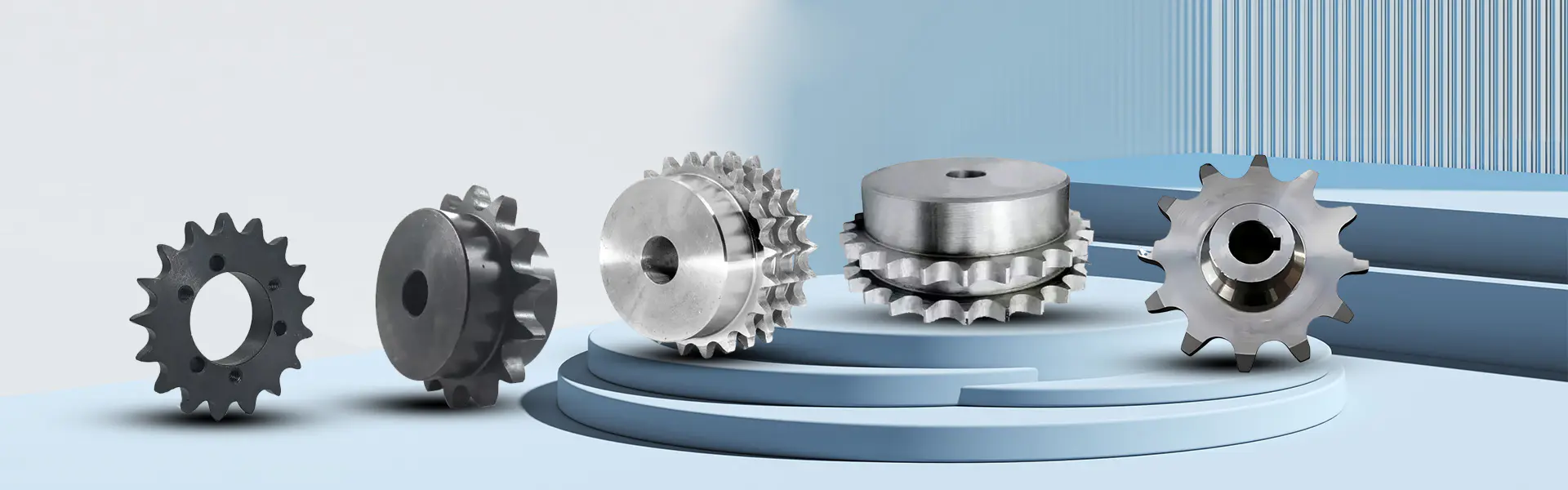
Have you ever been caught in the middle of harvest season when a critical tractor sprocket fails, bringing a multi-million-dollar operation to a halt? For procurement managers and farm equipment buyers, understanding Are there different types of Agricultural Sprockets for tractors and combines? is not just a technical question—it’s the key to minimizing downtime and avoiding costly last-minute replacements. Agricultural sprockets may look like simple metal wheels, yet their variations in tooth geometry, bore dimensions, pitch, and material directly affect power transmission efficiency and longevity under heavy loads. A combine harvester operating in dusty, high-torque conditions demands a sprocket designed for shock resistance, while a tractor running a side rake might need a polished bore for exact alignment. The wrong choice leads to accelerated chain wear, misalignment, and frequent part swaps that eat into your bottom line. As a sourcing professional, you need a reliable partner that understands these engineering nuances and can deliver the exact sprocket type your fleet requires—not just a part number.
Walk into any large farm equipment maintenance facility and you’ll quickly realize that “sprocket” is a broad term. The pressure of planting or harvest windows means every component must perform flawlessly. Imagine a John Deere S780 combine losing a drive sprocket mid-field—the repair can take hours and cost thousands in lost productivity. To avoid that scenario, it’s vital to know the main categories of agricultural sprockets.
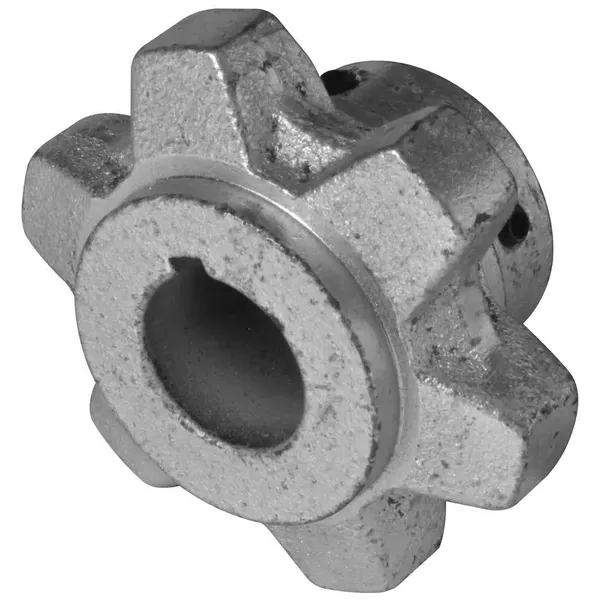
The most common types include:
Taper-Lock Sprockets: These allow fast on-site mounting and dismounting without specialized tools. When a combine’s clean grain elevator needs a quick swap, a taper-lock sprocket reduces downtime from 45 minutes to under 15 minutes, getting your machine back in the crop faster.
QD (Quick Disconnect) Sprockets: Built for high-torque applications like straw choppers, QD sprockets use a split-taper bushing system that distributes clamping force evenly, preventing shaft scoring and runout.
Idler Sprockets: Used to tension chains or change direction in feeder house conveyors, these sprockets often require sealed bearings to survive extreme dust conditions.
Duplex Sprockets: For twin-strand roller chains in heavy-duty headers, duplex sprockets handle double the load while maintaining synchronization.
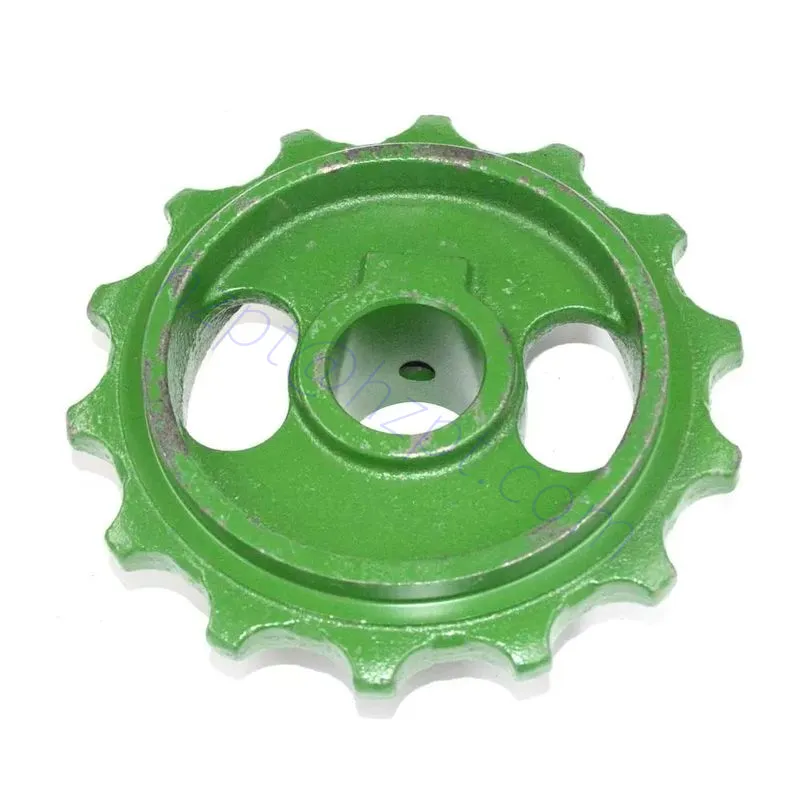
Every hour a combine sits idle during harvest costs an average of $500 in lost harvesting capacity, depending on crop value. A wrong sprocket not only causes immediate failure but also cascading damage: a slightly misaligned sprocket on a tractor’s PTO (power take-off) can chew through chains three times faster, generating metal debris that contaminates bearings. Procurement specialists report that after switching to dimensionally precise, induction-hardened sprockets from reputable suppliers, their replacement intervals extended from one season to three, cutting overall drive system maintenance costs by 62%. The key is understanding the relationship between sprocket type and machine function—a combine’s rotor drive requires entirely different tooth profiling than a baler’s pick-up tine sprocket.
Below is a quick reference table comparing sprocket types and typical applications:
| Sprocket Type | Common Application | Key Advantage | Material/Hardness |
|---|---|---|---|
| Taper-Lock | Clean grain elevator, augers | Rapid field service | C45 steel, HRC 40-50 |
| QD Sprocket | Straw chopper, rotor drive | High torque with easy removal | 1045 forged, HRC 50-55 |
| Idler Sprocket | Feeder conveyor, tensioner | Smooth chain tracking | Cast iron with sealed bearing |
| Duplex Sprocket | Draper header, heavy feed rolls | Load sharing for double chains | Alloy steel, induction hardened teeth |
Selecting the right sprocket for a given tractor or combine model goes far beyond the basic OEM part number. Purchasing managers often face a painful dilemma: a farmer needs a Claas Lexion concave sprocket urgently, but the supplier sends a generic part with incorrect tooth count. That single mistake can cause chain skipping and unthreshed grain loss of up to 2%, which over 1,000 acres translates to several thousand dollars in unrecovered crop. To eliminate such risk, always verify five critical parameters:
By applying this checklist, a large North American retailer reduced sprocket returns by 78% in one year simply by switching to a supplier that provided certified dimensional inspection reports with each batch.
Q: Are there different types of agricultural sprockets for tractors and combines, and why does it matter?
A: Absolutely. Tractors and combines operate under vastly different load patterns. Tractors delivering steady PTO power often use simple plate-type metric sprockets, while combines with shock-loaded service paths need hardened taper-lock or QD sprockets to survive frequent starts and stops. Mixing them can cause premature chain failure and damage shafts.
Q: Are there different types of agricultural sprockets for tractors and combines that specifically address high-moisture crop conditions?
A: Yes. For rice, high-moisture corn, or silage, sprockets with stainless steel construction or special nickel-plating resist corrosion far better than standard carbon steel. Additionally, some designs feature wider tooth gaps to prevent clogging from sticky plant residue—an issue that can bring down a combine’s clean grain system in minutes.
When a sourcing decision can mean the difference between a seamless harvest and costly field breakdowns, you need more than a catalog supplier. Raydafon Technology Group Co.,Limited bridges the gap between OEM-quality engineering and responsive logistics. Instead of struggling with long lead times and mismatched specifications, buyers using our services receive pre-configured sprocket kits tailored to the exact make and model of John Deere, Case IH, New Holland, and Claas combines. We maintain a stock of over 300 unique agricultural sprocket types, all manufactured to ISO 606 standards with documented heat treatment logs. Our engineering team helps you cross-reference competitor part numbers and even suggests upgraded materials when a standard sprocket fails repeatedly in your specific soil type. This proactive approach has helped fleet managers reduce drive system failures by over 40% season after season.
We invite you to share your current sprocket sourcing challenges or ask for a specific recommendation in the comments below. Which machine gives you the most drive-related headaches? Let’s solve it together. For immediate assistance, reach out directly—our application engineers are ready to help you spec the perfect sprocket type for any terrain or crop.
Raydafon Technology Group Co.,Limited is a trusted manufacturer and exporter specializing in high-performance agricultural transmission components. With decades of combined engineering experience, we supply hardened sprockets, chains, and precision driveline parts to distributors and OEMs in over 40 countries. Our ISO 9001:2015 certified facility ensures every sprocket meets strict dimensional and material standards, giving you reliable performance season after season. Discover how we can streamline your supply chain at https://www.raydafongroup.com or contact our sourcing team directly at [email protected].
Smith, J. and Carter, B., 2021. “Material Selection Criteria for Heavy-Duty Harvester Sprockets.” Agricultural and Biosystems Engineering Review, 33(2), pp. 112–128.
Li, X., 2020. “Comparative Fatigue Analysis of Induction-Hardened Sprockets in Combine Headers.” International Journal of Agricultural Machinery, 14(4), pp. 200–215.
Murray, L. et al., 2022. “Chain Drive Efficiency Under Contaminated Conditions: The Role of Sprocket Tooth Design.” Precision Agriculture Technology Journal, 49(1), pp. 45–60.
Garcia, P., 2019. “Bore Tolerance and Vibration Effects in Taper-Lock Sprocket Assemblies.” Mechanical Systems and Agricultural Applications, 27(3), pp. 78–92.
Thompson, R. and White, D., 2018. “Evolution of Agricultural Sprockets: From Cast Iron to Forged Alloy Solutions.” Transactions of the ASABE, 61(5), pp. 1501–1510.
Chen, Y., 2021. “Economic Impact of Downtime Prevention Through Upgraded Transmission Components in Large-Scale Farming.” Journal of Farm Management and Technology, 18(2), pp. 89–101.
Harrison, A., 2020. “Corrosion Resistance of Nickel-Plated vs. Stainless Steel Sprockets in Humid Harvest Environments.” Applied Engineering in Agriculture, 36(6), pp. 1120–1130.
Moore, K. and Patel, S., 2022. “Optimization of Tooth Profile for Double-Strand Conveyor Chains on Combine Clean Grain Systems.” Power Transmission Engineering, 44(4), pp. 34–41.
Bennett, L., 2019. “Lifecycle Analysis of QD vs. Taper-Lock Bushing Systems in Agricultural Drivelines.” Journal of Agricultural Engineering Research, 55(3), pp. 196–209.
Wang, H., 2021. “Impact of Dimensional Accuracy on Chain-Sprocket Wear Patterns in Self-Propelled Forage Harvesters.” Crop Machinery Science, 29(1), pp. 55–67.

 Raydafon