
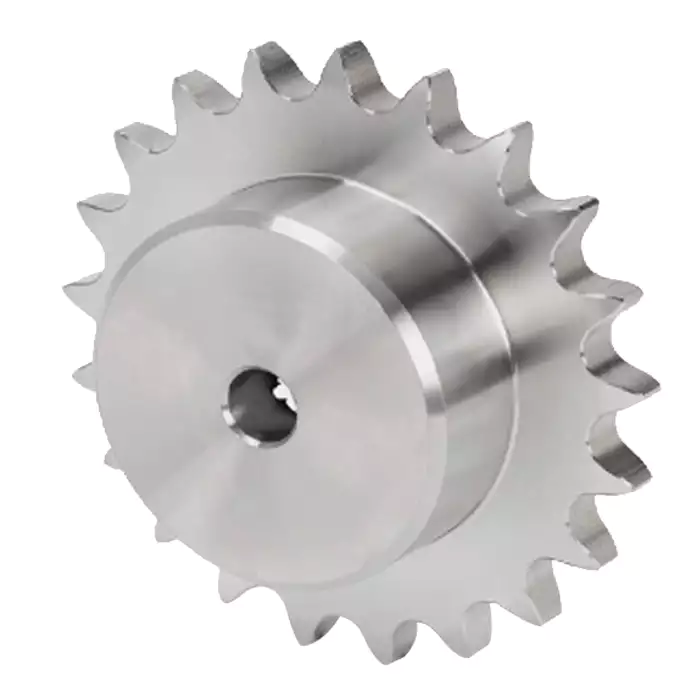
In industries where corrosion resistance, strength, and longevity are non-negotiable, the choice of power transmission components is critical. Stainless steel sprockets from Raydafon Group represent the pinnacle of engineering for these challenging environments. Unlike standard carbon steel sprockets, our stainless steel variants are specifically designed to withstand exposure to moisture, chemicals, extreme temperatures, and corrosive atmospheres without succumbing to rust or degradation. This inherent durability translates directly into reduced downtime, lower maintenance costs, and significantly extended service life for your machinery and conveyor systems.
Raydafon Group leverages advanced metallurgy and precision manufacturing processes to produce sprockets that offer exceptional performance. Whether for food processing, pharmaceutical manufacturing, marine operations, chemical plants, or outdoor machinery, our sprockets ensure reliable, smooth power transmission. We understand that a sprocket is more than just a component; it's a vital link in your operational chain. That's why we commit to unparalleled quality control, from material selection to final inspection, ensuring every sprocket that bears the Raydafon name meets the highest standards of precision and reliability.
Raydafon Group's stainless steel sprockets are available in a wide range of configurations to meet precise application requirements. Our standard offerings are crafted from premium grades of stainless steel, each selected for its specific properties.
| Parameter | Specifications & Options | Notes |
|---|---|---|
| American Standard (ASA/ANSI) | Single & Double Pitch: 25, 35, 40, 41, 50, 60, 80, 100, 120, 140, 160, 200 | Roller diameters from 0.141" to 2.0". Standard stock range. |
| British Standard (BS) | 06B, 08B, 10B, 12B, 16B, 20B, 24B | Manufactured to BS 228, equivalent to ISO 606. |
| Tooth Configuration | Standard, Double-Pitch, Taper-Lock Bushings, QD Bushings, Idler, Split Sprockets | Split sprockets allow for easy installation without dismantling shafts. |
| Bore Types | Plain Bore (for machining to size), Finished Bore (to exact dimensions), Taper-Lock, QD (Quick Disconnect), Hex Bore | Taper-Lock and QD bushings provide secure, backlash-free mounting and easy removal. |
| Hub Styles | Plain Hub, Extended Hub, Double Hub, Detachable Hub | Hub style selection depends on space constraints and chain/sprocket alignment needs. |
| Surface Finish | Standard Mill Finish, Polished (Food-Grade), Passivated | Passivation is a chemical process that enhances the natural oxide layer for maximum corrosion resistance. |
| Hardness | Varies by material: 304/316 (~150-200 HB), 17-4 PH (Up to 40-45 HRC after heat treat) | Hardness affects wear resistance. 17-4 PH is specified for high-abrasion applications. |
The performance of a sprocket is defined by its design and construction. Raydafon Group employs state-of-the-art CNC machining and gear hobbing equipment to ensure every tooth profile is geometrically perfect. This precision minimizes chain wear, reduces vibration and noise, and maximizes power transmission efficiency.
A: The primary advantages are corrosion resistance, hygiene, and longevity in harsh environments. Carbon steel sprockets will rust when exposed to moisture or chemicals, leading to pitting, increased wear, and eventual failure. Stainless steel sprockets resist rust and corrosion, making them ideal for washdown areas (food, pharma), marine settings, chemical exposure, and outdoor use. They also maintain their appearance and do not require protective coatings that can wear off.
A: Choose Type 316 when your application involves exposure to chlorides or stronger acids. This includes seawater, salt spray (coastal areas), bleach, and many industrial chemicals. Type 304 is excellent for general corrosion resistance against most organic chemicals, food products, and atmospheric exposure. If in doubt about a specific chemical, Raydafon Group's engineering team can provide material compatibility guidance.
A: Standard austenitic grades (304, 316) have good strength but lower surface hardness compared to hardened carbon steel. For high-load or abrasive applications, we recommend our sprockets made from precipitation-hardening stainless steel like 17-4 PH, which can be heat-treated to a significantly higher hardness (up to ~45 HRC). This provides excellent wear resistance while maintaining good corrosion resistance, making it a robust alternative where both properties are needed.
A: Absolutely. While we stock a comprehensive range of standard sprockets, a core strength of Raydafon Group is our custom manufacturing capability. We can produce sprockets with non-standard bore sizes, keyways, special tooth counts, unique hub configurations, or made-to-order dimensions. We work with you to understand your application's specific requirements and deliver a component engineered for optimal performance.
A: Proper maintenance is straightforward. Regular visual inspection for debris buildup or damage is key. For cleaning, use warm water with mild detergents. Avoid chlorinated cleaners or hydrochloric acid on Type 304, as they can cause pitting. For stubborn deposits, a soft brush can be used. Always rinse thoroughly with clean water. Periodically check mounting bolt torque and chain tension. The passive layer on stainless steel is self-healing in the presence of oxygen, so keeping them clean is often sufficient for long life.
A: To ensure you receive the perfect sprocket for your system, please have the following information ready: 1) Chain Standard and Size (e.g., ANSI 60, BS 12B), 2) Number of Teeth, 3) Bore Type and Dimensions (e.g., 1.5" finished bore with a 3/8" keyway), 4) Hub Style Requirement (plain, extended, etc.), 5) Material Grade (304, 316, etc.), and 6) Application Details (environment, load, speed). Our sales and engineering team is always available to assist with selection.
Raydafon Group's stainless steel sprockets are deployed across a diverse spectrum of industries. Our understanding of these unique operational challenges allows us to recommend the ideal product configuration.

 Raydafon