
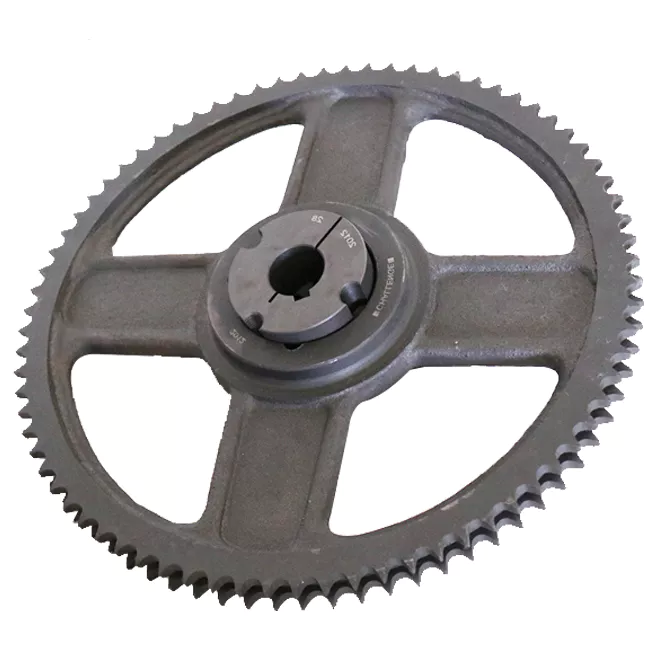
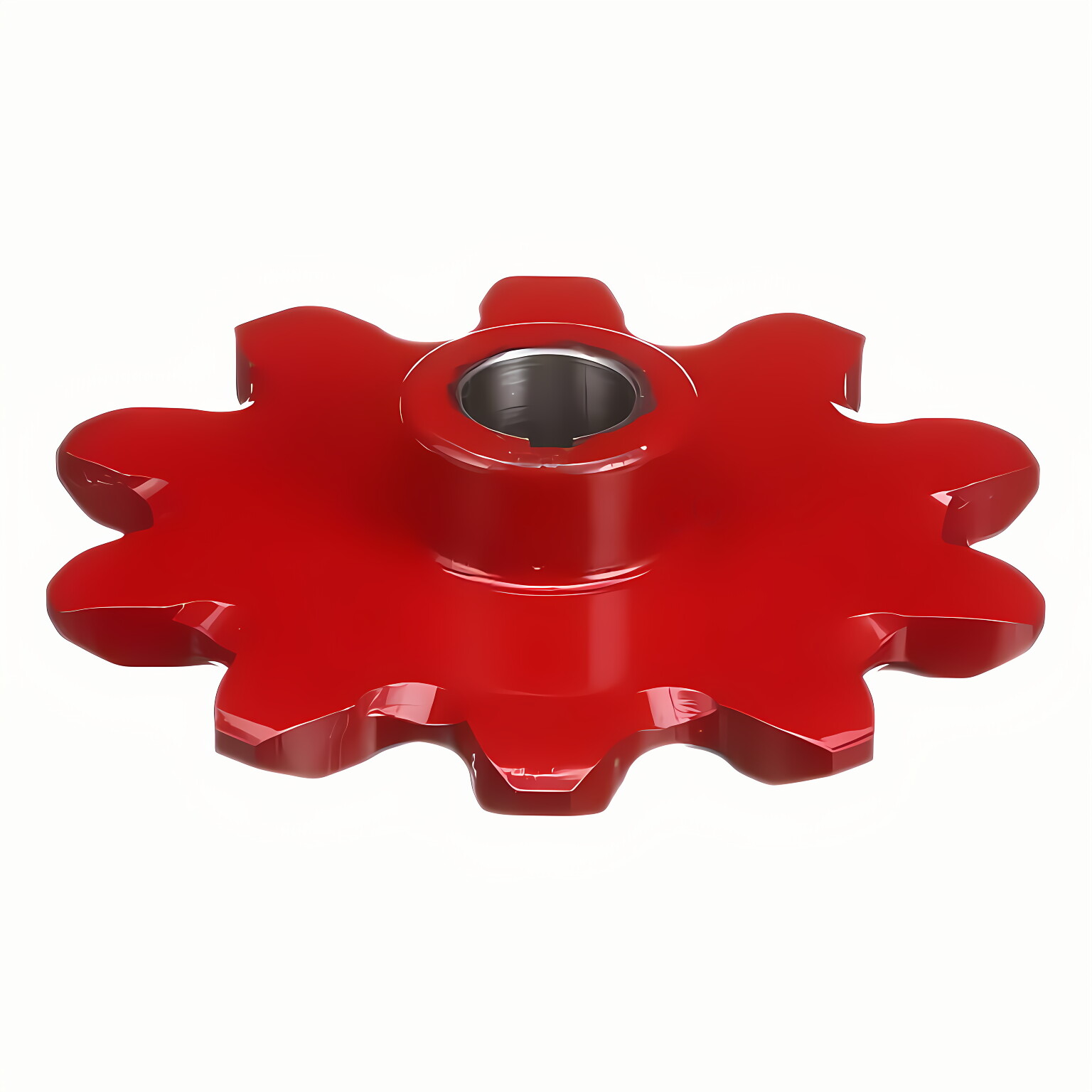
For industries where reliability and longevity under demanding conditions are non-negotiable, cast iron sprockets remain a cornerstone of mechanical power transmission. At Raydafon Group, we engineer and manufacture premium-grade cast iron sprockets designed to deliver consistent performance, minimize downtime, and provide exceptional value over the total lifecycle of your machinery. Unlike their steel counterparts, cast iron sprockets offer superior inherent damping properties, reducing noise and vibration in heavy-duty applications. Their excellent wear resistance and ability to maintain integrity under high compressive loads make them an ideal choice for conveyor systems, agricultural equipment, mining machinery, and various industrial drives where shock loads are frequent.
Understanding the critical role these components play, Raydafon Group utilizes advanced foundry techniques and rigorous quality control to produce sprockets that meet and exceed international standards. Our commitment is to provide not just a product, but a reliable link in your production chain.
Choosing the right sprocket material and design directly impacts operational efficiency and maintenance costs. Here are the defining features of our cast iron sprockets:
Our product range is designed to cover a wide spectrum of industrial needs. Below are the standard specifications for Raydafon Group's cast iron sprockets. Custom designs are also available upon request.
| Material Grade | ASTM Standard | Typical Hardness (Brinell) | Tensile Strength (MPa) | Key Application Suitability |
|---|---|---|---|---|
| Gray Cast Iron (Class 35) | A48 | 187 - 241 | 250 min | General purpose drives, conveyor systems, moderate shock load conditions. |
| Ductile Iron (Grade 65-45-12) | A536 | 170 - 229 | 450 min | High-stress applications, heavy shock loads, mining and agricultural machinery. Offers better impact resistance. |
| Austenitic Ductile Iron (Ni-Resist) | A439 | 140 - 250 | 415 - 550 | High-temperature environments, corrosive settings, and applications requiring superior scaling resistance. |
| Chain Pitch (Inch) | Standard Bore Range (mm) | Number of Teeth (Stock Range) | Hub Styles Available | Standard Finish |
|---|---|---|---|---|
| #35, #40, #41 | 12 - 50 | 10 - 60 | Plain, Finished Bore, Pilot Bore, Hub Extension | Phosphate Coated / Painted |
| #50, #60, #80 | 20 - 100 | 10 - 75 | Plain, Finished Bore, Pilot Bore, Hub Extension, Double Hub | Phosphate Coated / Painted |
| #100, #120, #140 | 40 - 150 | 15 - 90 | Plain, Finished Bore, Pilot Bore, Double Hub | Phosphate Coated / Painted |
| 0.375", 0.500", 0.625" (Roller Chain) | 15 - 80 | 9 - 75 | Plain, Finished Bore, Pilot Bore | Phosphate Coated / Painted |
Q: What are the main advantages of using a cast iron sprocket over a steel one?
A: Cast iron sprockets offer several distinct advantages. Their most notable benefit is superior vibration damping and noise reduction, leading to quieter operation. They possess excellent wear resistance due to the graphite in their microstructure, which can act as a solid lubricant. Cast iron also has good compressive strength and is generally more cost-effective for many standard industrial applications compared to precision-machined steel sprockets. They are ideal for environments where shock loading is common but extreme tensile strength is not the primary concern.
Q: When should I choose ductile iron over gray cast iron for a sprocket?
A: The choice depends on the application's stress and impact demands. Gray cast iron is suitable for general-purpose use with good wear and damping properties. However, if your application involves significant shock loads, higher tensile stress, or requires greater impact resistance (e.g., in mining, heavy construction, or forestry equipment), you should specify ductile iron (also known as nodular iron). Ductile iron has undergone a treatment that makes it much tougher and more elastic than gray iron, reducing the risk of fracture under sudden loads.
Q: Are Raydafon Group's cast iron sprockets suitable for outdoor or corrosive environments?
A: Standard gray and ductile iron sprockets offer some inherent corrosion resistance but are not entirely rust-proof. For outdoor, marine, or chemically exposed environments, we recommend specifying additional protective coatings. Raydafon Group offers phosphate coatings (which also aid in lubricant retention) and painted finishes as standard. For severe conditions, we can apply specialized coatings like zinc plating or manufacture sprockets from austenitic ductile iron (Ni-Resist), which provides significantly higher resistance to corrosion and heat.
Q: How do I determine the correct sprocket size and specification for my application?
A: Selecting the correct sprocket requires several key parameters: the chain pitch and type (e.g., ANSI #40, #60), the number of teeth (which affects speed ratio and engagement), the bore size and keyway dimensions to fit your shaft, and the hub configuration. It is crucial to also consider the service factor—accounting for load type (steady, shock), drive source, and hours of operation. Raydafon Group's technical support team can assist you with this selection process. Please have your machine specifications, chain details, and operational conditions ready for consultation.
Q: Can I order custom-designed cast iron sprockets from Raydafon Group?
A: Absolutely. While we maintain a comprehensive inventory of standard sprockets, a significant part of our service is providing custom-engineered solutions. We can manufacture sprockets to your exact drawings, including non-standard tooth profiles, special hub designs, unique bore configurations, and specific material or heat treatment requirements. Our engineering team will work with you to ensure the final product meets your application's precise performance criteria.
Q: What maintenance is recommended for cast iron sprockets to ensure maximum lifespan?
A: Proper maintenance is key to longevity. Ensure the driving chain is correctly tensioned and aligned to prevent uneven wear. Implement a regular lubrication schedule using a lubricant appropriate for both the chain and the operating environment; this reduces friction and wear on the sprocket teeth. Periodically inspect the sprocket for signs of wear such as hooking or thinning of the teeth, cracks, or material fatigue. Replacing a worn sprocket promptly prevents accelerated chain wear and potential drive failure. Using a chain wear gauge can help monitor the state of the entire drive system.
The robustness and reliability of our sprockets make them indispensable across a diverse range of sectors:
With decades of experience in power transmission components, Raydafon Group stands as a trusted global manufacturer. Our commitment to quality is embedded in every step, from selecting raw materials to final inspection. We leverage state-of-the-art manufacturing and testing facilities to ensure dimensional accuracy and performance reliability. Our technical experts are available to provide application support, helping you optimize your drive system design for efficiency and durability. We understand that downtime is costly, which is why we focus on delivering components that enhance the productivity and longevity of your operations. Choose Raydafon Group for sprockets that are engineered to keep industry moving.

 Raydafon