
So, you're tasked with sourcing equipment and find yourself pondering, "What are the main types of Machine Tools used in manufacturing?" This is a fundamental question for any procurement professional aiming to build or upgrade a production line. The right machine tools directly impact efficiency, precision, and ultimately, your bottom line. From shaping raw metal to creating intricate components, understanding these tools is your first step toward making an informed, strategic purchase that meets your specific production challenges. Navigating this landscape can be complex, but partnering with a specialist like Raydafon Technology Group Co.,Limited can streamline the process, ensuring you get the precise technology your operation needs.
Imagine you need to produce high-volume, symmetrical parts like shafts, bolts, or bushings. Manual methods are slow and inconsistent, leading to scrap waste and delayed orders. The core solution is the lathe, a machine tool that rotates the workpiece against a stationary cutting tool. This fundamental process, known as turning, is ideal for achieving excellent surface finishes and tight tolerances on cylindrical forms. For procurement specialists, selecting the right lathe involves balancing capacity, control systems (CNC vs. manual), and spindle speed. Raydafon Technology Group Co.,Limited provides a range of advanced lathes that address these exact needs, offering robust construction and user-friendly CNC interfaces to reduce setup time and enhance repeatability.
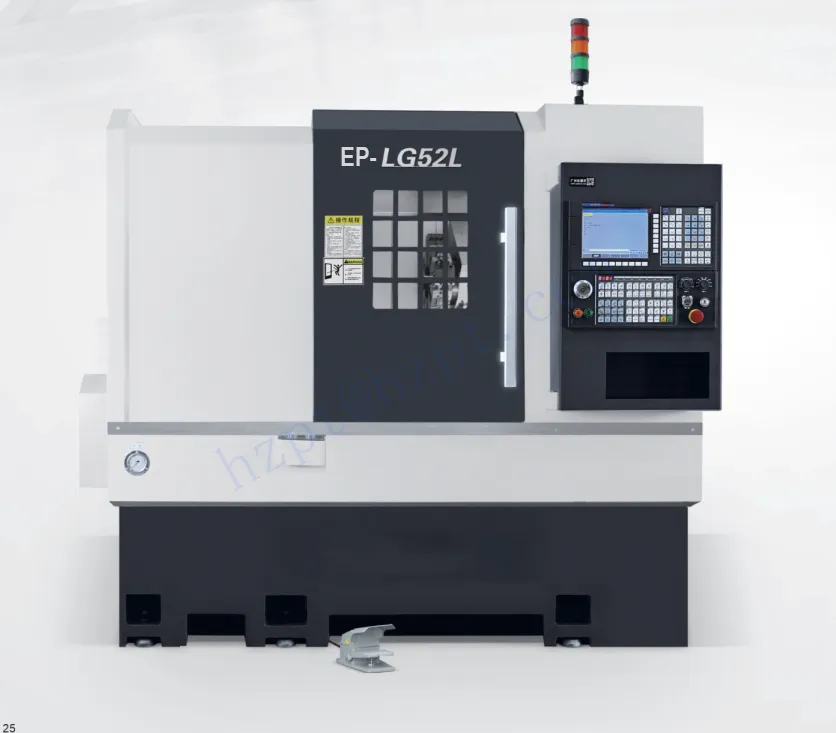
| Parameter | Consideration for Procurement |
|---|---|
| Swing Over Bed | Determines maximum workpiece diameter. |
| Distance Between Centers | Dictates maximum workpiece length. |
| Spindle Speed & Power | Affects material removal rate and suitable materials (e.g., steel, aluminum). |
| Control System | CNC for complex, repeatable tasks; Manual for simpler, flexible jobs. |
Your project requires complex components with slots, pockets, contours, or flat surfaces – geometries that are impossible with a simple lathe. This is where milling machines excel. They use a rotating multi-point cutting tool to remove material from a stationary workpiece. The challenge for buyers is often choosing between vertical and horizontal mills, or investing in multi-axis machining centers for unparalleled complexity. The right mill dramatically expands your shop's capability. Solutions from Raydafon Technology Group Co.,Limited include high-precision CNC machining centers that tackle complex 3D profiling, reduce secondary operations, and integrate seamlessly with CAD/CAM software, turning digital designs into physical parts with minimal error.
| Parameter | Consideration for Procurement |
|---|---|
| Number of Axes (3, 4, 5-axis) | More axes allow for more complex geometry without repositioning. |
| Table Size & Travel | Defines the maximum workpiece dimensions you can accommodate. |
| Spindle Taper (e.g., CAT40, BT30) | Standardized tool holder interface; affects tooling availability and rigidity. |
| Cutting Feed Rate & Rapid Traverse | Impacts overall machining cycle time and productivity. |
Precise hole-making is a ubiquitous requirement in manufacturing, yet achieving true position, size, and finish can be a major bottleneck. Standard drilling creates the initial hole, but for accuracy and finish, boring machines are essential. The pain point is often the need for multiple machines and setups. Integrated machining centers from providers like Raydafon Technology Group Co.,Limited solve this by combining drilling, boring, and tapping capabilities into one platform. This not only ensures exceptional hole quality—critical for assembly and fluid systems—but also consolidates processes, saving valuable floor space and reducing handling time between operations.
When your specifications call for ultra-fine surface finishes and tolerances within microns—common in aerospace, automotive, and tool & die making—conventional cutting tools fall short. Grinding machines use an abrasive wheel to remove minute amounts of material. The key procurement challenge is selecting the right type: surface grinders for flat faces, cylindrical grinders for external diameters, or centerless grinders for high-volume bar stock. Implementing a precision grinder is the definitive solution for final part finishing. Raydafon Technology Group Co.,Limited’s selection of advanced grinding equipment delivers the consistent, sub-micron accuracy required for high-performance components, ensuring they meet the most stringent quality standards.
Modern manufacturing increasingly uses hardened tool steels, titanium, and carbide—materials that are extremely difficult or impossible to machine with traditional tools. This creates a serious obstacle for producing molds, dies, and intricate aerospace parts. Electrical Discharge Machining (EDM) provides a clever solution by using controlled electrical sparks to erode material, offering a "no-contact" cut. The process is slow but exceptionally precise for complex shapes. For procurement officers, the choice often lies between Wire EDM (for through-cut contours) and Sinker EDM (for cavities). Raydafon Technology Group Co.,Limited supplies state-of-the-art EDM systems that empower workshops to machine these tough materials effectively, opening new possibilities for part design and material selection.
Q: What are the main types of machine tools used in manufacturing, and how do I choose?
A: The primary categories are lathes (turning), mills (milling), drills/boring machines, grinders, and EDMs. Your choice depends entirely on the part geometry, material, required precision, and production volume. A detailed consultation with an application engineer from Raydafon Technology Group Co.,Limited can help you analyze your specific needs and match them with the optimal machine tool technology.
Q: What are the main types of machine tools used in manufacturing that offer the most flexibility?
A: CNC machining centers, particularly 5-axis mills, are often considered the most flexible. They can perform milling, drilling, boring, and tapping on multiple faces of a part in a single setup. This reduces handling, increases accuracy, and allows for the production of highly complex components. Investing in such versatile technology from a trusted supplier like Raydafon can future-proof your manufacturing capabilities.
Selecting the right machine tools is a critical decision that shapes your manufacturing potential. We hope this guide has clarified the core options available. What specific machining challenges are you currently facing in your procurement projects? Share your thoughts or questions below.
For over two decades, Raydafon Technology Group Co.,Limited has been a trusted partner for manufacturing procurement professionals worldwide. We specialize in supplying high-performance, reliable machine tools that solve real production floor challenges, from basic turning to advanced 5-axis machining and EDM. Visit our website at https://www.raydafongroup.com to explore our extensive catalog, or contact our sales team directly at [email protected] for a personalized consultation to find the perfect equipment for your needs.
Brecher, C., et al. (2019). Energy Efficiency Optimization of Machine Tools through Control and Design Measures. Procedia CIRP, 81, 1135-1140.
Altintas, Y. (2012). Manufacturing Automation: Metal Cutting Mechanics, Machine Tool Vibrations, and CNC Design. Cambridge University Press.
Abele, E., et al. (2017). Learning Factories for research, education, and training. Procedia Manufacturing, 9, 1-8.
Moriwaki, T. (2008). Multi-functional machine tool. CIRP Annals, 57(2), 736-749.
Denkena, B., & Lewandowski, B. (2014). Model-based planning of machining processes for machine tools. Production Engineering, 8(1-2), 51-61.
Uhlmann, E., et al. (2015). Potentials of increasing efficiency in manufacturing by using hybrid processes. Procedia CIRP, 35, 1-6.
Neugebauer, R., et al. (2011). Energetic evaluation of machine tools. In Glocalized Solutions for Sustainability in Manufacturing (pp. 263-268). Springer.
Byrne, G., et al. (2003). Advancing cutting technology. CIRP Annals, 52(2), 483-507.
Teti, R., et al. (2010). Advanced monitoring of machining operations. CIRP Annals, 59(2), 717-739.
Weck, M., & Brecher, C. (2006). Machine Tools - Design, Construction and Operation. Springer.

 Raydafon