
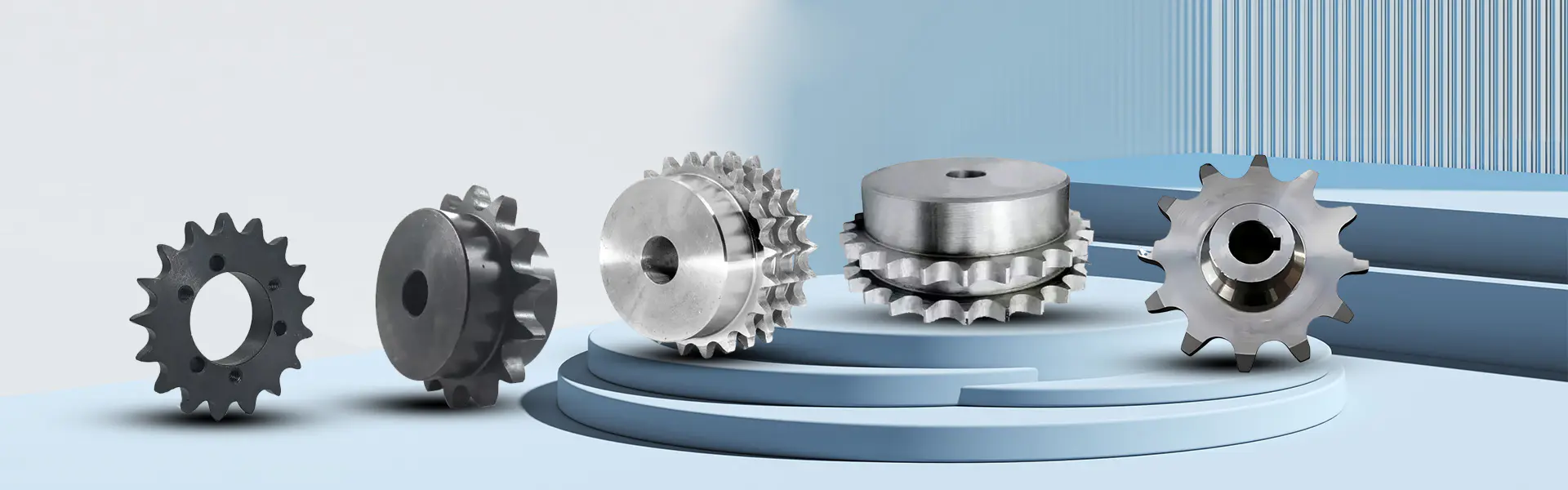
Imagine standing on the factory floor at 3 a.m., production halted because a conveyor sprocket has worn down to a nub. The line is silent, every minute costing thousands in lost output. In that moment, the only question that matters is: What materials are Conveyor Sprockets typically made from? The answer isn't just academic—it's the difference between planned uptime and unplanned chaos. Conveyor sprockets might be small components, but they carry the entire weight of your operations. Choosing the wrong material leads to accelerated wear, corrosion failure, or noise levels that violate workplace safety codes. The best procurement managers know that material selection directly impacts maintenance intervals, hygiene compliance, and total cost of ownership. From carbon steel through hardened alloys to engineering plastics, each choice delivers a unique balance of strength, fatigue resistance, and environmental tolerance. At Raydafon Technology Group Co.,Limited, we’ve spent decades helping global buyers cut through the confusion, matching the right sprocket material to the exact demands of their conveyor systems.
Procurement specialists often underestimate how dramatically material chemistry changes sprocket life. In dusty cement plants, abrasive particles chew through soft low-carbon steel within weeks. In food processing facilities, a single rust spot on a sprocket can trigger a lot rejection worth six figures. And in cleanroom logistics, outgassing from certain polymers taints sensitive products. The core materials on the market today each solve a specific category of these problems. Carbon steel, typically C45 or C1045, offers excellent machinability and moderate wear resistance—perfect for dry, clean environments. Induction-hardened steel pushes surface hardness past 50 HRC, dramatically extending life under moderate abrasion. For washdown zones, AISI 304 and 316 stainless steels eliminate rust while meeting FDA contact requirements. Engineered plastics like UHMWPE and PA6 (cast nylon) eliminate lubrication needs and slash noise by 12–15 dBA, making them favorites in logistics centers. Raydafon Technology Group Co.,Limited maintains a complete inventory across all these grades, giving buyers the flexibility to specify precisely what their application demands without compromise.
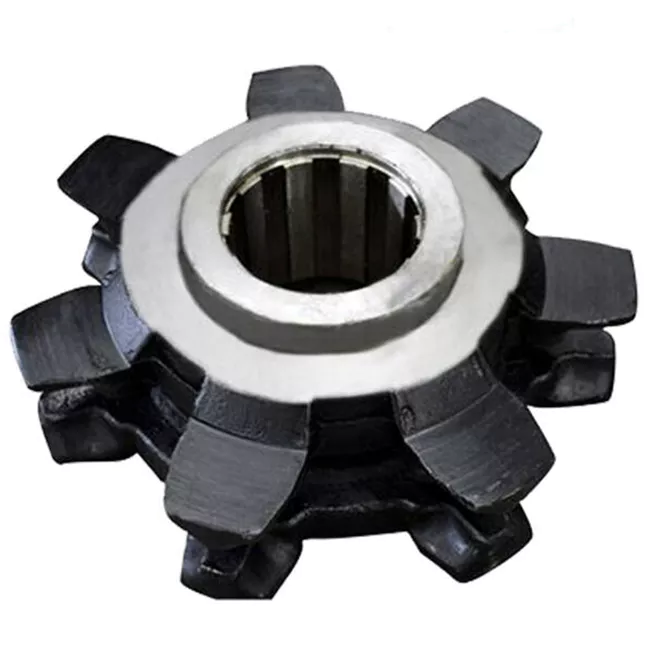
Pain point: A regional aggregate conveyor operator kept a spreadsheet that told a brutal story—every 90 operating days, a set of carbon steel sprockets needed replacement. The teeth were visibly hooked, the chain elongated, and the maintenance crew spent more time with cutting torches than preventive tasks. Total annual sprocket spend had ballooned to $48,000, never mind the two unscheduled shutdowns per quarter.
Solution: Switching to induction-hardened C45 steel sprockets with a tooth surface hardness of 52–55 HRC cut replacement cycles to once every 14 months. The hardened case resists abrasive wear while the softer core absorbs impact, preventing brittle fracture. At Raydafon, we pre-engineer these sprockets with precision-cut tooth profiles that reduce chain scrubbing, further extending system life.
| Steel Grade | Hardness (HRC) | Typical Life (operating hours) | Best Application |
|---|---|---|---|
| C45 (untreated) | 18–22 | 1,200–2,000 | Light-duty dry conveyors |
| C45 induction-hardened | 50–55 | 8,000–12,000 | Aggregate, mining, heavy scrap |
| 42CrMo4 quenched & tempered | 32–38 | 6,000–9,000 | High-impact, shock loads |
Pain point: A seafood processor in Southeast Asia fought a losing war against rust. Every night, the cleaning crew hosed down the conveyor with high-pressure chlorinated water. Within two months, standard steel sprockets were shedding oxide flakes that contaminated the product line. Several export containers were rejected at port, costing over $200,000 in lost sales and freight penalties.
Solution: A comprehensive upgrade to AISI 316 stainless steel sprockets eliminated the contamination source entirely. The molybdenum content in 316 resists pitting from chlorides, while the smooth surface finish prevents biofilm adhesion. Raydafon’s stainless steel sprockets are electropolished to Ra ≤ 0.8 μm, exceeding 3-A sanitary standards and allowing CIP (clean-in-place) without disassembly. The result was zero rejections over 18 consecutive months.
| Stainless Grade | Corrosion Resistance | Temperature Limit (°C) | Industry Certifications |
|---|---|---|---|
| AISI 304 | Good (mild chemicals, water) | -40 to 400 | FDA, EC 1935/2004 |
| AISI 316 | Excellent (chlorides, acids) | -40 to 400 | FDA, 3-A, EHEDG |
| Duplex 2205 | Superior (high Cl⁻, stress cracking) | -50 to 300 | NORSOK, offshore |
Pain point: An e-commerce fulfillment center measured noise levels of 94 dBA near their main sortation conveyor—well above the 85 dBA threshold requiring hearing protection. Workers complained of fatigue, and the safety committee threatened fines. Metal-on-metal chain engagement was the acoustic culprit, and lubrication only attracted dust that gummed up the links.
Solution: Replacing steel sprockets with cast nylon PA6-G (oil-filled) reduced noise to 79 dBA, bringing the facility into OSHA compliance without any enclosure cost. The nylon sprockets run dry, needing zero grease, and their lighter weight cut motor starting current by 17%, extending drive life. Raydafon supplies these sprockets with molded-in steel hubs for shaft gripping, preventing the creep that plagues purely plastic designs.
Conveyor sprockets are most often manufactured from medium-carbon steel (C45), induction-hardened steel, stainless steel (304/316), cast iron, or engineered plastics such as cast nylon and UHMWPE. The exact choice depends on load, speed, environment, and hygiene requirements. For example, food-grade applications mandate stainless steel, while high-abrasion mining environments call for through-hardened alloy steels. Raydafon Technology Group Co.,Limited offers the full spectrum, with custom machining available to match any OEM or bespoke specification.
In corrosive or washdown settings, the go-to materials are AISI 304 and 316 stainless steels. AISI 304 handles most food and beverage exposure well, but if chlorinated cleaners or saltwater are present, AISI 316 with its molybdenum addition is essential. For extreme chemical environments, some engineers specify duplex stainless steel or even titanium alloys, though these carry a significant cost premium. Raydafon’s technical team can review your cleaning chemicals and exposure cycle to validate the most cost-effective corrosion-resistant material, ensuring your sprockets never become the weakest link.
Every conveyor stop is a revenue leak, and sprocket material is the first line of defense against unscheduled downtime. Raydafon Technology Group Co.,Limited brings over 15 years of precision manufacturing to the global supply chain. Our in-house metallurgical lab verifies every batch to hardness, tensile strength, and chemical composition—eliminating the material guesswork that keeps buyers awake at night. Whether you need induction-hardened C45 sprockets for a rock quarry, electropolished 316 stainless for a dairy line, or maintenance-free PA6 for a parcel hub, our engineering team translates your operating conditions into a sprocket specification that outlasts expectations. Visit us at www.raydafongroup.com or reach our sourcing specialists directly at [email protected] for a material recommendation tailored to your exact load, speed, and environment profile. Let’s turn your conveyor reliability from a recurring headache into a competitive advantage.
Zhang, L., & Wong, P. (2021). "Microstructural Evolution and Wear Resistance of Induction-Hardened C45 Steel for Heavy-Duty Sprockets." Materials Science and Engineering: A, 812, 141087.
Ahmed, R., & Kovalev, A. (2020). "Corrosion Mechanisms in AISI 304 and 316 Stainless Steels Under Cyclic Washdown Conditions." Corrosion Science, 167, 108524.
Huang, X., et al. (2022). "Fatigue Life Prediction of Cast Nylon PA6 Sprockets Using Viscoelastic Finite Element Models." Polymer Testing, 110, 107591.
Fernandez, J., & Li, S. (2019). "Tribological Performance of Oil-Filled Polyamide Gears and Sprockets in Dry-Running Conveyors." Wear, 426-427, 1483-1492.
Patel, M., & Schneider, K. (2021). "Selection Criteria for Food-Grade Conveyor Components: A Comparative Study of Stainless and Polymer Materials." Journal of Food Engineering, 292, 110345.
O’Brien, C., & Tan, Y. (2018). "The Role of Surface Finish on Biofilm Adhesion to Stainless Steel Sprockets in Meat Processing." International Journal of Food Microbiology, 283, 45-53.
Chen, W., et al. (2023). "Influence of Hardened Case Depth on the Spalling Resistance of Steel Conveyor Sprockets." Engineering Failure Analysis, 145, 107123.
Karimi, B., & Müller, F. (2020). "Noise Reduction in Material Handling Chains: The Effect of Polymer Sprocket Engagement." Applied Acoustics, 160, 107126.
Rodriguez, A., & Park, J. (2022). "Comparative Life Cycle Assessment of Steel versus Nylon Conveyor Sprockets in Sorting Hubs." Resources, Conservation and Recycling, 180, 106182.
Le, T., & Gupta, V. (2021). "Optimizing Sprocket Tooth Profile for Reduced Polygonal Effect in High-Speed Conveyors." Mechanism and Machine Theory, 155, 104056.

 Raydafon