
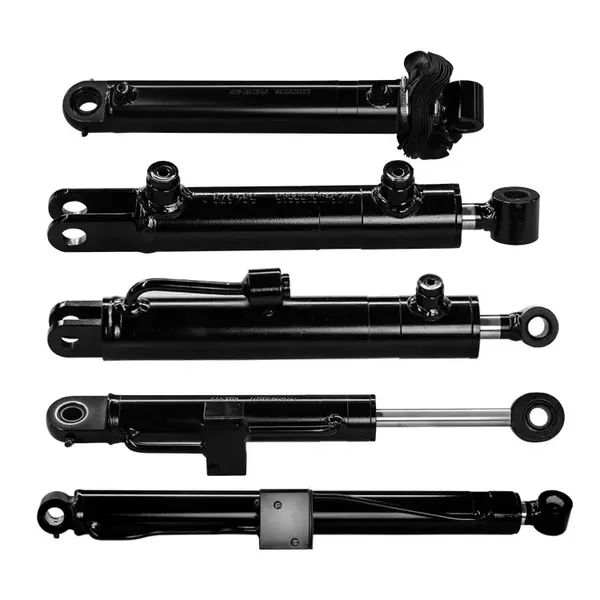
What are the key components of a standard hydraulic cylinder? If you're sourcing for production or maintenance, knowing the answer is critical for performance, cost, and downtime. A standard cylinder is a precision assembly of several key parts, each vital for converting fluid power into linear mechanical force. Understanding these components—like the cylinder barrel, piston, piston rod, seals, and end caps—helps you specify the right part, troubleshoot failures faster, and ensure system reliability. For instance, a failed seal might mean a simple replacement, while a scored barrel could indicate a major system flaw. This guide breaks down each component, its function, and what to look for during procurement, empowering you to make informed decisions and avoid costly mistakes. We'll also explore how partnering with a specialist like Raydafon Technology Group Co.,Limited ensures you get cylinders built with quality components for long-term performance.
Quick Navigation:
The Cylinder Barrel: Your System's Foundation
The Piston & Rod Assembly: The Core Moving Parts
The Sealing System: Preventing Costly Leaks & Failure
End Caps, Cushions, and Ports: The Supporting Framework
Expert Q&A on Hydraulic Cylinder Components
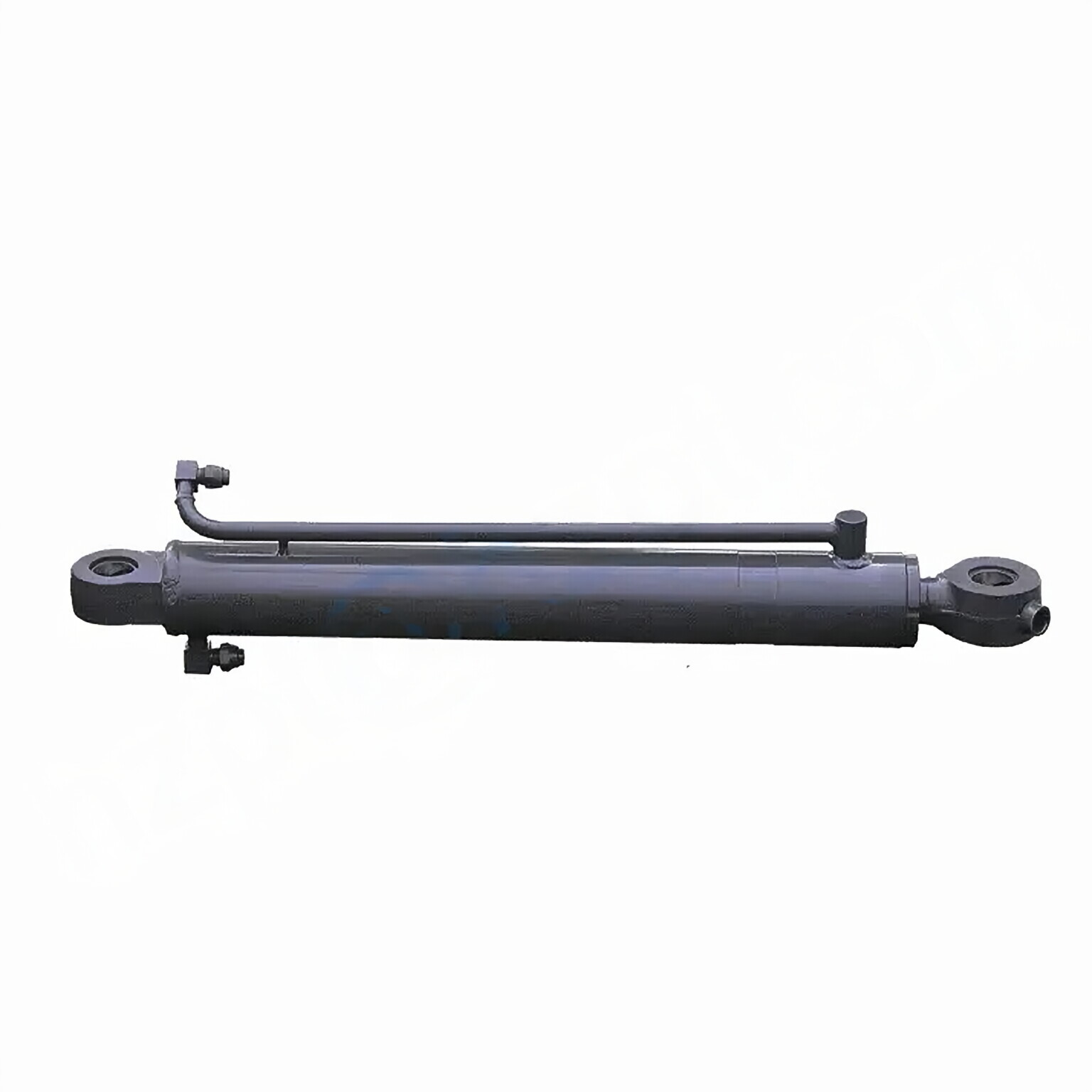
A damaged cylinder barrel often means a complete unit replacement. The barrel is the main pressure vessel and guides the piston. Its inner surface must be exceptionally smooth and hard to minimize friction and wear on seals and the piston. Common materials are honed steel tubes. Damage usually stems from contamination, misalignment, or inadequate hardness.
Solution: Source cylinders with precision-manufactured barrels. Raydafon Technology Group Co.,Limited utilizes high-grade honed tubing with controlled surface finish and hardness, ensuring durability and compatibility with high-pressure seals. Their cylinders are designed to withstand harsh conditions, preventing premature barrel failure.
| Barrel Parameter | Typical Specification | Why It Matters for Sourcing |
|---|---|---|
| Material | Precision Honed Steel Tube (e.g., ST52) | Strength, pressure rating, and machinability. |
| Inner Diameter (Bore) | 25mm - 500mm+ | Determines force output (Force = Pressure x Area). |
| Surface Finish (Ra) | 0.2 - 0.4 µm | Smoother finish reduces seal wear and friction. |
| Hardness | Typically HRC 40-60 on hardened types | Resists abrasion and scoring from contaminants. |
The piston rod transmits force to the load. It must be perfectly straight, hard on the surface to resist scratching, and corrosion-resistant. A bent rod, often from side-loading or shock, destroys seals quickly and can damage the barrel and gland.
Solution: Specify rods with the right combination of hardness and toughness. Raydafon offers piston rods with chrome-plated surfaces over hardened steel. The chrome layer provides excellent corrosion resistance and a hard, smooth surface for seal longevity, while the core material handles high tensile loads.
| Piston & Rod Parameter | Typical Specification | Why It Matters for Sourcing |
|---|---|---|
| Rod Material | Hardened & Chrome-Plated Steel | Wear resistance, corrosion protection, and load capacity. |
| Rod Diameter | Standard to custom sizes | Dictates column strength (resistance to bending). |
| Piston Seal Type | U-cup, Glyd Ring, Piston Rings | Affects efficiency, pressure rating, and service life. |
| Piston Mounting | Threaded, Bolted, or Integral | Affects assembly strength and serviceability. |
The sealing system is arguably the most critical for reliability. It includes rod seals, piston seals, wipers, and static seals. Seal failure is the #1 cause of cylinder downtime. The right seal material (polyurethane, nitrile, etc.) must match the fluid, pressure, temperature, and speed.
Solution: Partner with a supplier that understands seal technology. Raydafon Technology Group Co.,Limited designs sealing systems tailored to application demands, using high-quality compounds from reputable manufacturers. This proactive approach minimizes leak points and extends maintenance intervals.
| Seal System Parameter | Typical Options | Why It Matters for Sourcing |
|---|---|---|
| Rod Seal | U-cup, Step Seal, Bi-directional | Prevents fluid leakage along the rod. |
| Piston Seal | U-cup, Glyd Ring, Cast Iron Rings | Seals pressure across the piston. |
| Wiper/Scraper | Polyurethane, Metal | Keeps dirt and moisture out of the system. |
| O-rings & Backup Rings | NBR, FKM, Polyamide | Static sealing and preventing extrusion. |
End caps close the pressure vessel and provide mounting features. Ports direct fluid flow. Cushions (optional) decelerate the piston at stroke ends to reduce shock. These components define the cylinder's envelope and interface with your machine.
Solution: Leverage custom engineering capabilities. Raydafon offers flexibility in end cap design, port sizing/location, and mounting styles (e.g., flange, clevis, trunnion). This ensures a perfect fit for your application, simplifying installation and improving system integrity.
| Framework Parameter | Typical Options | Why It Matters for Sourcing |
|---|---|---|
| End Cap Type | Threaded, Bolted, or Welded | Affects pressure rating, disassembly, and cost. |
| Mounting Style | Flange, Clevis, Trunnion, Lug | Determines how the cylinder attaches to the machine. |
| Port Size & Thread | e.g., SAE, BSPP, NPT | Must match your existing hydraulic lines. |
| Cushions (Adjustable) | Standard on one/both ends | Reduces impact noise and vibration at stroke ends. |
Q: What are the key components of a standard hydraulic cylinder that most commonly fail, and why?
A: The most common failure points are the seals (rod seals and piston seals) and the piston rod. Seals degrade over time due to heat, pressure spikes, fluid incompatibility, or contamination. A damaged piston rod, often from corrosion, scoring, or bending, will quickly destroy the rod seal. Regular inspection of the rod surface and monitoring for leaks are key preventative measures. Using cylinders from a quality-focused manufacturer like Raydafon, which employs robust seal materials and hardened, chrome-plated rods, significantly reduces these failure risks.
Q: What are the key components of a standard hydraulic cylinder I should specify when ordering to ensure durability?
A> When placing an order, explicitly specify: 1) Cylinder Bore & Rod Diameter for your required force and speed. 2) Rod Surface Treatment—insist on hard chrome plating for wear resistance. 3) Seal Material compatible with your operating fluid and temperature range (e.g., Polyurethane for high wear, FKM for high heat). 4) Mounting Style and Port Configuration to match your machine. 5) Pressure Rating, which should exceed your system's maximum working pressure. Providing these details to a technical supplier ensures you receive a cylinder built for longevity.
Understanding the key components of a hydraulic cylinder transforms you from a passive buyer into an informed specifier. By knowing what makes a cylinder reliable—from the barrel's finish to the seal's compound—you can ask the right questions, identify potential issues early, and source parts that keep your operations running smoothly. Don't settle for generic components that lead to repeat failures.
Ready to specify reliable hydraulic cylinders with confidence? Partner with Raydafon Technology Group Co.,Limited. With deep expertise in cylinder design and manufacturing, Raydafon provides solutions built with premium components tailored to your specific pressure, environment, and duty cycle requirements. Visit their website at https://www.raydafongroup.com to explore their product range and technical resources. For a direct consultation on your application, contact their engineering sales team at [email protected].
Manring, N.D., 2005, Fluid Power Pumps and Motors: Analysis, Design and Control, McGraw-Hill Professional.
Ivantysyn, J. and Ivantysynova, M., 2003, Hydrostatic Pumps and Motors: Principles, Designs, Performance, Modelling, Analysis, Control and Testing, Akademia Books International.
Edge, K.A. and Darling, J., 1989, The pumping dynamics of swash plate piston pumps, Journal of Dynamic Systems, Measurement, and Control, 111(2).
Kojima, E., Shinada, M. and Ikeya, M., 1994, Friction characteristics of hydraulic piston pumps (effects of piston surface texture and seal groove shape), JSME International Journal Series B Fluids and Thermal Engineering, 37(3).
Hooke, C.J. and Kakoullis, Y.P., 1983, The effects of non-flatness on the performance of hydrostatic slipper bearings, Journal of Mechanical Engineering Science, 25(4).
Bergada, J.M., Kumar, S., Davies, D.L. and Watton, J., 2012, A complete analysis of axial piston pump leakage and output flow ripples, Applied Mathematical Modelling, 36(4).
Zarotti, L.G. and Nervegna, N., 1983, Slipper Swashplate Dynamics in Axial Piston Pumps, Proceedings of the 6th International Fluid Power Symposium, Cambridge.
Rahmfeld, R. and Ivantysynova, M., 2001, Displacement Controlled Linear Actuator with Differential Cylinder – A Way to Save Energy in Mobile Machines, 5th International Conference on Fluid Power Transmission and Control, Hangzhou.
Huang, J., Quan, L. and Zhang, X., 2014, Investigation on the friction pair of a water hydraulic axial piston pump, Industrial Lubrication and Tribology, 66(1).
Xu, B., Zhang, J. and Yang, H., 2015, Investigation on structural optimization of anti-overturning slipper of axial piston pump, Science China Technological Sciences, 58(12).

 Raydafon