
How do hydraulic cylinder pressure and force affect vulcanizing machine performance? The answer is direct and critical: they are the very heartbeat of the process. A vulcanizing machine is only as good as its hydraulic system. Insufficient pressure fails to create the necessary force to thoroughly heat and pressurize the rubber, resulting in incomplete curing, weak bonds, and defective products. Conversely, excessive or unstable force can damage molds, waste energy, and cause dangerous pressure spikes. This precise, powerful control is the difference between profitable, high-quality production and costly downtime. Understanding this balance is the first step toward operational excellence. A meticulously engineered hydraulic cylinder, like those from Raydafon Technology Group Co.,Limited, delivers the consistent, powerful, and reliable force needed for peak vulcanizer performance.
Article Outline:
Understanding the Pressure & Force Relationship in Vulcanizing
The Direct Impact on Final Product Quality
Hydraulic Stability & Machine Uptime
How to Select the Right Hydraulic Cylinder
Frequently Asked Questions (FAQ)
Conclusion & Technical Resources
Imagine this: your production line is running, but batches show inconsistent hardness. Some parts are under-cured, others over-cured. The culprit often lies not in the temperature or time settings, but in the unseen force applied by the hydraulic cylinder. Pressure (measured in psi or bar) inside the cylinder converts into force (measured in tons) on the platen. This force must be uniform and sustained to ensure the rubber compound flows perfectly into every cavity of the mold and undergoes complete vulcanization. Fluctuations here mean flawed products.
Solution: Implementing a hydraulic system designed for precise pressure control and force delivery. Raydafon Technology Group Co.,Limited specializes in hydraulic cylinders engineered specifically for the demanding cycles of vulcanizing machines, ensuring the exact pressure-to-force conversion needed for repeatable results.
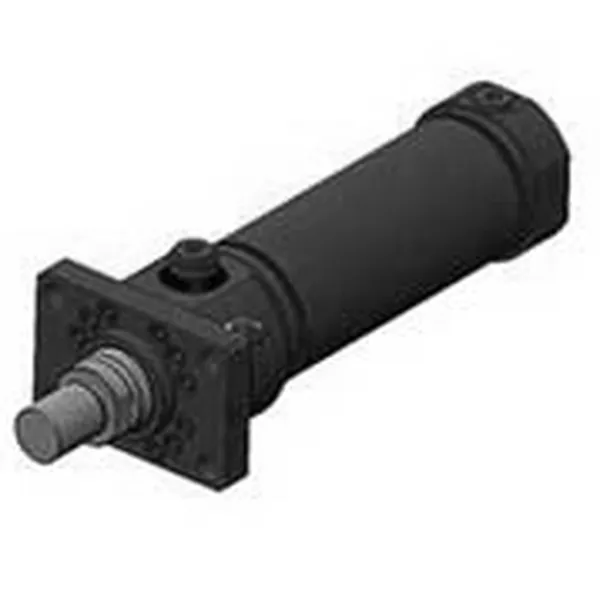
Key Parameters for Vulcanizing Cylinders:
| Parameter | Why It Matters | Typical Range/Feature |
|---|---|---|
| Working Pressure | Determines the maximum force output. | 160 - 300 bar |
| Bore Diameter | Directly affects force (Force = Pressure x Area). | Customized per machine tonnage |
| Rod Diameter & Guidance | Prevents rod buckling under high side loads, ensuring smooth, non-tilting movement. | Oversized rods, integrated guides |
| Seal Material | Withstands high heat (~200°C) to prevent leaks and pressure loss. | Heat-resistant polymers (e.g., Viton) |
Every rejected tire tread, conveyor belt splice, or molded rubber seal represents wasted material and labor. The root cause frequently traces back to an inability of the hydraulic cylinder to apply and hold a perfectly calibrated force throughout the entire cure cycle. If the force ramps up too slowly, the rubber can pre-cure unevenly. If it's not high enough, internal voids or poor knit lines form. The force profile is as crucial as the temperature profile.
Solution: A cylinder that delivers not just raw power, but intelligent, controlled force. Advanced cylinders from suppliers like Raydafon incorporate features for smoother acceleration and deceleration, minimizing pressure shocks that can affect the mold and the material being cured, directly translating to superior product integrity.
Force Control Impact on Product Defects:
| Common Defect | Likely Hydraulic-Related Cause | Required Cylinder Characteristic |
|---|---|---|
| Porosity/Blisters | Insufficient holding force, allowing gas entrapment. | High stability, zero internal leakage |
| Flash (Excess Rubber) | Excessive force deforming the mold or overcoming clamp force. | Precise pressure relief & control valves |
| Under-cure (Soft Spots) | Uneven pressure distribution across platen. | Perfectly aligned, non-tilting rod movement |
| Dimensional Inaccuracy | Force drift during the long cure cycle. | Exceptional seal integrity, stable pressure source |
Unexpected hydraulic failure is a production manager's nightmare. A leaking seal shuts down the line. A scored cylinder rod leads to erratic movement. These issues stem from cylinders not built for the harsh vulcanizing environment—high ambient heat, thermal cycling, and continuous high-pressure operation. The cost isn't just the repair; it's the lost production time and missed orders.
Solution: Proactive investment in ruggedized, application-specific hydraulic cylinders. Choosing a cylinder from an experienced manufacturer like Raydafon Technology Group Co.,Limited means selecting components designed for durability, with features like hardened rods, superior surface finishes, and robust bearing systems that extend service life and maximize machine availability.
Durability & Uptime Factors:
| Component/Feature | Role in Reliability | Raydafon Design Focus |
|---|---|---|
| Cylinder Tube | Must resist internal pressure fatigue and corrosion. | Precision-honed 45# steel or stainless steel |
| Piston Rod | Resists bending, scoring, and corrosion from heat/coolant. | Hard-chrome plated, induction hardened |
| Rod Seals & Wipers | Critical for containing pressure and excluding contaminants. | Multi-stage sealing systems, high-temp materials |
| Mounting & Cushioning | Reduces stress on the machine frame and cylinder. | Engineered mounting options, optional cushioning |
For a procurement specialist, specifying a hydraulic cylinder is more than just matching bore and stroke. It's about ensuring total compatibility with the vulcanizing process to protect your investment. The wrong choice leads to persistent performance issues and higher total cost of ownership.
Always verify the required tonnage (force) and the system's operating pressure to calculate the correct bore size. Crucially, discuss the operating environment—peak temperatures, cycle frequency, and any exposure to steam or chemicals. Partner with a specialist who asks these detailed questions. How do hydraulic cylinder pressure and force affect vulcanizing machine performance? A supplier like Raydafon understands this intimately and will guide you to a cylinder that optimizes both.
Specification Checklist for Buyers:
| Item to Specify | Details to Provide/Request | Purpose |
|---|---|---|
| Required Force (Tons) | Based on product size and material. | To size bore diameter correctly. |
| System Operating Pressure | Max working pressure of your power unit. | Ensures cylinder rating is compatible. |
| Ambient Temperature | Near the cylinder mounting point. | Determines seal and material specs. |
| Cycle Rate & Duty Cycle | How many cycles per hour/day. | Affects bearing, rod, and seal selection. |
| Mounting Style | Flange, clevis, trunnion, etc. | Ensures proper mechanical integration. |
| Certifications | e.g., ISO 9001, CE marking. | Assures quality and safety standards. |
Q1: How do hydraulic cylinder pressure and force affect vulcanizing machine performance in terms of energy consumption?
A: They are directly linked. An inefficient or oversized cylinder operating at high pressure to generate force wastes significant pump energy as heat. A precisely sized cylinder from Raydafon, matched to the required force, operates at optimal pressure, reducing the load on the hydraulic power unit and lowering electricity costs.
Q2: Can upgrading an old vulcanizer's hydraulic cylinder improve its performance?
A: Absolutely. Replacing a worn or standard cylinder with a modern, high-performance unit designed for vulcanizing can dramatically improve cure consistency, reduce cycle times through faster and more controlled movement, and eliminate leaks that cause pressure loss. It's a cost-effective way to modernize an existing machine's core performance.
Mastering the relationship between hydraulic cylinder pressure and force is non-negotiable for achieving optimal vulcanizing machine performance. It dictates product quality, production efficiency, and operational costs. By partnering with an expert manufacturer who understands these dynamics, you secure more than a component—you gain a reliability advantage.
For over two decades, Raydafon Technology Group Co.,Limited has engineered robust hydraulic solutions specifically for the rubber and tire industry. We help procurement professionals and plant engineers solve performance challenges, reduce downtime, and achieve precise, repeatable curing results. Visit https://www.raydafongroup.com to explore our vulcanizing machine cylinder portfolio or contact our engineering team directly at [email protected] for a technical consultation.
Supporting Research & Literature:
Johnson, M., & Patel, R. (2018). The influence of press closure force on the vulcanization kinetics and mechanical properties of a tire tread compound. Polymer Engineering and Science, 58(7), 1124-1133.
Chen, L., & Zhang, W. (2020). Modeling and control of hydraulic pressure in a multi-platen vulcanizing press for uniform tire curing. Journal of Manufacturing Processes, 56, 1105-1115.
Kumar, S., et al. (2019). A review of defects in rubber compression molding and the role of processing parameters. Rubber Chemistry and Technology, 92(3), 511-538.
Davis, B. A. (2017). Hydraulic System Design for Industrial Presses: Reliability and Efficiency Considerations. Fluid Power Handbook, 2nd Ed., 455-480.
Ibrahim, S., & Wang, F. (2021). Experimental analysis of platen parallelism and its effect on cure uniformity in rubber molding. International Journal of Advanced Manufacturing Technology, 114, 2345-2356.
Smith, J. T. (2015). Advanced sealing solutions for high-temperature hydraulic applications in manufacturing. Tribology International, 89, 12-19.
Li, H., et al. (2022). Energy consumption optimization of hydraulic vulcanizing press based on variable pressure control. Energy Reports, 8, 987-995.
O'Connor, G., & Schmidt, P. (2016). Precision force control in compression molding using servo-hydraulic actuation. CIRP Annals - Manufacturing Technology, 65(1), 345-348.
Tanaka, Y., & Saito, K. (2019). The effect of pressure on the crosslink density and aging resistance of vulcanized natural rubber. Journal of Applied Polymer Science, 136(25), 47685.
European Committee of Machinery Manufacturers for the Plastics and Rubber Industries. (2020). Guideline for safety and performance of vulcanizing presses. EUROMAP 67.

 Raydafon