Discover Raydafon Guoup's Ground Helical Gear Racks for sale—perfect for heavy machinery, robotics, and automation, offering superior precision, strength, and durability. These racks feature advanced ground technology and high-quality materials, ensuring smooth operation and reduced noise. Ideal for engineers and industrial professionals, they solve alignment issues and boost efficiency in demanding applications. Stand out with Raydafon Guoup's innovative design and reliable performance, transforming your projects into seamless successes.
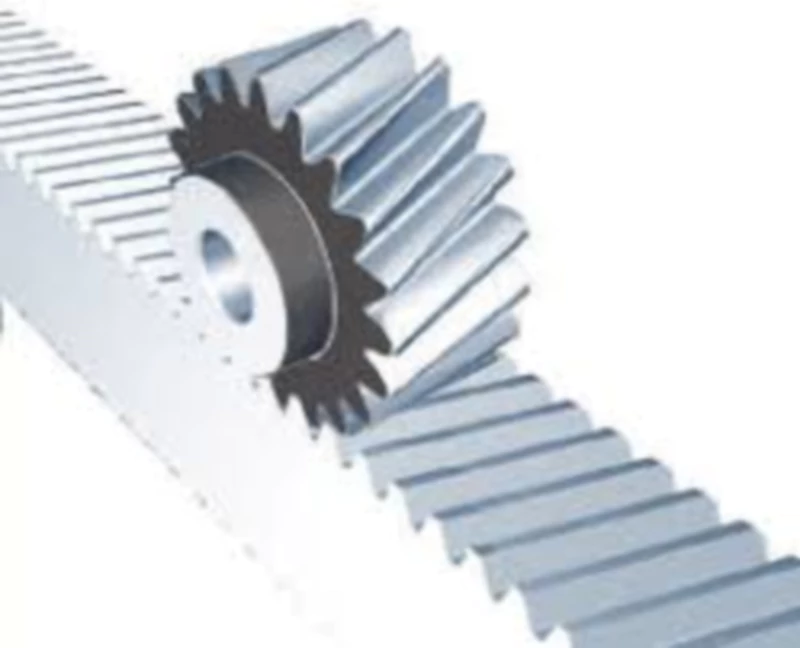
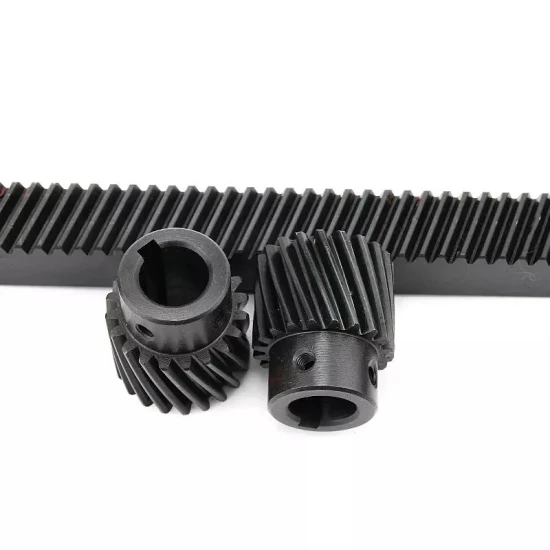
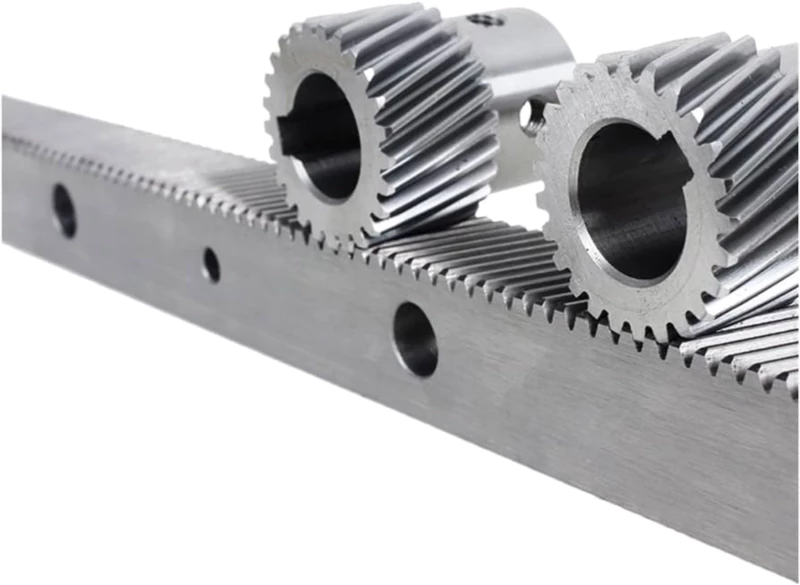
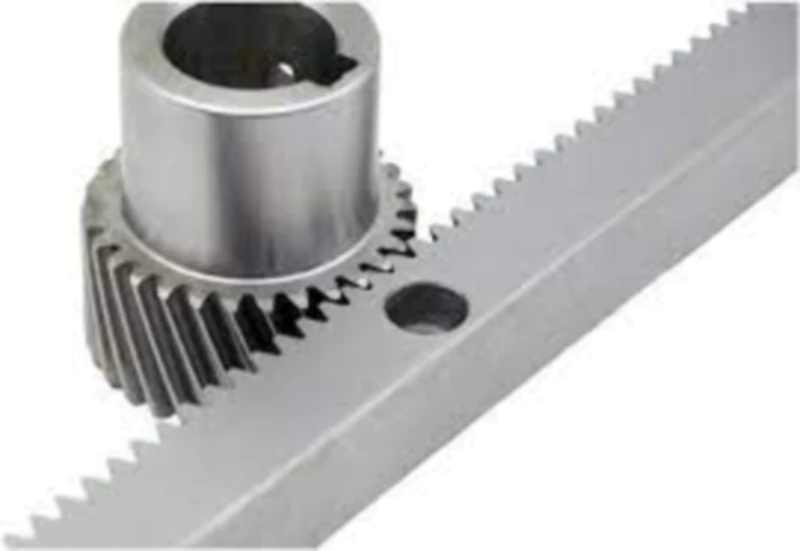
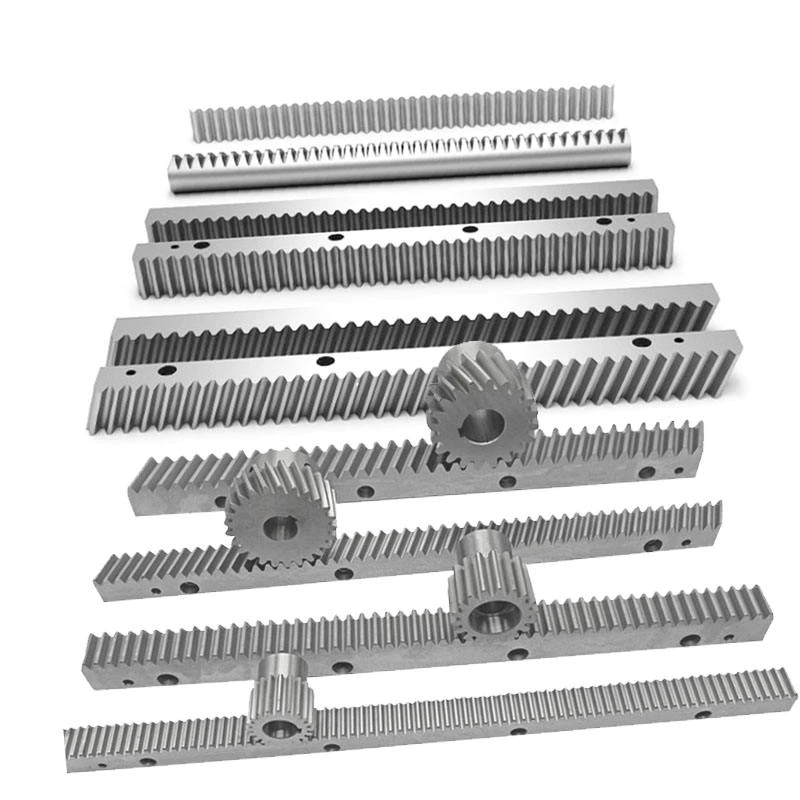
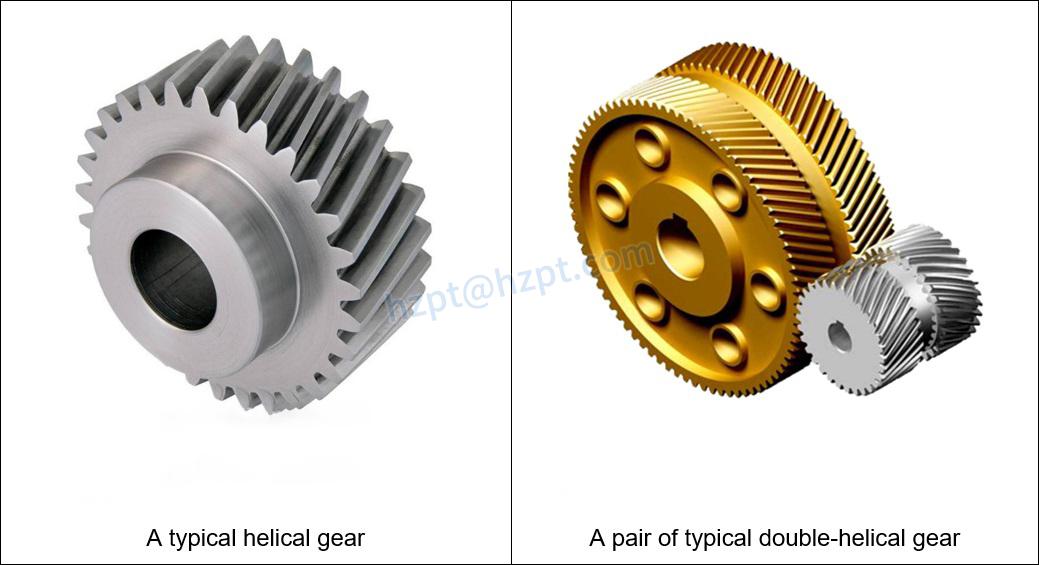
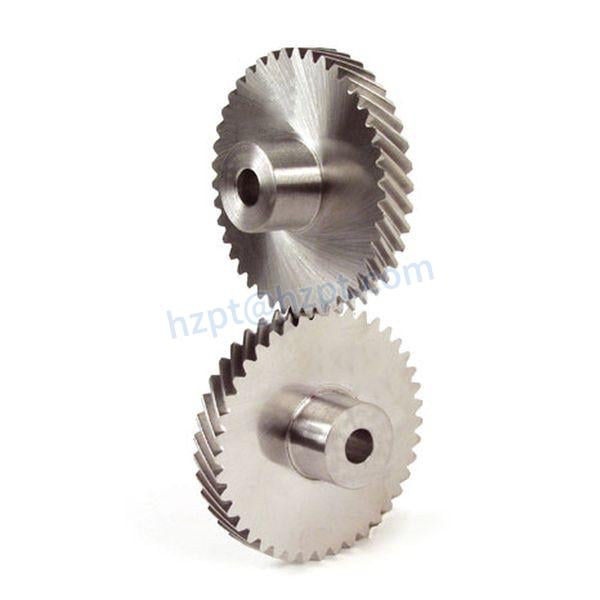
Ground helical gear racks, also known as helical gear racks or helical racks, are mechanical components used in power transmission systems. They are designed to convert rotary motion into linear motion or vice versa.A ground helical gear rack consists of a long, straight bar with a series of helical teeth cut along its length. The teeth are inclined at an angle relative to the axis of the rack, forming a helix shape. This helical tooth profile allows for smooth and efficient engagement with a mating helical gear, which is typically in the form of a cylindrical gear with helical teeth.The main advantage of ground helical gear racks is their ability to transmit large amounts of load and torque while providing a smooth and quiet operation. The helical tooth design distributes the load over multiple teeth, resulting in improved load-carrying capacity and reduced wear compared to other types of gear racks.
Application
1. Automation and Robotics: Ground helical gear racks play a crucial role in automation and robotics systems that require precise linear motion. They are used in robotic arms and gantries to enable accurate and repeatable movement. These gear racks ensure smooth and reliable operation, allowing robots to perform tasks such as pick-and-place operations, assembly, and packaging with high precision.2. Machine Tools: In the field of machine tools, ground helical gear racks are utilized for the linear movement of components such as tool slides, tables, and carriages. They provide the necessary precision and rigidity for applications like milling, turning, grinding, and drilling machines. This enables the machines to achieve accurate positioning, smooth motion, and high-quality surface finishes in metalworking processes.3. Transportation: Ground helical gear racks find applications in the transportation industry, particularly in areas such as rail systems, automotive manufacturing, and logistics. They are used in the movement and positioning of heavy loads, such as doors, ramps, and sliding mechanisms in trains, buses, and commercial vehicles. These gear racks ensure reliable and efficient operation, contributing to the overall functionality and safety of transportation systems.4. Aerospace: The aerospace industry relies on ground helical gear racks for various critical applications. They are used in aircraft control systems, landing gear mechanisms, and aerospace manufacturing equipment. These gear racks provide precise linear motion and positioning required for functions like wing flap control, landing gear extension/retraction, and aircraft assembly processes.5. Printing Presses: Ground helical gear racks are essential components in printing presses, where they enable the precise movement of print heads, paper feed mechanisms, and other printing components. They ensure accurate registration and alignment for multi-color printing, contributing to high-quality print output in industries such as packaging, publishing, and commercial printing.6. Material Handling Equipment: Ground helical gear racks play a vital role in material handling equipment, including conveyor systems, lifting mechanisms, and automated storage and retrieval systems (ASRS). They enable the controlled and precise movement of loads, ensuring efficient transfer, stacking, and sorting of goods in industries such as warehouses, distribution centers, and manufacturing facilities.
How to choose the appropriate ground helical gear rack?
1. Load Capacity: Determine the maximum load that the gear rack will need to handle. Consider both the static load (weight of the object being moved) and dynamic load (forces during operation). Choose a gear rack with a load capacity that exceeds the application requirements to ensure reliable and safe operation.2. Pitch and Module: Determine the desired pitch (distance between teeth) and module (relationship between pitch diameter and number of teeth) based on the specific requirements of your application. This will depend on factors such as desired linear speed, precision, and torque transmission capabilities.3. Length and Mounting: Consider the required length of the gear rack based on the linear travel distance needed. Ensure that the rack length fits within the available space in your system. Also, determine the appropriate mounting method (e.g., bolt-on, integral) based on the mechanical design and requirements of your application.4. Precision and Backlash: Assess the required precision and backlash (clearance between mating gears) for your application. Depending on the level of accuracy needed, choose a gear rack with appropriate tooth profile accuracy and minimal backlash to ensure precise and repeatable motion.5. Material and Surface Treatment: Consider the material of the gear rack based on factors such as load requirements, environmental conditions, and compatibility with mating gears. Common materials include steel and stainless steel. Additionally, consider surface treatments like hardening or coating to enhance durability, wear resistance, and corrosion resistance.6. Noise and Efficiency: Evaluate the noise level and efficiency requirements of your application. Ground helical gear racks generally offer smoother operation and lower noise compared to other types of gear racks. Consider the gear rack's design features, such as tooth profile and surface finish, to minimize noise and maximize efficiency.7. Manufacturer and Quality: Choose gear racks from reputable manufacturers known for their quality and reliability. Consider factors such as manufacturing standards, certifications, and customer reviews to ensure you are selecting a reliable and high-quality product.
How do ground helical gear racks work?
Ground helical gear racks work by converting rotational motion into linear motion or vice versa. They achieve this through the engagement between the helical teeth of the gear rack and the mating helical gear.When a rotational force or torque is applied to the mating helical gear, its helical teeth mesh with the helical teeth of the gear rack. As the gear rotates, the contact between the mating gear and the gear rack causes the gear rack to move linearly along its length. This linear motion is proportional to the rotational motion of the mating gear.The helical tooth profile of the gear rack and the mating gear ensures a smooth and gradual transfer of the rotational motion to linear motion. As the helical teeth of the gear rack and the mating gear engage, the contact between the teeth starts at one end and gradually progresses along the length of the gear rack. This gradual engagement reduces the impact and noise associated with sudden contact, resulting in smoother operation.The angle of the helical teeth on the gear rack and the mating gear determines the direction of the linear motion. By changing the direction of the helix angle, the linear motion can be reversed, allowing for bidirectional operation.The precision and accuracy of the gear rack's tooth profile, along with the tight meshing between the gear rack and the mating gear, are crucial for achieving smooth and efficient operation. Proper lubrication is also essential to reduce friction and wear between the teeth, ensuring the longevity of the gear rack system.
Here are some common questions related to ground helical gear racks and their corresponding solutions:
1. Q: How can I reduce noise and vibration in a ground helical gear rack system?A: To reduce noise and vibration, ensure proper alignment of mating gears, maintain adequate lubrication, and use gear racks with high precision tooth profiles. Additionally, selecting gear racks with reduced backlash and optimizing the gear system's design can help minimize noise and vibration.2. Q: What should I do if my ground helical gear rack shows signs of wear or damage?A: If you notice wear or damage on the gear rack, it is important to replace it promptly to avoid further issues. Regular inspection and maintenance can help identify early signs of wear. Additionally, ensure that the gear rack is properly lubricated and that the load on the system is within the rated capacity to prevent premature wear.3. Q: How can I improve the accuracy and repeatability of my ground helical gear rack system?A: To improve accuracy and repeatability, select gear racks with high precision tooth profiles and ensure proper alignment and meshing with the mating gear. Regularly inspect and adjust the system for any misalignment or backlash. Additionally, consider using closed-loop control systems or feedback mechanisms to compensate for any inaccuracies.4. Q: What can cause excessive backlash in a ground helical gear rack system?A: Excessive backlash can be caused by factors such as worn gear teeth, improper gear meshing, misalignment between gears, or insufficient preload. To address excessive backlash, inspect and replace worn components, ensure proper gear alignment, and adjust preload settings as per manufacturer guidelines.5. Q: How can I increase the load-carrying capacity of my ground helical gear rack system?A: To increase the load-carrying capacity, choose gear racks with higher modulus and tooth strength. Consider using materials with higher load-bearing capabilities or opting for hardened and surface-treated gear racks. Additionally, ensure proper lubrication and maintenance to minimize wear and maximize the gear rack's lifespan.6. Q: How do I select the appropriate lubricant for my ground helical gear rack system?A: Consult the manufacturer's guidelines or recommendations for selecting the suitable lubricant based on factors such as load, speed, temperature, and operating conditions. Consider using lubricants specifically formulated for gear applications and ensure regular lubrication as per the recommended maintenance schedule.
Application
Metric gear racks are widely used in various automation and precision motion control applications, including:Machine tools: Linear movement of slides and carriages.3D printers: Movement of the printing head along the X and Y axes.Robotics: Actuation of arms and grippers.Packaging machinery: Conveyor systems and material handling.Food processing equipment: Linear movement for processing tasks.Greenhouse automation: Ventilation systems, shade control, and irrigation mechanisms.
Types of Ground Helical Gear Rack
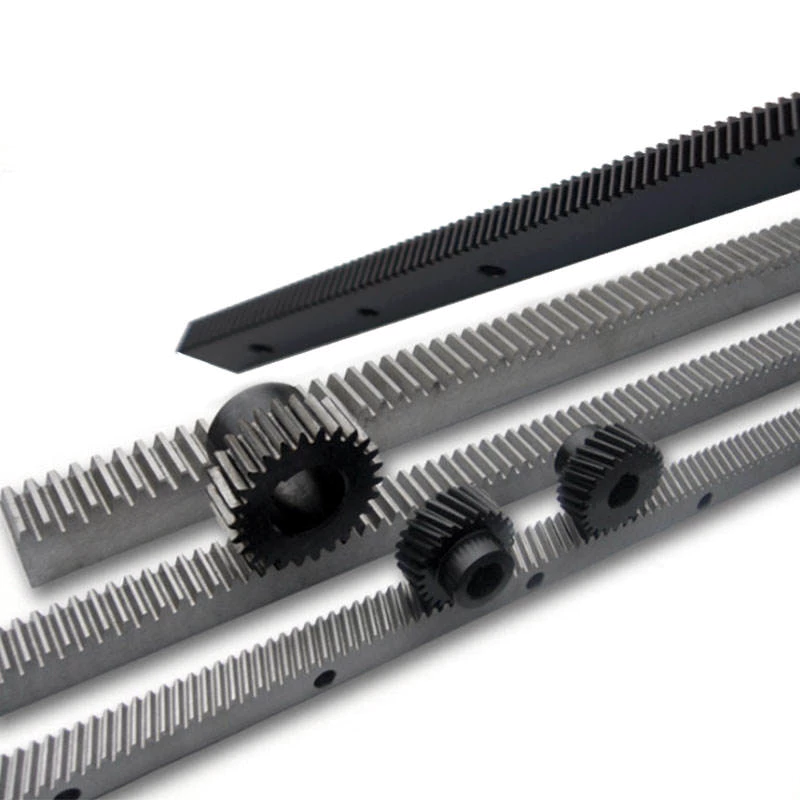
Ground helical gear racks come in various types, differentiated by their design features and applications. Here are some common types of ground helical gear racks:1. Straight-tooth Ground Helical Gear Racks: These gear racks have straight teeth cut at a helix angle along their length. They are suitable for applications that require high load-carrying capacity and smooth operation. Straight-tooth gear racks are commonly used in industrial machinery, automation systems, and material handling equipment.2. Helix-tooth Ground Helical Gear Racks: In this type, the helix angle of the teeth on the gear rack matches the helix angle of the mating gear. This design ensures optimal contact and load distribution, resulting in improved performance and reduced noise. Helix-tooth gear racks are ideal for applications that require high precision and smooth motion, such as CNC machines, robotics, and printing presses.3. Modular Ground Helical Gear Racks: Modular gear racks have a standardized tooth profile based on a specific module size. The module represents the ratio of the pitch diameter to the number of teeth. These gear racks allow for easy interchangeability and compatibility with mating gears of the same module size. Modular gear racks are commonly used in machine tools, automotive applications, and general machinery.4. Stainless Steel Ground Helical Gear Racks: These gear racks are made from stainless steel, which offers excellent corrosion resistance and durability. Stainless steel gear racks are suitable for applications that require resistance to harsh environments, such as food processing, pharmaceuticals, and marine industries.5. Hardened Ground Helical Gear Racks: Hardened gear racks undergo a heat treatment process to increase their surface hardness and wear resistance. This type of gear rack is ideal for applications that involve heavy loads, high speeds, and demanding operating conditions. Hardened gear racks are commonly used in machine tools, aerospace, and industrial automation.6. Custom Ground Helical Gear Racks: Custom gear racks are tailored to specific application requirements, including unique dimensions, tooth profiles, materials, and surface treatments. Custom gear racks are often used in specialized machinery and equipment where standard options may not meet the specific needs.It's important to note that the availability of specific types of ground helical gear racks may vary depending on manufacturers and suppliers. When selecting a gear rack, consider the specific requirements of your application and consult with gear rack manufacturers or suppliers to determine the most suitable type for your needs.
What should you pay attention to when using ground helical gear rack?
When using ground helical gear racks, there are several important considerations to ensure proper operation and maximize their performance. Here are some key points to pay attention to:1. Lubrication: Proper lubrication is essential for reducing friction, preventing wear, and ensuring smooth operation of the gear rack. Follow the manufacturer's recommendations for the type and amount of lubricant to use. Regularly check and replenish the lubrication as needed.2. Alignment and Mounting: Ensure proper alignment and mounting of the gear rack to maintain accurate and efficient operation. Proper alignment helps prevent excessive wear, noise, and premature failure. Follow the manufacturer's guidelines for alignment procedures and torque specifications during installation.3. Load Capacity: Do not exceed the maximum load capacity specified for the gear rack. Overloading can lead to accelerated wear, decreased performance, and potential damage to the system. Consider the static and dynamic loads in your application and select a gear rack that can safely handle the anticipated loads.4. Backlash: Check and adjust the backlash of the gear rack system if necessary. Excessive backlash can lead to positioning errors and reduced accuracy. Follow the manufacturer's instructions for adjusting the backlash to ensure proper meshing between the gear rack and mating gear.5. Maintenance and Inspection: Regularly inspect the gear rack system for signs of wear, damage, or misalignment. Replace any worn or damaged components promptly to prevent further issues. Clean the gear rack and remove any debris or contaminants that may affect its performance.6. Environmental Factors: Consider the operating environment of the gear rack system. Factors such as temperature, humidity, dust, and chemical exposure can impact the performance and lifespan of the gear rack. Take appropriate measures, such as using protective covers or seals, to mitigate the effects of the environment.7. Operator Training: Ensure that operators are trained in the proper handling, operation, and maintenance of the gear rack system. This includes understanding the load limits, lubrication requirements, and any specific operating procedures.8. Regular Inspections: Implement a regular inspection and maintenance schedule for the gear rack system. This helps identify and address any issues early on, ensuring optimal performance and extending the lifespan of the gear rack.
Ground helical Gear Rack Suppliers
Custom rack and pinion gear designs are based on many factors, including design constraints. These considerations are cost, accuracy, load requirements, and peak cycle forces. These cycle forces depend on the weight being moved, the speed versus time provided for the cycle, the friction of the axis bearings, and the external forces that act on the axis.
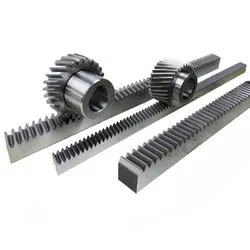
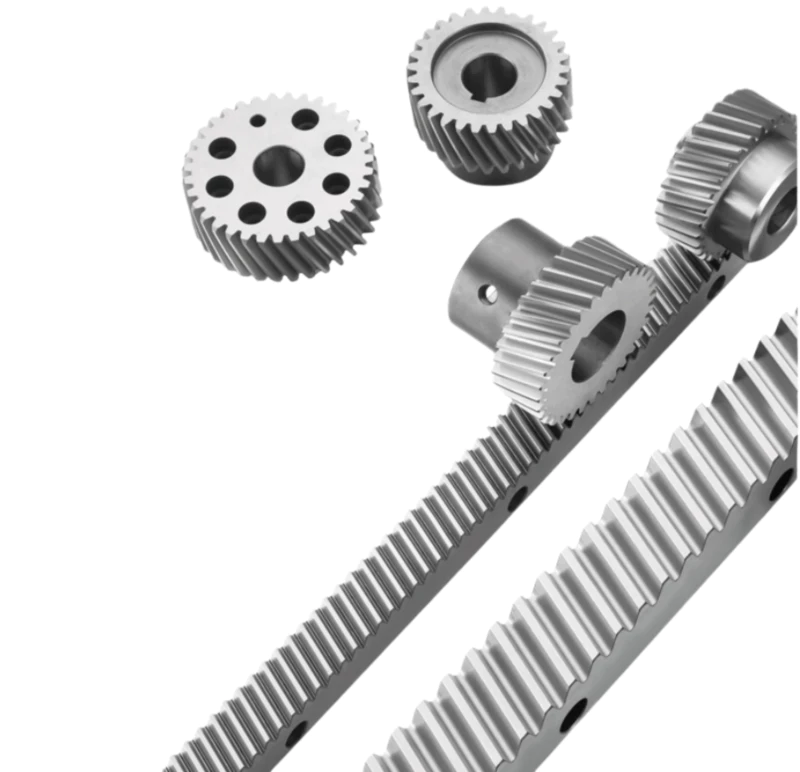
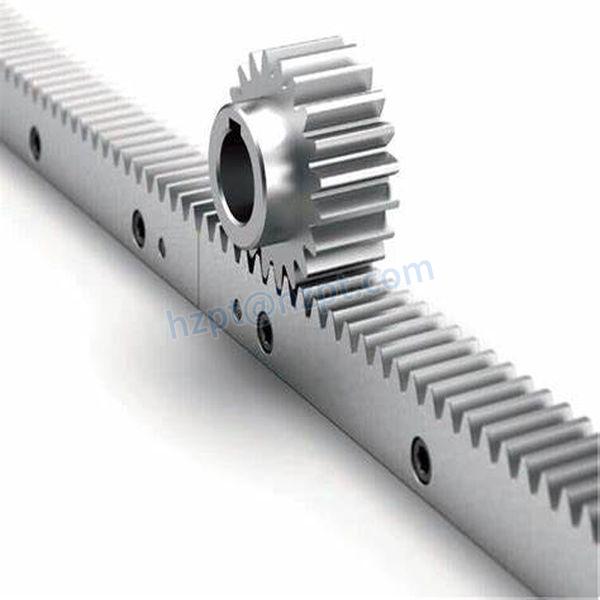
Custom Gear RacksThe gear rack is a long, straight bar with teeth along its entire length. The teeth have the same pitch as the pinion gear, which engages with it.
Custom PinionsAs the pinion gear is turned, its gears mesh with the gear rack, creating linear torque.
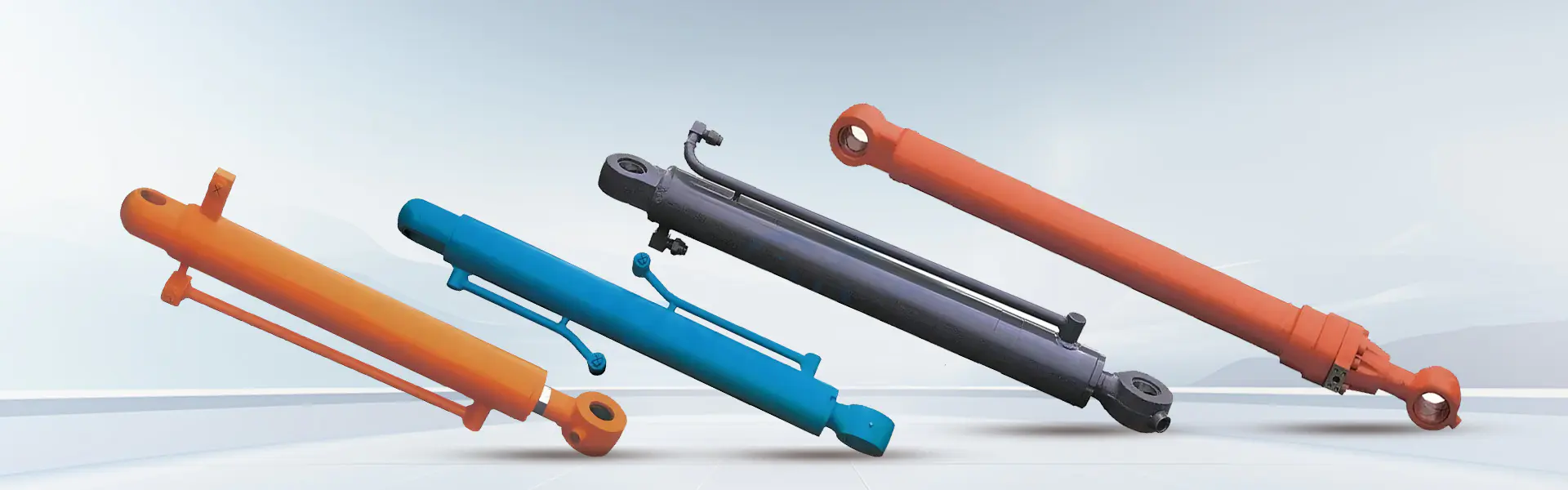
Observe the diagram below to note the required specs to manufacture a custom rack and pinion. For accuracy, three additional components must be considered: Backlash, Pitch Deviation, and Tooth Quality.Rack Quality Levels are selected for certain types of applications – and they also denote the accuracy of the teeth. Tooth Quality is the accuracy of the manufactured tooth flanks. Tooth accuracy affects backlash, positioning accuracy, and the noise level of the rack and pinion set. Backlash is the amount of clearance between the rack and pinion tooth flanks. Pitch Deviation is the difference between the theoretical rack length and its actual length.From custom long gear racks to giant drive pinion gears, your heavy-duty machining projects may need Raydafon Flame Machining Technology to enhance application longevity, quality, and affordability. Raydafon has manufactured many clients' large custom-designed racks and pinions that move their projects, ranging from furnace doors to blast hole drills.In addition, we also offer other gear rack products, as well as agricultural machinery gearboxes, PTO shafts, sprockets and chains, hydraulic cylinders, air compressors, and other products. Customers are welcome to customize or inquire.
We use cookies to offer you a better browsing experience, analyze site traffic and personalize content. By using this site, you agree to our use of cookies.Privacy Policy



 Raydafon