Raydafon Technology Group Co.,Limited
Products
Products
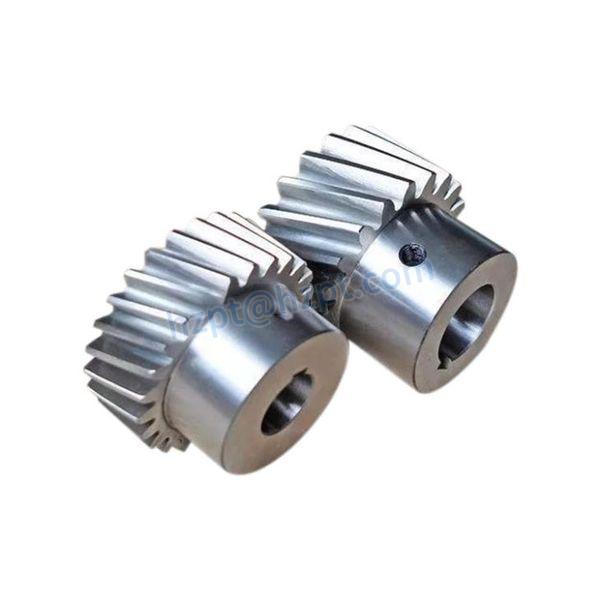
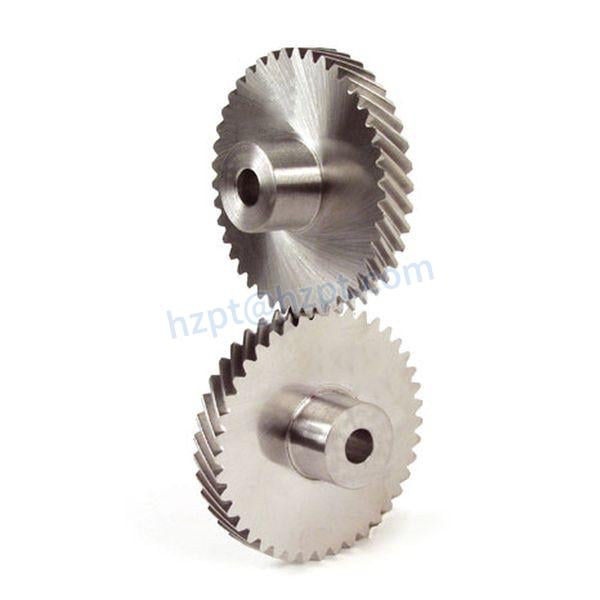
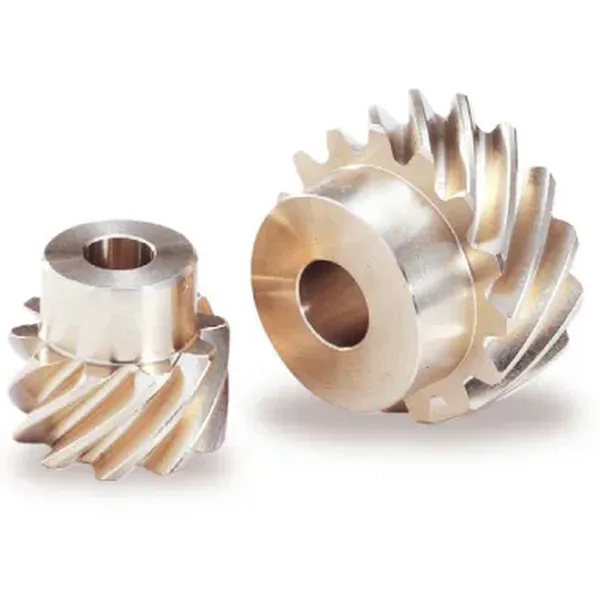
Crossed Helical Gear (Screw Gear)
  • Crossed Helical Gear (Screw Gear)Crossed Helical Gear (Screw Gear)

Crossed Helical Gear (Screw Gear)

Experience unmatched precision with Raydafon Group's Crossed Helical Gear (Screw Gear), designed for smooth, efficient power transmission in demanding industrial applications. Its high-strength material and advanced engineering ensure durability and quiet operation, ideal for machinery requiring reliable performance in automotive, aerospace, or manufacturing sectors. Users enjoy enhanced productivity and reduced downtime, solving alignment and vibration issues. Our unique helical design offers superior efficiency over standard gears, backed by Raydafon Group's quality commitment—discover innovation that drives your success.

Crossed Helical Gear (Screw Gears)

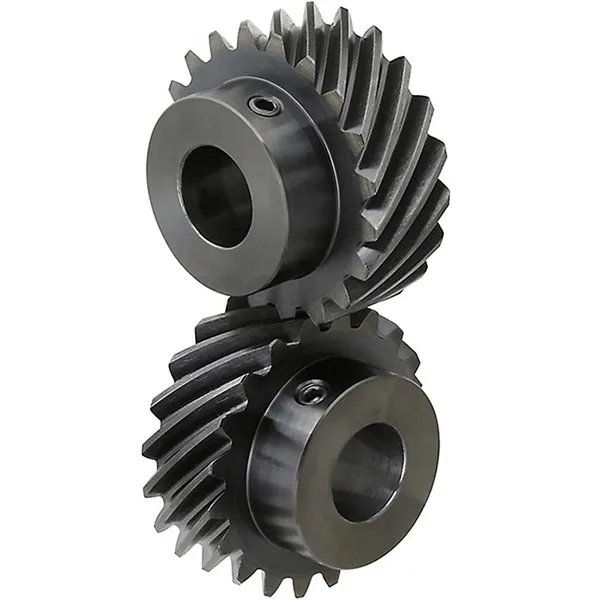
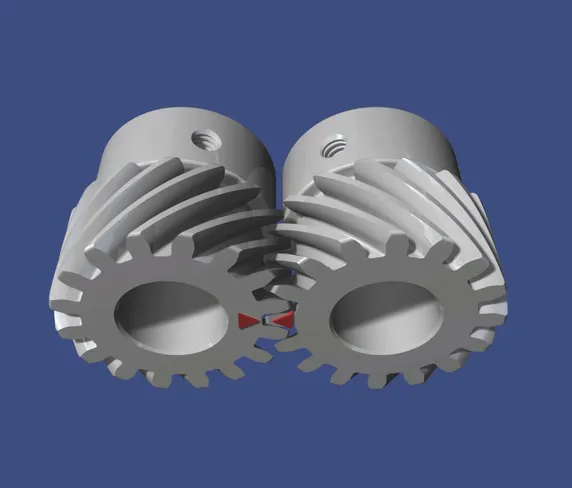
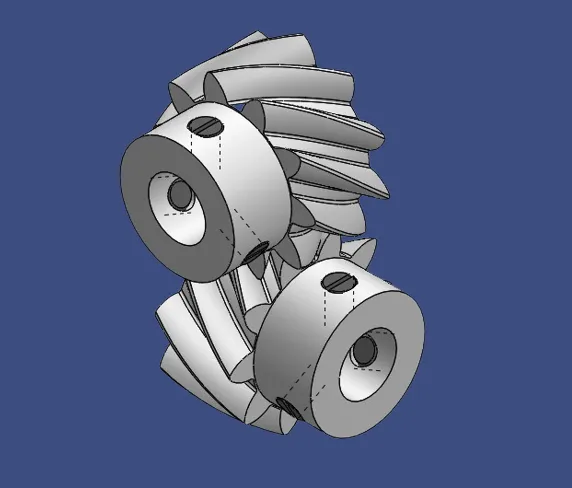
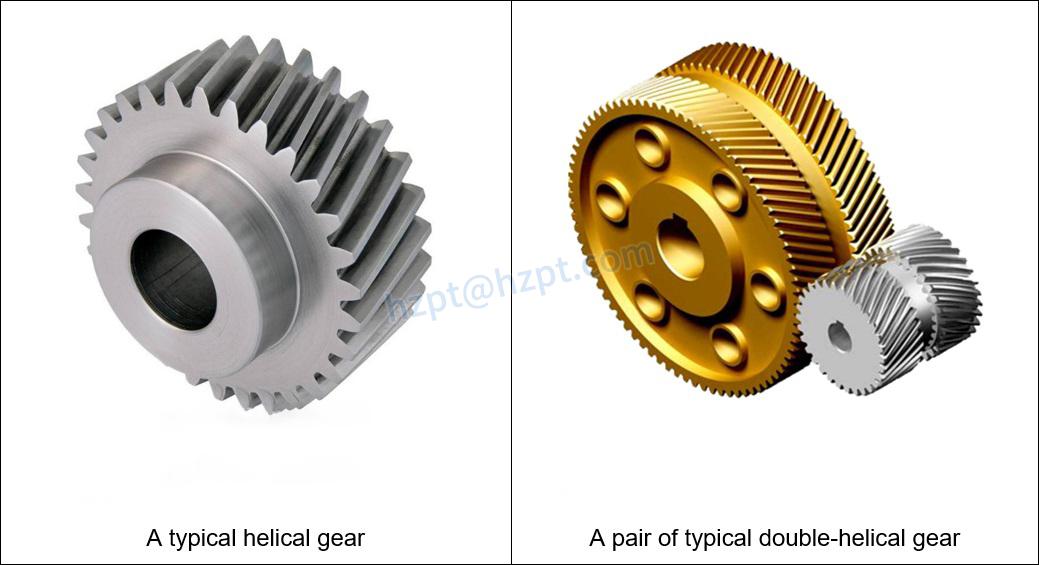
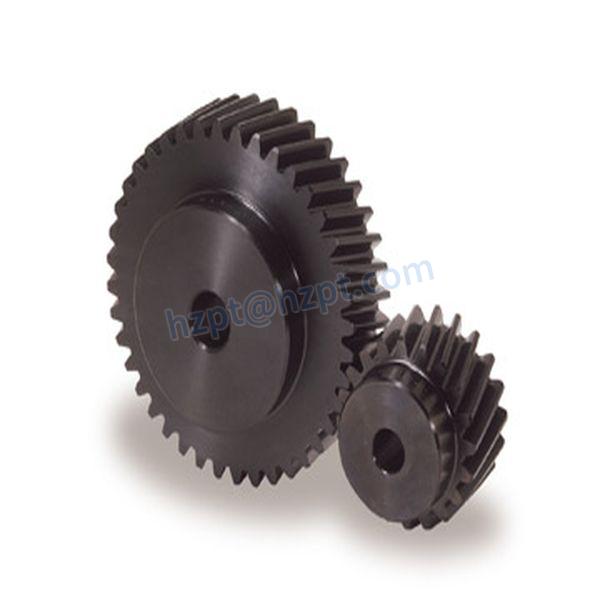
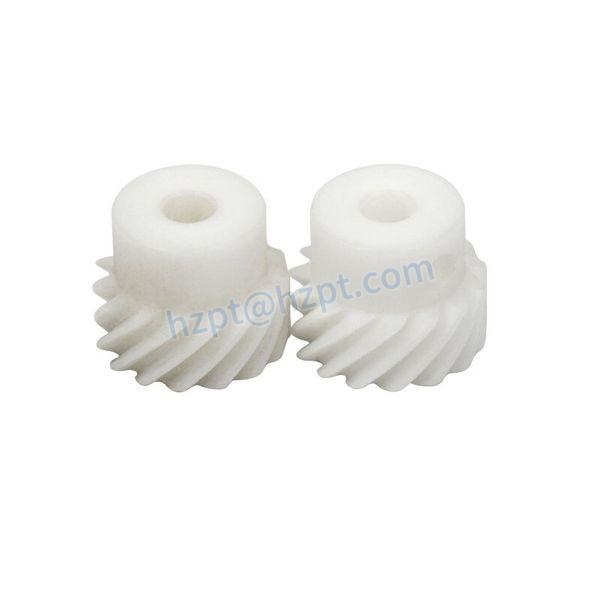
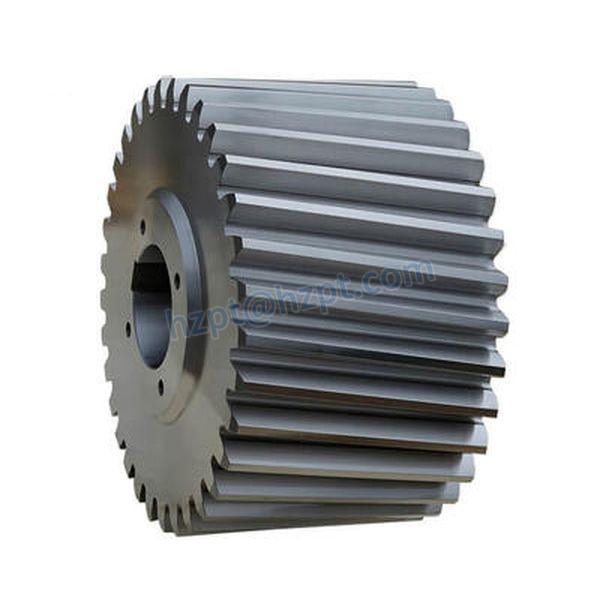
Crossed helical gears, also sometimes called screw gears, are helical gears used in motion transmission between non-intersecting shafts. The helical gears used in parallel shafts have the same helix angle but in opposite directions. An arbitrary helix angle can be chosen for shaft angles other than the parallel. Assuming no profile shift, the intersecting angle of the shafts is the sum of the respective helix angles. Crossed helical gears have point contacts and have lower efficiency than parallel or perpendicular shaft gears and cannot transmit heavy loads. Crossed helical gears are suitable for light load applications, machine tools, camshaft smell IC engines, etc.
Crossed Helical Gear (Screw Gear)Crossed Helical Gear (Screw Gear)

Crossed Helical Gear Description

Model NumberM1,M1.5,M2,M2.5,M3,M4,M5,M8,M12   and etc.
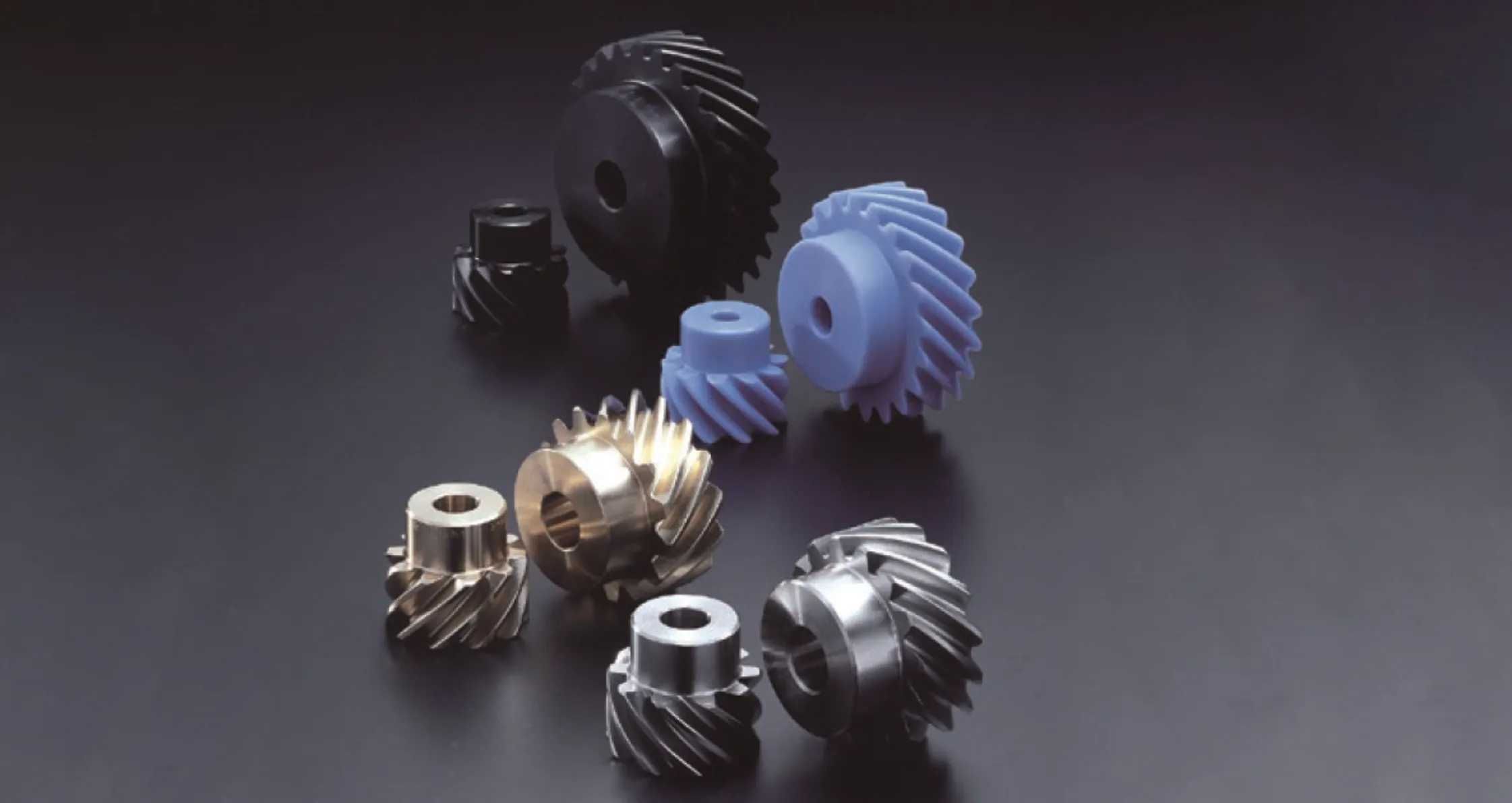
MaterialBrass,   C45 steel, Stainless steel, Copper, POM, Aluminum, Alloy, and so on
Surface   treatmentZinc-plated, Nickel plated, Passivation, Oxidation, Anodization,    Geomet, Dacromet, Black Oxide, Phosphatizing, Powder Coating, and   Electrophoresis.
StandardISO,   DIN, ANSI, JIS, BS and Non-standard.
PrecisionDIN6,DIN7,DIN8,DIN9.
Teeth   treatmentHardened, Milled, or Ground
Tolerance0.001mm-0.01mm-0.1mm
Finishshot/sandblast, heat treatment, annealing, tempering, polishing, anodizing, zinc-plated
Items   packingPlastic   bag+Cartons Or Wooden Packing
Payment   termsT/T,   L/C
Production   lead time20    business days for the sample,25 days for the bulk
SamplesSample price range from $2 to $100.   sample express request paid by clients
Application1.   Automatic controlling machine   2. Semiconductor industry   3. General industry machinery   4. Medical equipment   5. Solar energy equipment   6. Machine tool   7. Parking system   8. High-speed rail and aviation transportation equipment, etc.

Crossed Helical Gear Design

  • The geometry of crossed helical gears
  • Crossed helical gear calculation
  • Crossed helical gears with external and internal teeth
  • Collision check
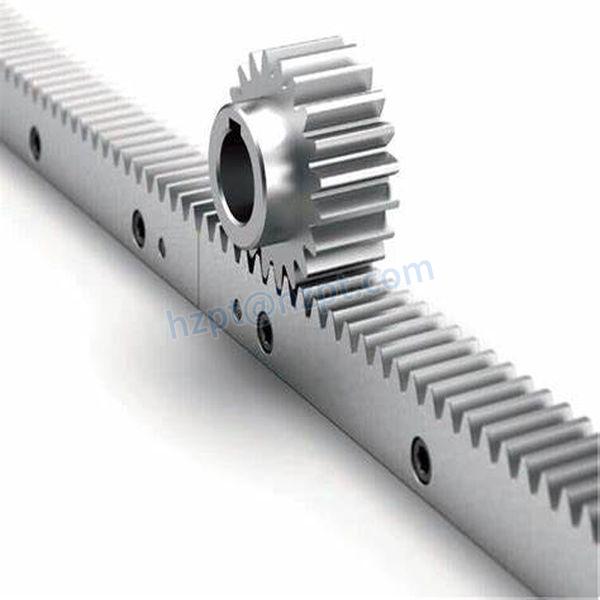
  • Crossed helical gear with rack
  • Fine sizing for crossed helical gear

Crossed Helical Gear Features

While the helix angles must be identical (but with the different hands of the helix) when pairing helical gears, paired crossed helical gears have different helix angles (but with the very hand of the helix). The transmission ratio depends on the ratio of these helix angles.As the name suggests, the crossed helical gear no longer shows a pure rolling movement during the engagement but a screw motion. Typical for screw motions is the permanent sliding of the flanks. Thus, there are no points on the reference bodies of crossed helical gears to which a pure rolling process can be assigned (i.e., the circumferential speeds of the gears are not identical at any point). The reference bodies of crossed helical gear are no longer "pitch bodies" but so-called rotational hyperboloids! A hyperboloid is obtained by rotating a skew straight line around an axis.The constant sliding of the flanks usually requires special lubrication of the crossed helical gears (hypoid gear oil); otherwise, increased wear is expected. Due to the screw course of the teeth, the flanks no longer touch each other line-shaped, but the contact is punctiform (exception: worm gears). In addition, the screw tooth path causes strong lateral forces, which must be absorbed constructively by an appropriate bearing.Therefore, crossed helical gears are designed for moderate torques and speeds, e.g., for drives for machine tools. The use of crossed helical gear also has a disadvantageous effect on transmission efficiency, which is lower due to the sliding processes on the flanks.The advantage of crossed helical gears, in addition to the already mentioned oblique arrangement of the gear axes, is their low-noise operation. In addition, crossed helical gears can be shifted axially within relatively wide limits without negatively influencing power transmission.

Crossed Helical Gear Animation

[video poster="https://hzpt.com/wp-content/uploads/2022/12/Crossed-Helical-Gear-Animation-mp4-image.png?v=1671077134" width="1920" height="1080" mp4="https://hzpt.com/wp-content/uploads/2022/12/Crossed-Helical-Gear-Animation.mp4"][/video]

Differences Between Parallel Helical Gear and Crossed Helical Gear

Parallel Helical GearCrossed Helical Gear
Parallel helical gears can transmit motion and power between parallel shafts only.Crossed helical gears can transmit motion and power between perpendicular but not-intersecting shafts.
Two mating gears must be mounted on two parallel shafts.Two mating gears are mounted on two perpendicular but non-intersecting shafts.
Two mating gears should have the same helix angle but the opposite hand of the helix.Two mating gears may have different helix angles. They may have either same or the opposite hand of the helix.
Engagement between two teeth starts with a point contact but gradually becomes a line contact.Two meshing teeth always have point contact.
The power transmission capacity of parallel helical gear is higher due to broader contact.Crossed helical gear has lower power transmission capacity due to point contact.
It has many applications ranging from small equipment to large industrial fields, including gear trains.It is rarely used in small-size instruments.
Crossed Helical Gear (Screw Gear)Crossed Helical Gear (Screw Gear)

Crossed Helical Gear Applications

Crossed helical gears are used on many lift/elevator and escalator-drive applications due to their compact size and the non-reversibility of the gear. Crossed helical gear is used in presses, rolling mills, conveying engineering, mining industry machines, on rudders. Crossed helical gear has lower power transmission capacity due to point contact. It has a wide area of applications ranging from small equipment to large industrial fields including gear trains. It is rarely used in small-size instruments.

Gear Transmission Maintenance

Proper maintenance is necessary for extending the service life of gears for ordinary working of gear transmissions. The daily maintenance mainly includes the following contents:1. Installation and running-in. The fixing and positioning of the gears should meet the technical requirements during installation. Using a pair of new gears to run in first, that is, run for more than ten hours to dozens of hours under no-load and step-by-step loading. Then clean the box and replace it with new oil before use.2. Proper use of gear transmission, start-up, loading, unloading, and gear shifting, should strive to be stable to avoid impact loads, and Party B is causing teeth to be broken and other failures.3. Frequently check the condition of the lubrication system, such as the amount of lubricating oil, the state of oil supply, the quality of the lubricating oil, etc., to avoid the occurrence of impact loads, and regularly replace and supplement the lubricating oil of specified brand according to the user's specifications.4. Monitor the operating status, watch, touch, and hear for abnormal sounds if the cargo box is overheated, and "work with fault" is prohibited. For gear transmission at high speed, heavy loads, or on essential occasions, an automatic detection device can be adopted to ensure the safety and reliability of gear transmission.5. Install the protective cover. For open gear transmission, the protective cover should be installed to prevent dust, chips, and other debris from entering the tooth surface, accelerating the wear of the tooth surface, and protecting personal safety.Crossed Helical Gear (Screw Gear)

FAQ

Q: If there is no stock, how can Raydafon Machinery provide such fast delivery?A: Our unique manufacturing process, coupled with a large stock of tools, raw materials, and semi-finished products, allows us to complete orders in the shortest possible time.Q: When we send the inquiry, how long will you reply?A: We usually quote within 12 hours after receiving your inquiry. Please call me if you are very urgent, except on national holidays.Q: Can Raydafon Machinery manufacture Gears that are not on this site?A: Of course! We can provide custom gears with the same excellent delivery options as standard gearsQ: Can Raydafon Machinery manufacture metric gears?A: Of course! We have the tools to manufacture any metric size.Q: Do you have a minimum order quantity?A: Our minimum requirements depend on the parts ordered. Send us your drawings, pictures, sample gears, or specifications, and we will let you know the minimum requirements for the position.Q: How to get the lowest price?A: Increase the quantity. The more parts you order, the lower the price you get.Q: Are you a trading company or a manufacturer?A: We are a factory.Q: Can I use other materials besides steel to manufacture rack and pinion?A: The price of racks is not fixed. Generally, we need to quote according to the customer's required parameters, such as material, tooth type, module, length, accuracy, style, spiral angle, and unique customization!
Hot Tags: Crossed Helical Gear Manufacturer, Screw Gear Supplier, Custom Helical Gear Wholesale
Send Inquiry
Contact Info
Get customized quotes for transmission components, gearboxes, and machinery. Our engineers will respond within 24 hours.
Online
X
We use cookies to offer you a better browsing experience, analyze site traffic and personalize content. By using this site, you agree to our use of cookies. Privacy Policy
Reject Accept