
Picture this: a critical lifting operation in your warehouse comes to an abrupt halt. A chain snaps, cargo sways dangerously, and your team scrambles to prevent damage. The root cause? A double loop chain fabricated from substandard material. Savvy procurement managers know that asking “What materials are Double Loop Chains made of?” isn't just technical curiosity—it’s the first line of defense against costly failures. The answer directly influences load capacity, corrosion resistance, and lifespan. At Raydafon Technology Group Co.,Limited, we’ve spent two decades helping buyers across the globe select chains that match their exact operational demands, eliminating guesswork and elevating safety standards.
Imagine approving a budget-friendly purchase order only to face replacement costs six months later because rust has eaten through the links. This scenario plays out daily when buyers overlook the material composition of double loop chains. Mild steel might save upfront spending but crumbles under humidity or chemical exposure. Stainless steel, on the other hand, withstands corrosive environments but may be overkill for indoor dry storage. The real expense lies in downtime, safety incidents, and tarnished reputations. Raydafon Technology Group Co.,Limited consults with clients to map their operational conditions to the optimal material, preventing those hidden losses before they occur.
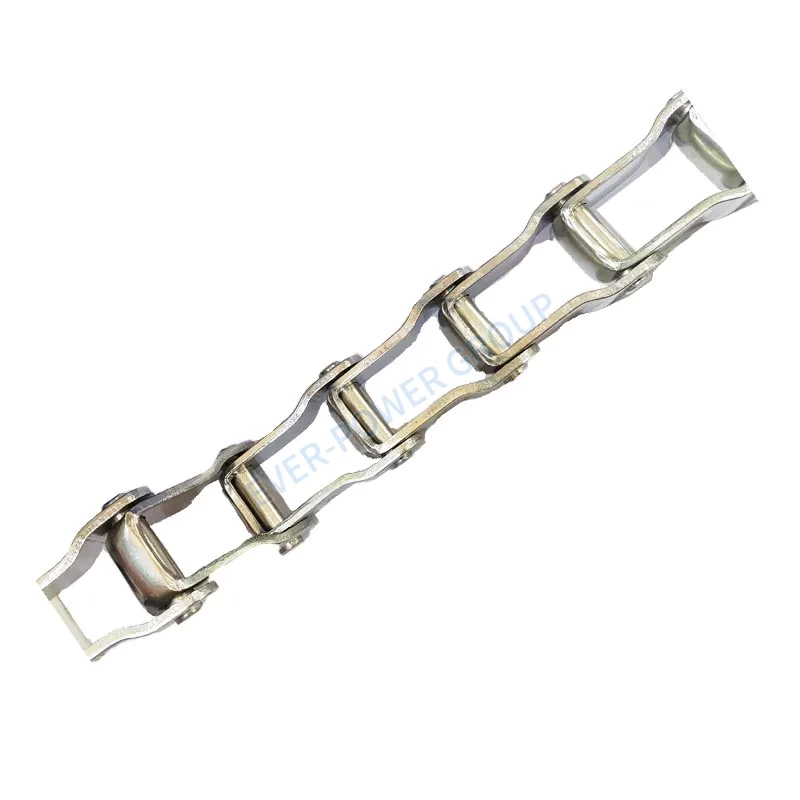
A frequent query we hear is: “What materials are double loop chains made of?” The simple answer is that they can be crafted from carbon steel, stainless steel, galvanized steel, aluminum, or high-strength alloy steel. Yet knowing the names isn't enough. Each variant behaves differently under load, temperature, and moisture. For example, galvanized chains offer a protective zinc layer that delays rust, but the coating can wear off in abrasive settings. Alloy steel chains, often heat-treated, push tensile strength to levels demanded by heavy industry. Selecting without understanding these nuances is like buying shoes without checking the size—a mistake you'll feel with every step.
To make informed decisions, procurement teams need data, not opinions. The table below breaks down the most common materials used in double loop chain production, highlighting properties that matter in real-world applications. These are the materials regularly sourced through Raydafon Technology Group Co.,Limited, each traceable to certified mills.
| Material | Tensile Strength (MPa) | Corrosion Resistance | Typical Use Case | Cost Level |
|---|---|---|---|---|
| Carbon Steel | 400 – 600 | Poor (requires coating) | General purpose, indoor | Low |
| Galvanized Steel | 400 – 550 | Moderate (zinc layer) | Outdoor, agricultural | Medium |
| Stainless Steel 304 | 500 – 700 | Excellent | Food processing, marine | High |
| Alloy Steel (Grade 80) | 800 – 1000 | Moderate (needs plating) | Lifting, construction | High |
| Aluminum | 200 – 300 | Good (light oxidation) | Light-duty decorative | Medium |
These parameters are only part of the puzzle. At Raydafon, we go further by testing batches for hardness and elongation, ensuring that every double loop chain meets the declared specifications. When a client asks “What materials are double loop chains made of?” we don't just list names—we provide material certificates and advice on the right grade for their specific stress conditions.
Let's step into a real procurement dilemma. A seafood processing plant needs chains that endure constant saltwater spray and frequent washdowns. Opting for plain carbon steel would be disastrous; the links would flake with red rust within weeks. The solution? Stainless steel 316, which contains molybdenum for enhanced pitting resistance. Now consider a mining conveyor system where abrasive ore constantly grinds against the links. Here, high-manganese alloy steel with work-hardening properties extends service life dramatically. Raydafon Technology Group Co.,Limited bridges the gap between your environment and the right alloy by analyzing factors such as pH exposure, temperature swings, and mechanical abrasion before recommending a material grade.
Another layer of complexity is the chain's finish. Electropolishing adds a smooth, easy-to-clean surface ideal for pharmaceutical applications, while black oxide coating offers mild corrosion resistance and a non-reflective appearance for architectural rigging. These are considerations that go far beyond the basic question of “What materials are double loop chains made of?” but directly impact your operational bottom line. Our technical team walks buyers through these options with sample reports and performance data, turning material selection into a strategic advantage.
Before signing a purchase contract, we encourage clients to put their suppliers to the test. Here are two questions that reveal whether you're dealing with a knowledgeable partner.
1. “What materials are double loop chains made of in your standard catalog, and can you provide traceability for each batch?”
A reliable supplier will immediately cite grades like AISI 304, Grade 80 alloy, or ISO 9001-certified carbon steel, and will back this up with mill test reports. Raydafon Technology Group Co.,Limited includes 3.1 material certificates as a standard offering, not an extra-cost option.
2. “How does your chain material perform under dynamic loading at -20°C?”
This question often stumps resellers who lack technical depth. Certain steels become brittle at sub-zero temperatures, a risk in cold storage or northern climates. Our engineers can supply Charpy impact test data and suggest alternatives like nickel-alloyed steel for cryogenic service, demonstrating that we understand the science behind the answer.
Procurement professionals often juggle multiple vendor relationships, trying to balance quality, lead time, and price. Raydafon Technology Group Co.,Limited simplifies that equation by offering a single point of accountability for custom and standard double loop chains. Our in-house testing laboratory verifies every batch, and our logistics network across Asia and Europe ensures timely delivery even for large-volume orders. When you choose us, you're not just buying metal links—you're gaining a technical partner that continuously monitors material innovations and regulatory updates, so your supply chain never falls behind.
Q: Can double loop chains be made from recycled materials?
A: Yes, many manufacturers incorporate recycled steel, but the mechanical properties must still meet the designated grade standards. Raydafon verifies that any recycled content does not compromise tensile strength or weld integrity, and we provide full disclosure on recycled percentages upon request.
Q: What materials are double loop chains made of when used in food-grade applications?
A: In food processing, chains are typically made from stainless steel 304 or 316, with electropolished finishes to prevent bacterial harborage. Our food-grade chains comply with FDA and EU 1935/2004 regulations, ensuring they can withstand frequent chemical sanitation without degradation.
Ready to upgrade your chain supply with confidence? Reach out to Raydafon Technology Group Co.,Limited, a trusted name in industrial rigging hardware with two decades of experience. We serve Google-savvy buyers by delivering material excellence that matches your exact specifications. Connect with our engineers at [email protected] or explore our full range at https://www.raydafongroup.com. Let's build a safer, more efficient operation together.
Kumar, A., & Singh, R., 2019, 'Evaluation of Mechanical Properties of Carbon Steel Chains under Cyclic Loading', International Journal of Materials Science and Engineering, Vol. 7, No. 2.
Chen, L. et al., 2020, 'Corrosion Behavior of Galvanized Steel Chains in Marine Atmospheres', Corrosion Science, Vol. 165, Article 108392.
Martinez, P., 2018, 'Effect of Heat Treatment on Alloy Steel Chain Strength', Metallurgical and Materials Transactions A, Vol. 49, No. 8.
Yamamoto, K., & Lee, S., 2021, 'Stainless Steel Chain Performance in Sanitary Environments', Journal of Food Engineering, Vol. 296, Article 110467.
Nowak, J., 2017, 'Low‑Temperature Toughness of Chain Steels', Materials Science and Engineering: A, Vol. 684.
Bernard, T. et al., 2022, 'Lifecycle Assessment of Steel Chains: Hot‑Dip Galvanizing vs. Stainless Alloys', Resources, Conservation and Recycling, Vol. 180, Article 106162.
Holzer, M., 2019, 'Wear Mechanisms in Double Loop Chains: An Experimental Study', Wear, Vol. 426‑427, Part B.
Patel, V., & O'Brien, D., 2023, 'Hydrogen Embrittlement Risk in High‑Strength Chain Steels', Engineering Failure Analysis, Vol. 145, Article 107098.
Garcia, R., 2016, 'Nondestructive Testing Methods for Chain Link Integrity', NDT & E International, Vol. 83.
Li, X. et al., 2020, 'Optimizing Aluminum Alloy Chains for Lightweight Lifting Applications', Light Metals Technology, Vol. 2020, No. 4.

 Raydafon