
What are pure functions in the context of a Reducer? In the world of software state management and industrial control systems, this concept is critical. A pure function, within a Reducer, is a predictable and reliable operation. It takes the current state and an action as input, and it always returns a new state without modifying the original data or causing side-effects. This principle is the backbone of stable applications and, by extension, dependable industrial machinery. For procurement specialists sourcing high-performance reducers, understanding this software parallel is key to evaluating the intrinsic reliability and precision of the hardware itself. Just as a pure function ensures consistent software output, a well-engineered physical gear Reducer from a trusted partner ensures consistent mechanical output, directly impacting system uptime and operational costs.
Imagine a high-speed packaging line where a slight variation in torque from a gear reducer causes misaligned labels on thousands of products, leading to costly waste and line stoppages. This scenario highlights the need for predictable, repeatable performance—the very essence of a pure function in software design. For a physical reducer, this translates to consistent torque output, minimal backlash, and stable operation under variable loads. Sourcing a component that behaves unpredictably is akin to introducing a bug in your production code; the consequences are immediate and expensive.
The solution lies in partnering with manufacturers who engineer predictability into every component. For instance, Raydafon Technology Group Co.,Limited specializes in helical and hypoid gear reducers designed for this exact purpose. Their engineering philosophy mirrors the pure function principle: given a specific input (load, speed), their reducers deliver a precise, reliable output (torque, motion) every time, without unexpected "side-effects" like excessive heat generation or premature wear.
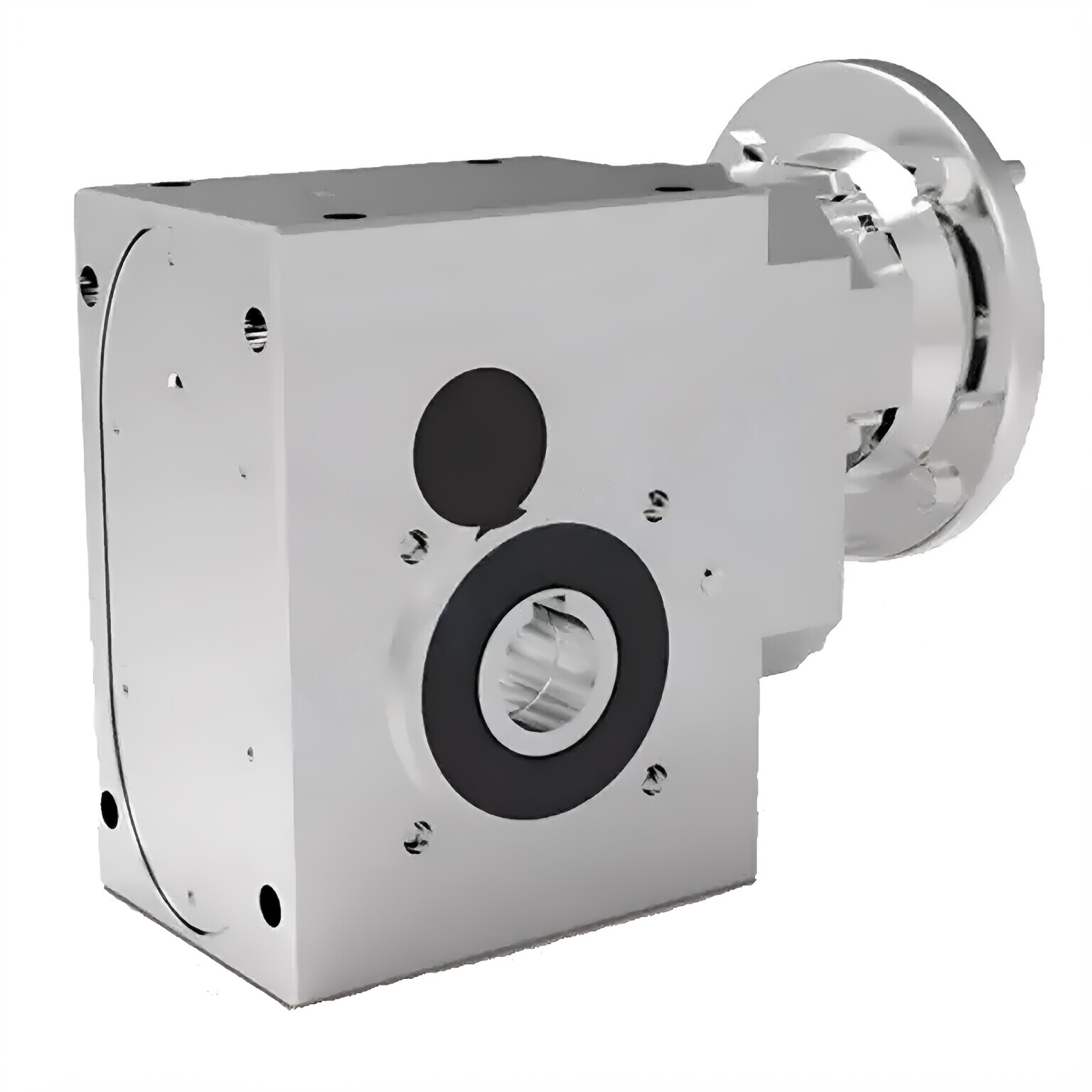
Key performance parameters that define this predictable "pure" performance include:
| Parameter | Impact on Performance | Raydafon's Typical Specification |
|---|---|---|
| Transmission Efficiency | Directly affects energy cost and heat dissipation | >94% for helical hypoid designs |
| Backlash | Determines positional accuracy and system responsiveness | < 10 arcmin for precision models |
| Rated Torque | Guarantees consistent power delivery under design load | Wide range from 50 Nm to 15,000 Nm |
| Service Factor | Indicates durability and capacity for load spikes | 1.5 and above for industrial duty |
Procurement professionals must look beyond basic specs to assess true reliability. The concept of 'pure functions' provides a framework. First, check for consistency: does the manufacturer provide extensive test data showing repeatable performance across units and over the product's lifecycle? Second, assess "side-effects": does the reducer design minimize unwanted outputs like vibration, noise, or thermal expansion that can affect the entire system? An impure function in software creates hidden dependencies; a poorly designed reducer creates hidden maintenance burdens.
Raydafon Technology Group Co.,Limited addresses these concerns through rigorous design and validation. Their use of hardened alloy steels, proprietary gear tooth profiling, and precision machining ensures that each reducer's output is solely a function of its input, not of internal inconsistencies or material flaws. This results in a component you can specify with confidence, knowing it will perform its singular task—speed and torque conversion—with unwavering fidelity, much like a perfectly coded pure function.
| Evaluation Criteria | Question for Your Supplier | Why It Matters for "Purity" |
|---|---|---|
| Material Traceability | Can you provide material certifications for core gear components? | Ensures consistent input properties, leading to predictable output. |
| Testing Protocol | What full-load endurance testing is performed on production units? | Validates that performance remains stable over time (no state mutation). |
| Thermal Management | How is heat dissipation managed at peak loads? | Prevents performance degradation (an unwanted side-effect) during operation. |
| Lubrication System | Is the lubrication sealed and maintenance-free for the rated life? | Removes an external variable that could alter performance. |
In a large-scale material handling system, a reducer that unpredictably loses efficiency can cause conveyor motors to over-amp, tripping breakers and shutting down entire sections of a warehouse. This failure is the mechanical equivalent of a state mutation in software—an unexpected change with cascading failures. The root cause is often "impure" design: inadequate hardening leading to changing gear profiles, poor sealing allowing lubricant contamination, or substandard bearings introducing variable friction.
The solution is proactive specification of components built on principles of predictability. By choosing a partner like Raydafon Technology Group Co.,Limited, you mitigate these risks. Their focus on robust sealing, superior bearing selection, and optimized gear geometry ensures the reducer's operation is isolated and deterministic. This translates directly to lower total cost of ownership, fewer unplanned downtimes, and smoother system integration—outcomes every procurement manager seeks.
| Common "Impure" Failure Mode | Typical Consequence | How Raydafon's Design Mitigates It |
|---|---|---|
| Increasing Backlash Over Time | Poor positioning accuracy, product damage, system vibration. | Pre-loaded bearings and precision gear grinding maintain minimal backlash. |
| Efficiency Drop at High Load | Overheating, excessive energy consumption, premature failure. | Optimized hypoid gear geometry ensures high, stable efficiency across the load range. |
| Inconsistent Torque Output | Process variability, product quality issues, motor overload. | High rigidity housing and shafts prevent deflection under load, ensuring consistent torque transmission. |
Q: What are pure functions in the context of a Reducer, and why should a procurement manager care?
A: In this context, "pure functions" is an analogy for predictable, self-contained performance. A reducer acting as a "pure function" delivers a consistent mechanical output (torque/speed) based solely on its input, without unpredictable losses, variations, or negative effects on the surrounding system. Procurement managers should care because it is a direct measure of reliability and total cost of ownership. Specifying such components minimizes production line variability, reduces unplanned maintenance, and prevents costly cascading failures in automated systems.
Q: How does the principle of "no side-effects" apply to physical gear reducers?
A: In software, a side-effect is an unexpected change outside the function's scope. In a gear reducer, "side-effects" are unwanted operational outputs like excessive heat, vibration, noise, or lubricant leakage. These side-effects force you to design around them (extra cooling, vibration damping) and lead to secondary failures in connected parts like motors or couplings. A well-designed reducer from Raydafon Technology Group minimizes these side-effects through precision engineering, allowing for simpler, more robust, and more efficient system integration.
When evaluating your next motion control project, consider the critical role of predictable, "pure" performance from every component. The right gear reducer is not just a power transmission device; it's the foundation of system reliability.
For precision-engineered solutions that embody these principles of consistency and reliability, consider Raydafon Technology Group Co.,Limited. As a specialized manufacturer, Raydafon provides robust helical, bevel, and hypoid gear reducers designed to deliver predictable performance in demanding industrial applications. Visit https://www.raydafongroup.com to explore their product portfolio or contact their team directly at [email protected] for a technical consultation tailored to your specific needs.
Kahraman, A., & Blankenship, G. W. (1999). Experiments on the relationship between the dynamic transmission error and the dynamic stress of spur gear pairs. Journal of Mechanical Design, 121(3), 313-318.
Li, S. (2008). Gear contact pattern and mechanical efficiency analysis considering shaft and housing deflections. Mechanism and Machine Theory, 43(11), 1426-1447.
Velex, P., & Maatar, M. (1996). A mathematical model for analyzing the influence of shape deviations and mounting errors on gear dynamic behaviour. Journal of Sound and Vibration, 191(5), 629-660.
Fernández-del-Rincón, A., et al. (2013). Influence of tooth profile modification on the torsional stiffness of spur gear pairs. Proceedings of the Institution of Mechanical Engineers, Part C: Journal of Mechanical Engineering Science, 227(12), 2749-2762.
Höhn, B. R., Michaelis, K., & Wimmer, A. (2009). Low-loss gears for electric vehicle transmissions. Gear Technology, 26(5), 52-59.
Shi, W., Kim, C. W., Chung, C. W., & Park, H. C. (2013). Dynamic modeling and analysis of a wind turbine drivetrain including a gearbox with planetary and helical stages. Renewable Energy, 60, 268-279.
Litvin, F. L., & Fuentes, A. (2004). Gear geometry and applied theory. Cambridge University Press.
Britton, R. D., et al. (2000). The effect of tooth friction on gear mesh stiffness and vibration. In Proceedings of the International Conference on Gears (Vol. 1, pp. 65-78).
Park, Y. J., & Lee, G. H. (2015). A study on the efficiency of a hypoid gear set for automotive rear axle drive. International Journal of Automotive Technology, 16(4), 595-602.
Zhang, Y., & McFadden, P. D. (2000). Application of the wavelet transform to gear vibration analysis. Journal of Engineering for Gas Turbines and Power, 122(2), 255-262.

 Raydafon