Raydafon Technology Group Co.,Limited
Products
Products
Spur Gear Rack
  • Spur Gear RackSpur Gear Rack

Spur Gear Rack

Experience precision and durability with the Spur Gear Rack from Raydafon Group, designed for seamless motion control in machinery. Ideal for engineers and manufacturers seeking reliable performance, it features high-strength materials and a compact design that outlasts competitors. Solve alignment issues effortlessly and enhance your projects with confidence—transform your applications today with this essential component.
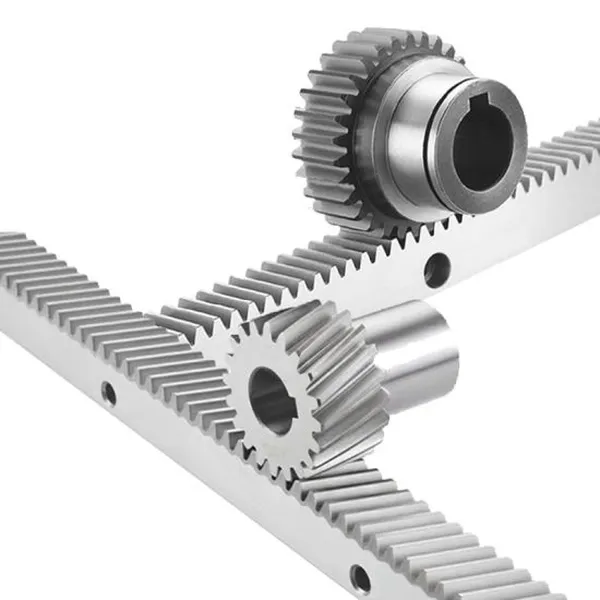
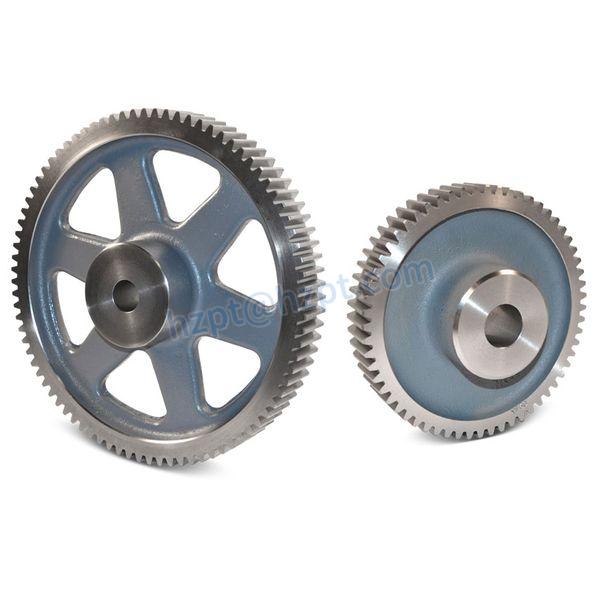
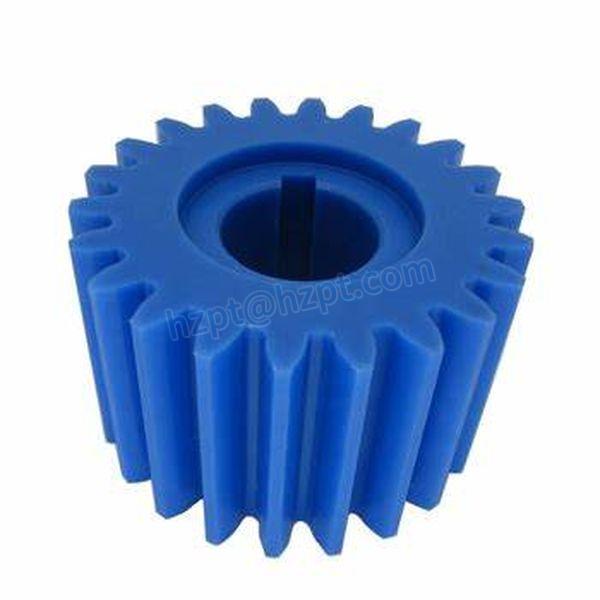
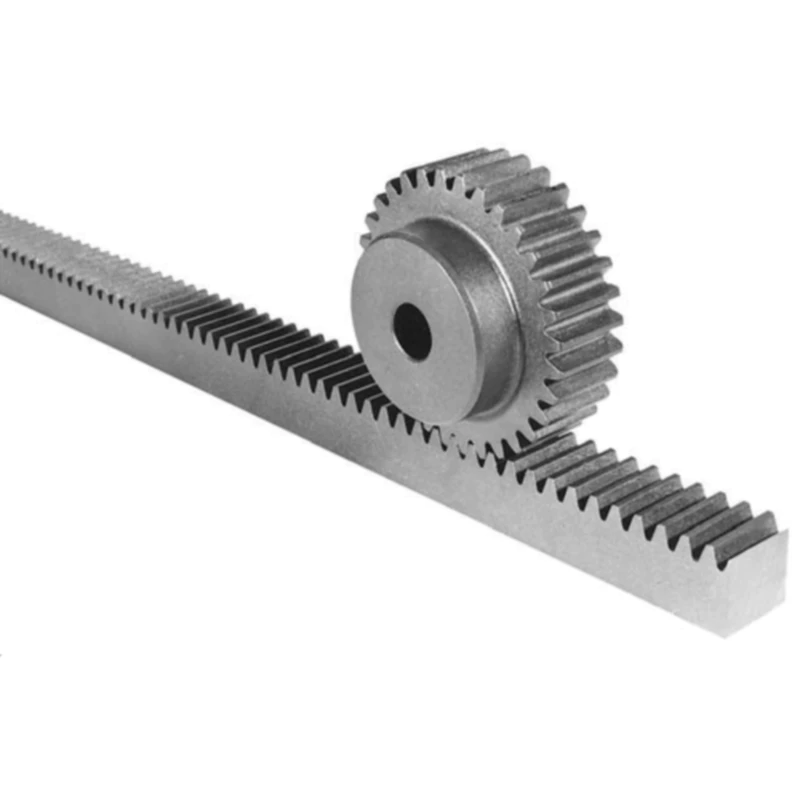
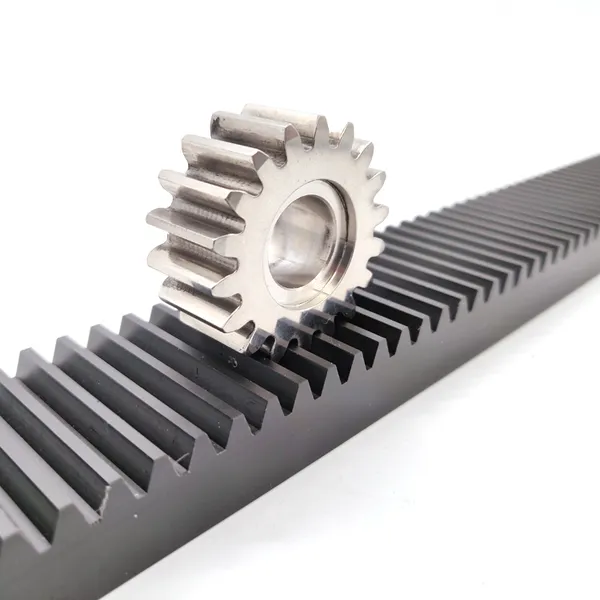
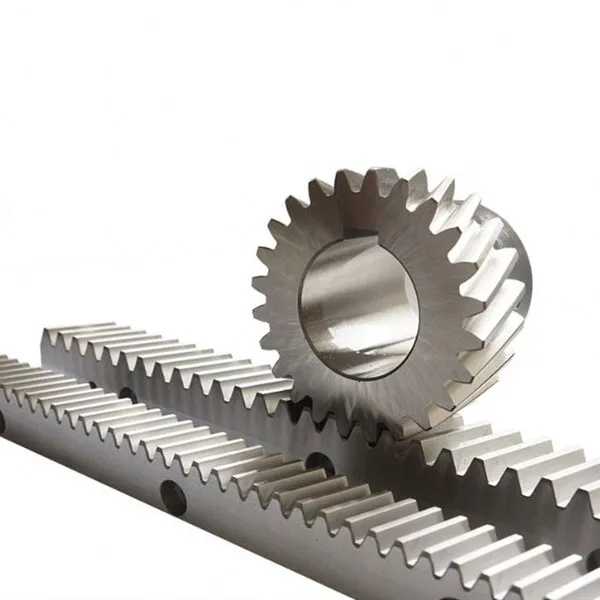
A spur gear rack, also known simply as a gear rack, is a linear motion component that consists of a straight bar with teeth along its length. It is designed to mesh with a spur gear, which is a cylindrical gear with teeth that are parallel to the gear's axis. The gear rack and spur gear work together to convert rotary motion into linear motion or vice versa.There are many ways to use gears. Gear racks are utilized to convert rotating movement into linear motion. A gear rack has straight teeth cut into one surface of a square or round rod section and operates with a pinion, a small cylindrical gear meshing with the gear rack. Generally, gear rack and pinion are called "rack and pinion." For example, as shown in the picture, equipment is used to rotate a parallel shaft with the gear rack.Raydafon has many gear racks in stock to provide many racks and pinion variations. If the application requires a long length requiring multiple gear racks in series, we have shelves with the tooth forms correctly configured at the ends. These are described as "gear racks with machined ends." When a rack and pinion gear is produced, the tooth cutting and heat treatment processes can cause it to try & go out of true. We can control this with special presses & remedial methods.There are applications where the gear rack is stationary while the pinion traverses, and others rotate on a fixed axis while the gear rack moves. The former is used widely in conveying systems, while the latter can be used in extrusion systems and lifting/lowering applications.As a mechanical element to transfer rotary into linear motion, gear racks are often compared to ball screws. There are pros and cons to using racks in place of ball screws. The advantages of a gear rack are its mechanical simplicity, sizeable load-carrying capacity, no limit to the length, etc. One disadvantage, though, is the backlash. The advantages of a ball screw are the high precision and lower backlash, while its shortcomings include the limit in length due to deflection.
Spur Gear RackSpur Gear Rack

Types of Spur Gear Rack

Rack and pinion gears are available in three variations:
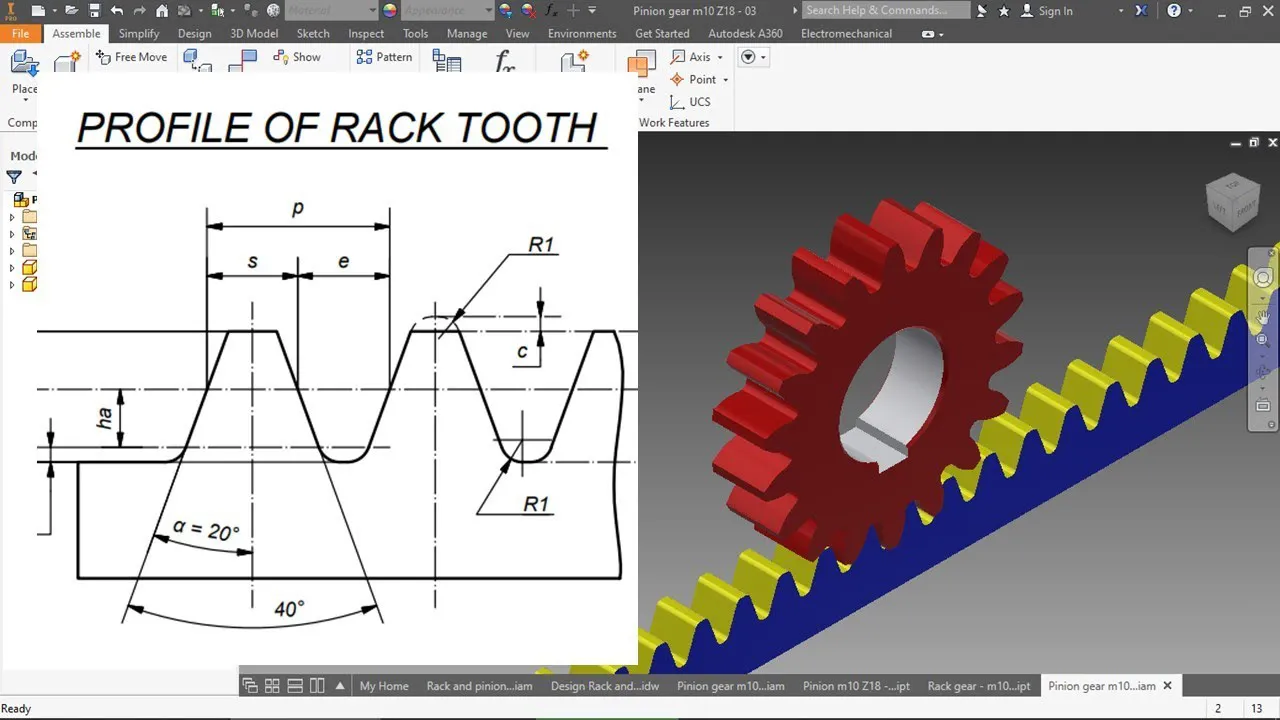
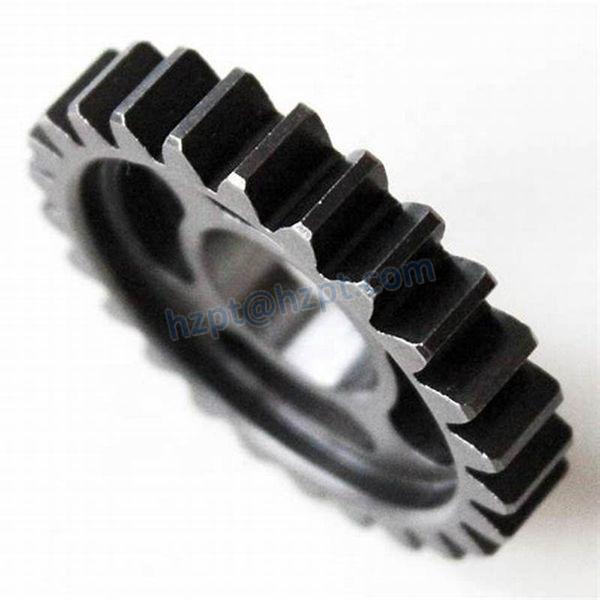
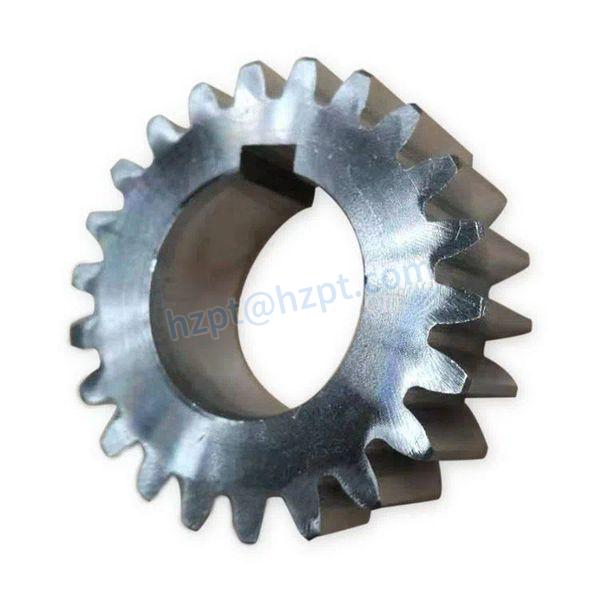
  • Straight teeth have the tooth axis parallel to the axis of rotation. Straight teeth that run parallel to the axis of the gear. Load movement or transfer is manual or walk-behind.
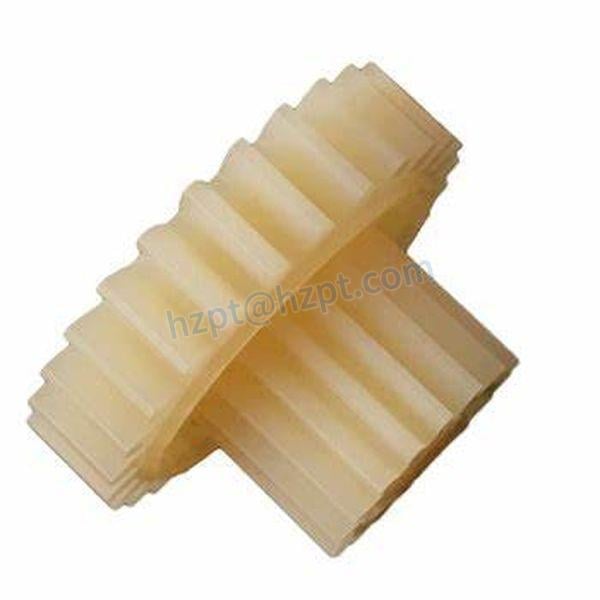
  • Helical teeth gears provide continuous engagement along the tooth length and are often quieter and more efficient than straight tooth gears. Helical tooth gears resemble spur gears in the rotation plane but include teeth twisted along a helical path in the axial direction.
  • Roller pinion drives use bearing-supported rollers that mesh with the teeth of that rack to provide minimal to no backlash.

How Do Spur Gear Rack Work?

A rack and pinion are used when converting rotational movement to linear motion (or vice versa). A bar-shaped gear with an infinite (flat surface) radius of a cylindrical gear is called a rack, and a meshed spur gear is called a pinion. A rack can be extended by combining as many racks as possible with machining operations on end faces. A helical rack is a bar-shaped gear with a diagonal linear tooth trace used when silence and high-speed rotation are required, and it can mesh with a helical gear.

Rack and Pinion Gear Design

Gears transmit power by rotating one gear to move the meshed equipment. On the other hand, in rack and pinion, the combination of rack gear in the form of a gear stretched in a rod form, and a small-diameter gear (pinion gear) converts rotational motion into a linear signal to transmit power. For example, in a case where the pinion gear is stationary and the rack moves, the pinion is often connected to the output shaft of the motors. A separate structure of machine elements supports the driven side of the rack. The pinion gear's repetitive rotational motion produces a repeated forward-backward movement of the frame.The gear is attached to a shaft by a key for the power transmission mechanism, and its shaft is supported with the ball or sleeve bearings. In the case of a rack and pinion, when the driven member is the rack, more creativity in design is needed since the stand is in the form of a rod (circular or rectangular). When the rack is circular, sleeve bearings on the market can be used, and the bearing support structure is relatively simple. On the other hand, to ensure the constant meshing of the pinion and the rack, it is necessary to provide means to stop the rack from rotating. The round racks have the gear teeth cut on the rod so that the cross-section differs from the standard gears. They have the shape of a crescent moon with their shoulders shaved off. As a result, their strength is less than that of rectangular racks.When the rack is rectangular, it becomes necessary to make suitable bearings. In this case, they can also act as the means to stop rack rotation. Also, the cross-sections of rectangular racks are, unlike that of round racks, the same as those of gears with the same strength as those of the same specifications.Spur Gear RackRack and pinion have the characteristics of their function being drastically altered depending on whether the rack is stationary or movable. When the rack is movable, its motion is in a straight line, and its use is mainly to take advantage of this behavior. For example, it is used as a jack or clamping system or, by modifying the tip of a rack, utilized as the pusher of a workpiece.When the rack is stationary, the pinion gear rolls on the rack, and its application method varies widely. Positioning of machines, hand press, horizontal transport, elevating mechanism, etc., can be used as examples.Also, if two racks are laid facing each other and a pinion is placed between them, the repeated forward-backward motion of the pinion will produce an alternating advance and retreat motion. For applications of this mechanism, work escapement mechanisms and air-driven rotary actuators can be listed.Racks can be placed midstream in conveyor transport mechanisms. The items on the pallet can be flipped or rotated by incorporating freely rotating pinions on transport pallets that engage the racks. This is one particular application example.Pinion gear and rack possess a high degree of freedom in their applications, depending only on the users' ideas.

Rack and Pinion Gear Material

As for the materials of racks and pinions, strength, abrasion resistance, and absorbency are considered. Carbon steel is the most common material used to make racks and pinion steel.
  1. This material is excellent for most settings and usage scenarios.
  2. The relative strength of the rack tooth combined with the pinion makes this material effective.
  3. Additionally, the material is well-suited for heat-treating to increase strength, allows for the insertion of threaded or bolt holes, upholds dimensional stability, and may be straightened if required.
AluminumAluminum is a bluish, silver-white, malleable, ductile, light, trivalent, metallic element with good electrical and thermal conductivity, high reflectivity, and oxidation resistance. It is lighter than steel but not as strong.
BrassBrass has good strength, high-temperature ductility and cold flexibility, electrical conductivity, corrosion resistance, bearing properties, and low magnetic permeability.
Bronze Bronze is a copper base alloy that consists of copper as the primary alloying metal and one or more other metals, such as tin, zinc, or phosphorus. Silicon bronze is a typical bronze alloy.
Cast IronCast iron is a very durable iron alloy with high amounts of carbon. Types include ductile iron, gray iron, and white cast iron grades. Differences in grades are due to variations in composition and processing.
Carbon / Alloy SteelSteel is a commercial iron that contains carbon in any amount up to about 1.7 percent as an essential alloying constituent. Many grades of carbon and alloy steel are available. They may require a coating to protect against corrosion, however.
Hardened SteelSteel may be hardened in several ways. These include a variety of quenching techniques in oil and water, passing the steel through induction chambers, etc. Quickly cooling steel during processing freezes, traps, and packs the carbon atoms inside the shrunken iron crystals, producing a rigid and brittle metal. Although challenging, it cannot absorb much shock or impact without breaking.
Stainless SteelStainless steel is chemical and corrosion-resistant and can have relatively high-stress ratings. Most stainless steels cannot be hardened to the same degree as carbon steels.
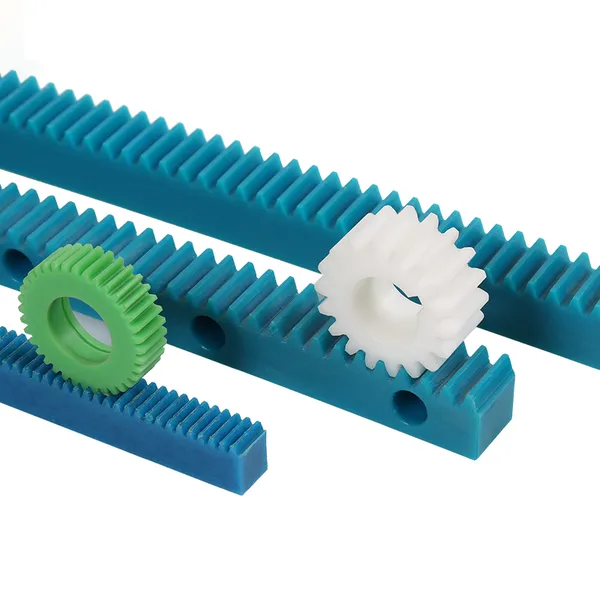
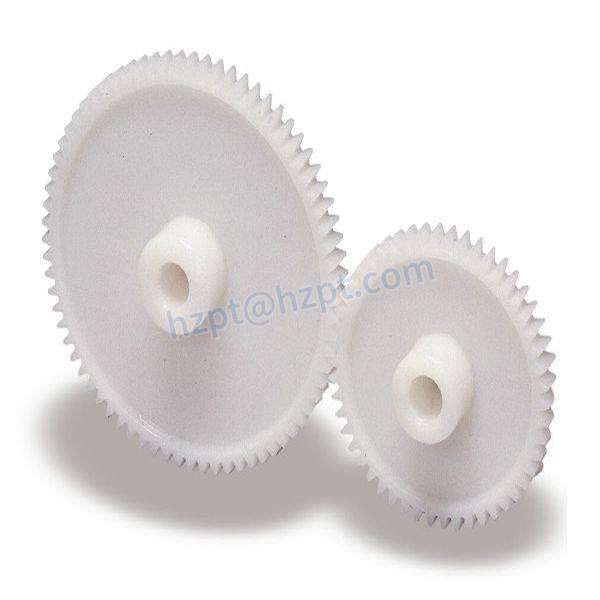
AcetalAcetal is a stable plastic material with inherent self-lubricating properties that can be enhanced with lubricating fillers.
DelrinDelrin is an engineered plastic with toughness, stiffness, wear and abrasion resistance, and low frictional characteristics.
NylonNylon, comprising several grades of polyamides, is a general-purpose material in wide use. It is challenging and resistant and has good pressure ratings.
PolycarbonatePolycarbonate is an extremely tough polymer that can be machined to close tolerances. Lubrication is sometimes needed, as the wear properties of polycarbonate are not as good as some other polymers.
Spur Gear RackSpur Gear Rack

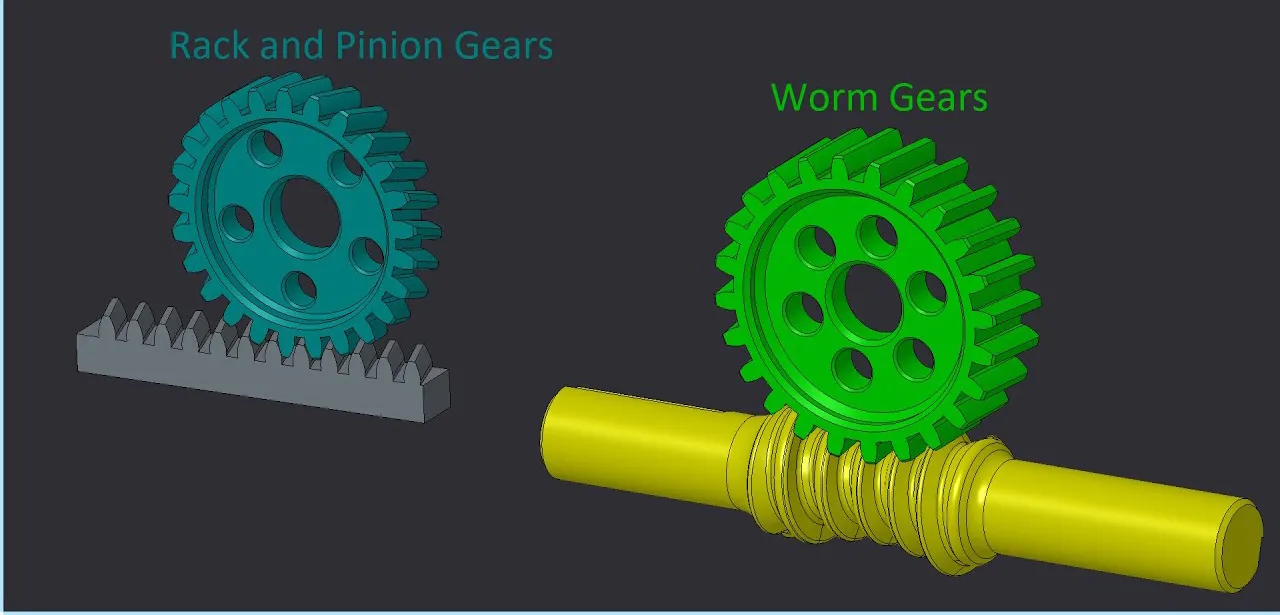
Difference Between Spur Gear Rack and Worm Gear

Spur Gear Rack: The rack and pinion are used to convert between rotary and linear motion. The rack is the flat, toothed part, and the pinion is the gear. Rack and pinion can convert from rotary to linear or from linear to rotary. The diameter of the gear determines the speed that the rack moves as the pinion turns. Rack and pinions are commonly used in the steering system of cars to convert the rotary motion of the steering wheel to the side-to-side motion in the wheels. Rack and pinion gears give a positive motion especially compared to the friction drive of a wheel in a tarmac. In the rack and pinion railway, a central rack between the two rails engages with a pinion on the engine allowing the train to be pulled up very steep slopes.Worm Gear: A worm is used to reduce speed. For each complete turn of the worm shaft, the gear shaft advances only one tooth of the gear. In this case, with a twelve-tooth gear, the speed is reduced by a factor of twelve. Also, the axis of rotation is turned by 90 degrees. Unlike ordinary gears, the motion is not reversible, a worm can drive a gear to reduce speed, but a gear cannot drive a worm to increase it. As the speed is reduced, the power to the drive increases correspondingly. Worm gears are a compact, efficient means of substantially decreasing speed and increasing power. Ideal for use with small electric motors.Spur Gear Rack

Where Are Spur Gear Rack Used?

Rack and pinion gearing is used for lifting mechanisms (vertical movement), horizontal direction, positioning mechanisms, and stoppers and to permit the synchronous rotation of several shafts in general industrial machinery. On the other hand, they are also used in steering systems to change the direction of cars. With this mechanism, the pinion, mounted to the steering shaft, is meshed with a steering rack to transmit rotary motion laterally (converting it to linear motion) so you can control the wheel. In addition, racks and pinions are used for various other purposes, such as toys and lateral slide gates. The characteristics of rack and pinion systems in steering are as follows: simple structure, high rigidity, small and lightweight, and excellent responsiveness.

Examples of Spur Gear Rack in Everyday Life

An excellent example of a rack and pinion gear system can be seen on trains designed to travel up steep inclines. The wheels on a train are steel, and they cannot grip the steel track. Usually, the train's weight is enough to allow the train to travel safely and at speed along the way. However, if a train has to go up a steep bank or hill, it is likely to slip backward. A rack and pinion system has been added to some trains to overcome this problem. A large gear wheel is added to the center of the train, and an extra track with teeth, called a  rack, is added to the track. As the train approaches a steep hill or slope, the gear is lowered to the track and meshes with the rack. The train does not slip backward but is pulled up the steep slope.Spur Gear Rack

Spur Gear Rack Suppliers

Custom rack and pinion gear designs are based on many factors, including design constraints. These considerations are cost, accuracy, load requirements, and peak cycle forces. These cycle forces depend on the weight being moved, the speed versus time provided for the cycle, the friction of the axis bearings, and the external forces that act on the axis.
  • Custom Gear RacksThe gear rack is a long, straight bar with teeth along its entire length. The teeth have the same pitch as the pinion gear, which engages with it.
  • Custom PinionsAs the pinion gear is turned, its gears mesh with the gear rack, creating linear torque.
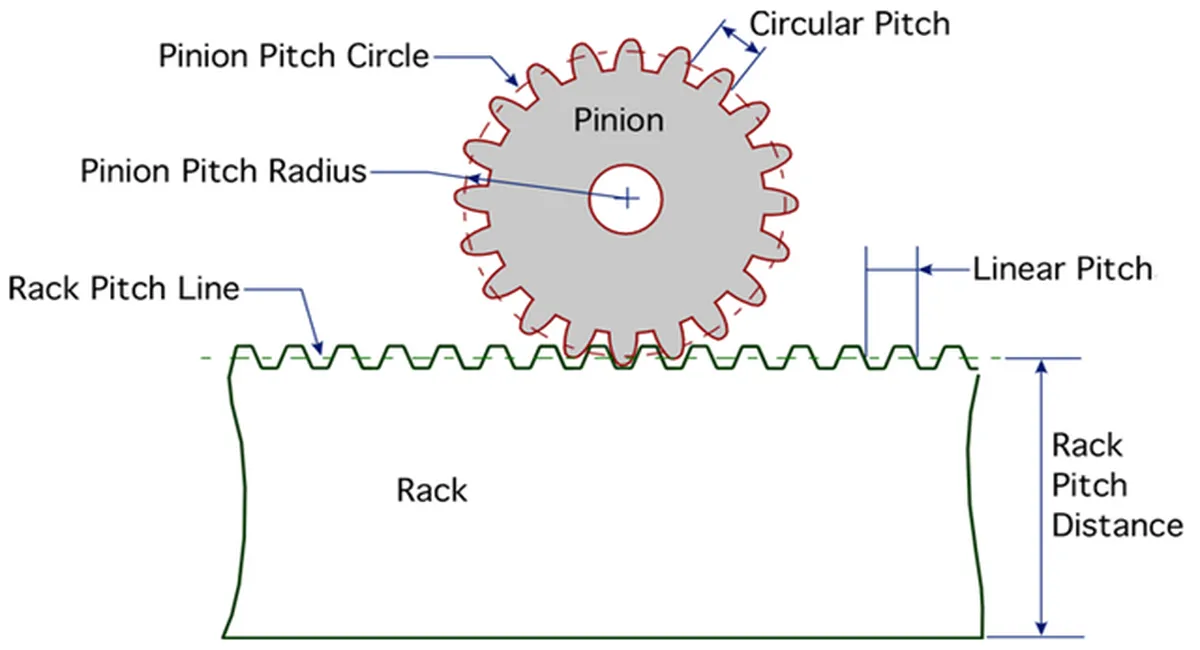
Observe the diagram below to note the required specs to manufacture a custom rack and pinion. For accuracy, three additional components must be considered: Backlash, Pitch Deviation, and Tooth Quality.Rack Quality Levels are selected for certain types of applications – and they also denote the accuracy of the teeth. Tooth Quality is the accuracy of the manufactured tooth flanks. Tooth accuracy affects backlash, positioning accuracy, and the noise level of the rack and pinion set. Backlash is the amount of clearance between the rack and pinion tooth flanks. Pitch Deviation is the difference between the theoretical rack length and its actual length.From custom long gear racks to giant drive pinion gears, your heavy-duty machining projects may need Raydafon Flame Machining Technology to enhance application longevity, quality, and affordability. Raydafon has manufactured many clients' large custom-designed racks and pinions that move their projects, ranging from furnace doors to blast hole drills.Spur Gear Rack

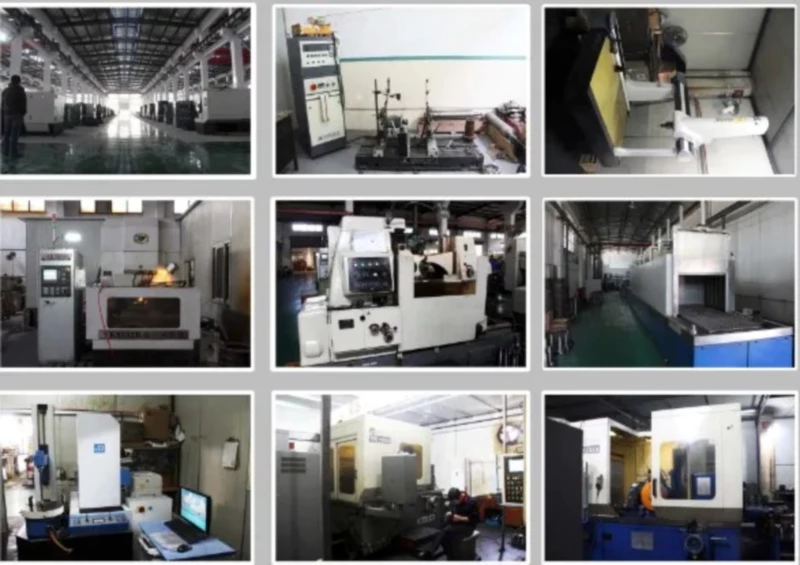
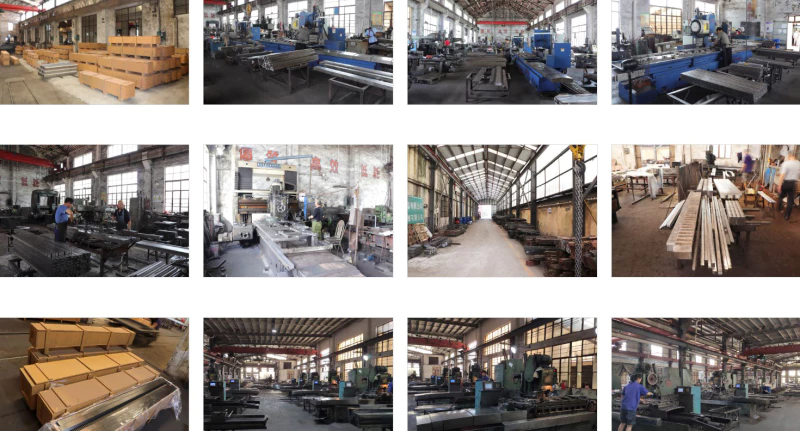
Our Factory

Spur Gear RackSpur Gear Rack
Hot Tags: Spur Gear Rack Manufacturer, Customized Gear Rack Supplier, High Precision Gear Rack Wholesale
Send Inquiry
Contact Info
Get customized quotes for transmission components, gearboxes, and machinery. Our engineers will respond within 24 hours.
Online
X
We use cookies to offer you a better browsing experience, analyze site traffic and personalize content. By using this site, you agree to our use of cookies. Privacy Policy
Reject Accept