
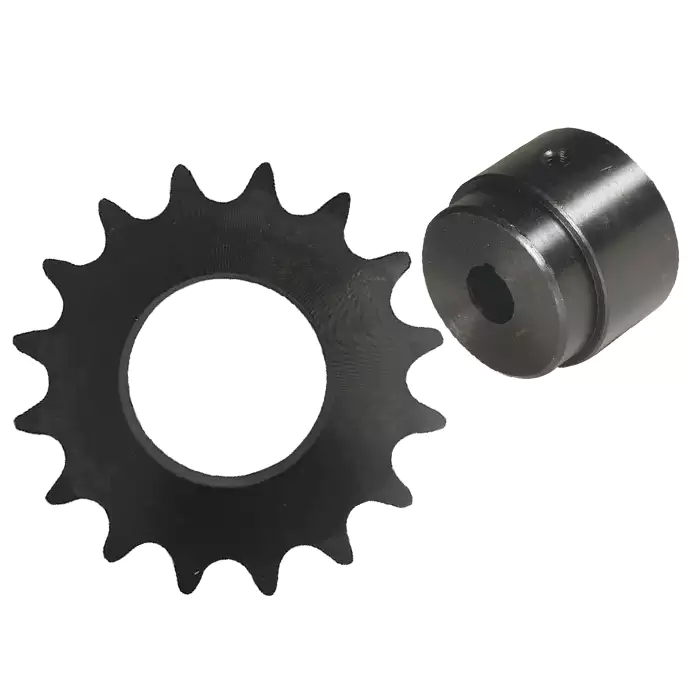
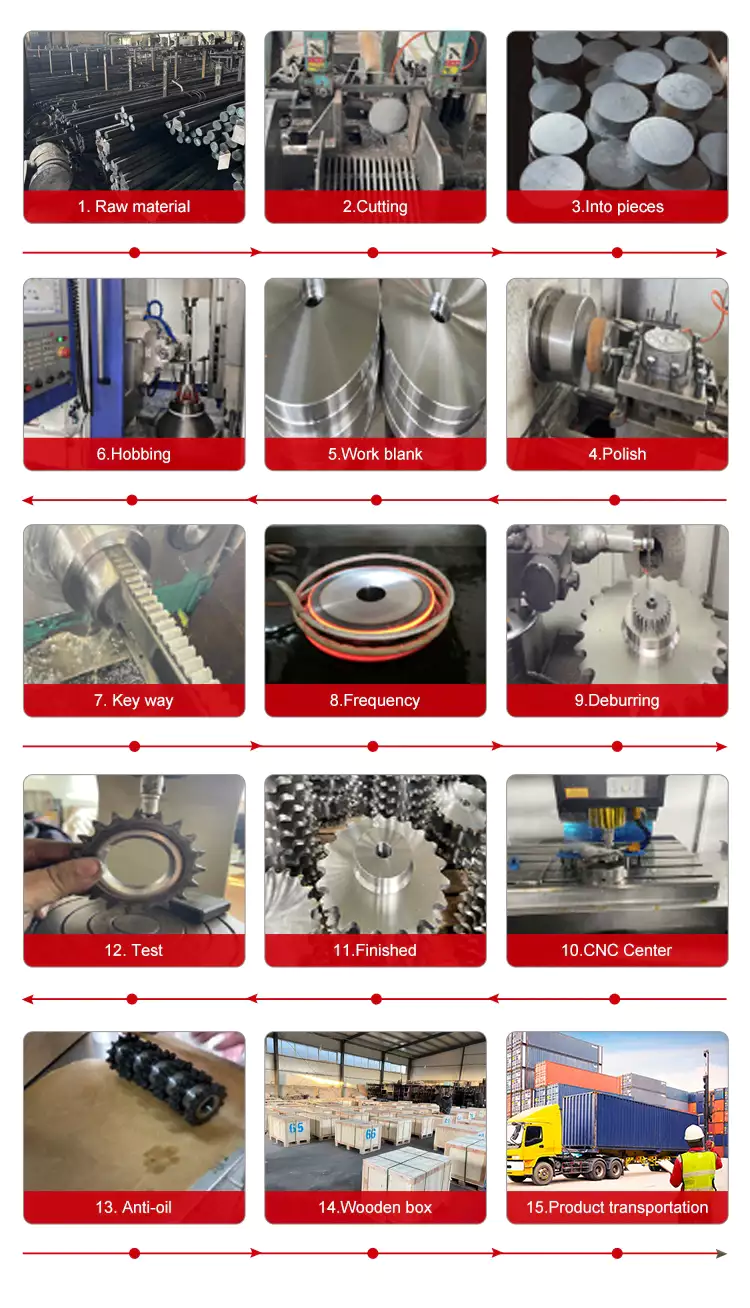
Weld-on sprockets are an essential component in power transmission systems. Weld-on sprockets are designed to be welded onto a specific shaft, providing an effective solution for transmitting torque. Our weld-on sprockets are made of high-quality materials, such as high carbon steel, alloy steel, or stainless steel, and are manufactured using a variety of processes including material selection, cutting, stamping, forging, machining, heat treatment, surface hardening, surface treatment, and quality testing.
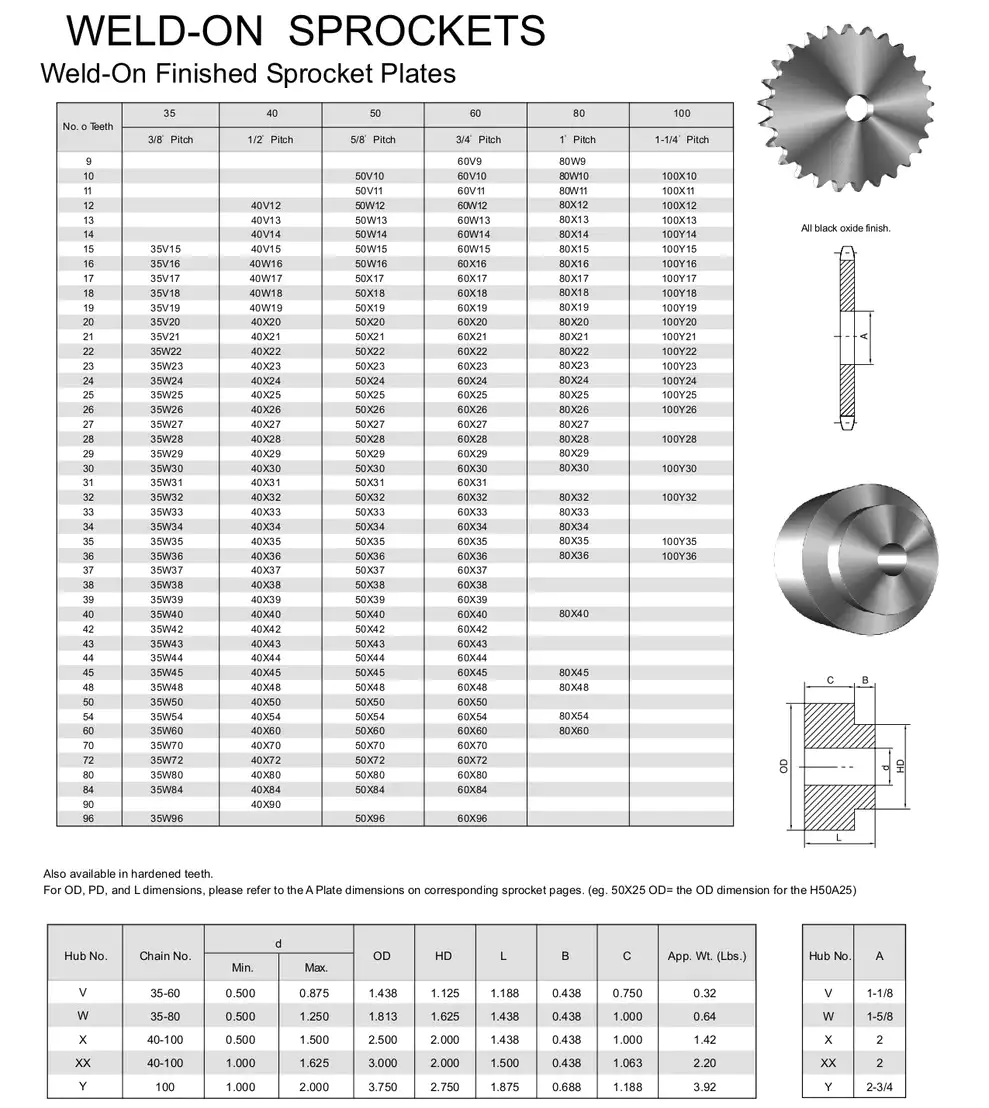
Our weld-on sprockets are made of high-quality materials, such as high carbon steel, alloy steel, or stainless steel. The material selection process is crucial to ensure that the sprockets have the required strength and wear resistance. The manufacturing process includes cutting, stamping, forging, machining, heat treatment, surface hardening, surface treatment, and quality testing. These processes ensure that each sprocket is of high quality and meets our customer's requirements.
The material selection process is critical to ensure that the sprockets have the required strength and wear resistance. High carbon steel is used for applications requiring high strength and wear resistance. Alloy steel is used for applications requiring high strength, toughness, and wear resistance. Stainless steel is used for applications requiring high corrosion resistance.
Weld-on sprockets are used in a variety of applications, including conveyor systems, agricultural equipment, mining equipment, and industrial machinery. For applications requiring special designs or sizes, customers can choose the appropriate hub for welding according to the actual shaft diameter.
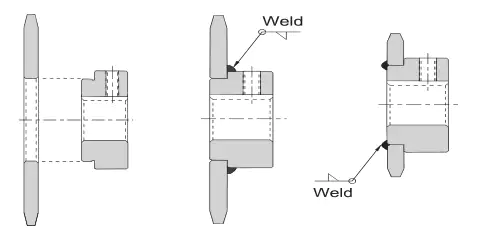
We offer a range of hubs with circular inner holes to meet our customer's requirements.
Proper maintenance is crucial to ensure the longevity and efficiency of the chain sprocket. Below are some maintenance tips:
Inspect the chain sprocket regularly to ensure that it is in good condition. Check for signs of wear, damage, or misalignment.
Clean the chain sprocket regularly to remove dirt and debris that can cause wear and tear. Use a brush and a cleaning solution to clean the sprocket.
Lubricate the chain sprocket regularly to reduce friction and wear. Use the appropriate lubricant that is compatible with the sprocket material and the operating conditions.
Adjust and calibrate the chain sprocket regularly to ensure that it is in proper alignment and tension. Improper alignment and tension can cause wear and tear and reduce the efficiency of the chain sprocket.
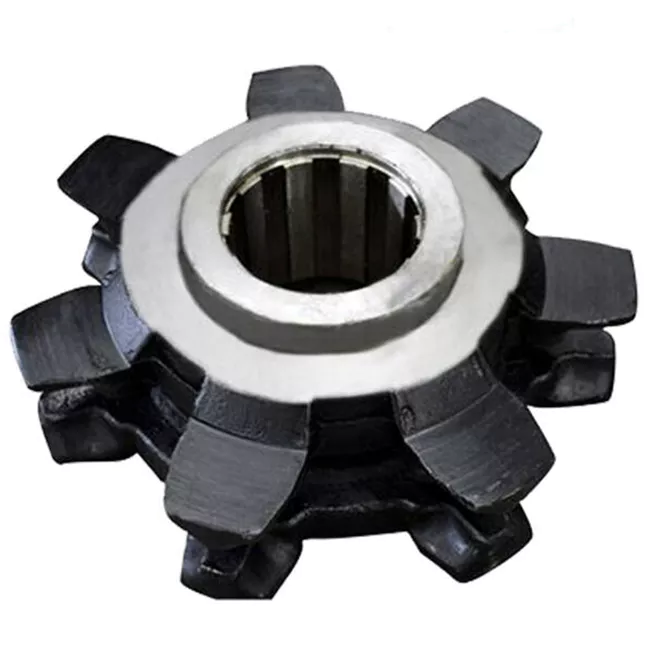
We also offer other types of sprockets, such as platewheel sprocket, qd sprocket, taper lock sprocket, etc., as well as matching chains.
Author: Miya
Address
Luotuo Industrial Area, Zhenhai District, Ningbo City, China
Tel

 Raydafon