Raydafon Technology Group Co.,Limited
Products
Products
Miniature Hay Baler for Small Farms
  • Miniature Hay Baler for Small FarmsMiniature Hay Baler for Small Farms

Miniature Hay Baler for Small Farms

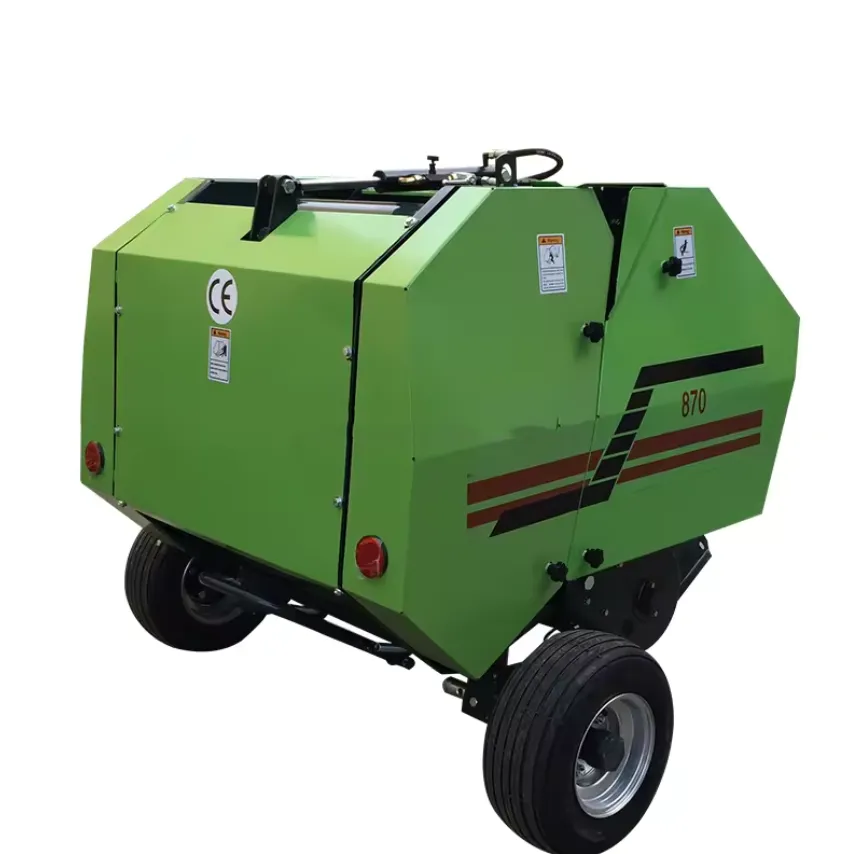
Raydafon Group's Miniature Hay Baler for Small Farms is a compact, efficient tool designed to simplify hay baling for small-scale farmers. Crafted with durable materials and innovative technology, it features user-friendly design for easy operation, ideal for hobby farmers or rural homesteads. This baler saves time and reduces physical strain, bringing joy and productivity to daily farm tasks. Its unique compact size and quiet operation set it apart from bulkier models. Experience the difference today with our limited-time free shipping offer!

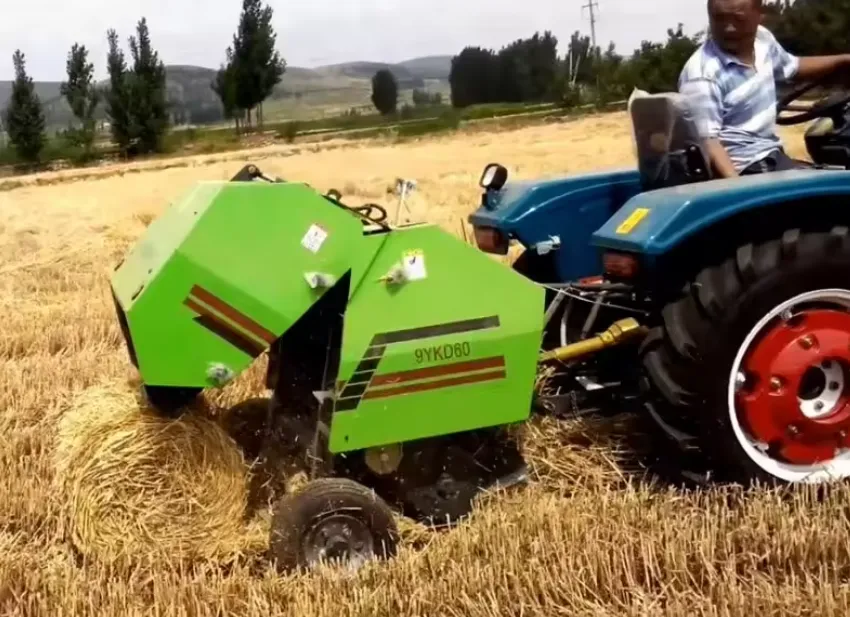
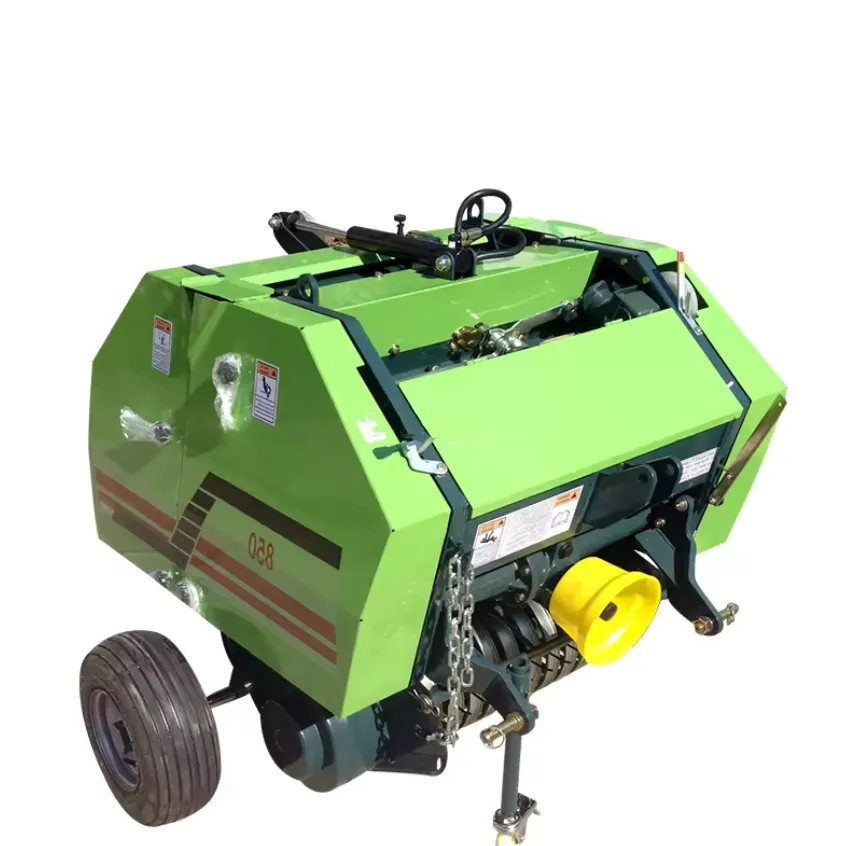
If you're looking for a high-quality, efficient, and convenient solution for your baling needs, you can't go wrong with a miniature hay baler. This compact and lightweight equipment is designed to pick up and bale various types of crops, including grass, alfalfa, wheat, and rice straw. The baler operates at a speed of 3-10km/h and boasts a new condition. Available in two models, RXYK0850 and RXYK0870, it is perfect for small to medium-sized farms. Despite its compact size, this baler is backed by a two-year warranty and certified by ISO and CE.

The Advantages of a Mini Hay Baler

When it comes to agricultural tasks, having the right equipment can make a world of difference. Here are six key advantages of the Miniature Hay Baler:

  1. Efficiency: With an operating speed of 3-10km/h, this baler can cover a significant area in a short time, making it an efficient choice for farming.
  2. Compact Size: Its small dimensions (1300x1300x1350mm) make it easy to maneuver in tight spaces, making it perfect for smaller farms and fields.
  3. Diverse Application: Whether it's grass, alfalfa, or wheat, this baler is designed to handle a wide range of crops, making it a versatile addition to your farming equipment.
  4. Quality Assurance: The baler is ISO and CE certified and comes with a two-year warranty, providing quality assurance and peace of mind.
  5. Convenient Features: With features like twine rope, a pickup width of 80cm, and a matched power of 20-50HP, this baler offers convenience and functionality.
  6. Easy Maintenance: The Miniature Hay Baler is designed for easy maintenance, ensuring it remains in excellent working condition for years to come.

Applications of the Mini Hay Baler

The Miniature Hay Baler is more than just an efficient way to bale hay. It offers a wide range of applications that can benefit small and medium-sized farms. Here are six key applications:
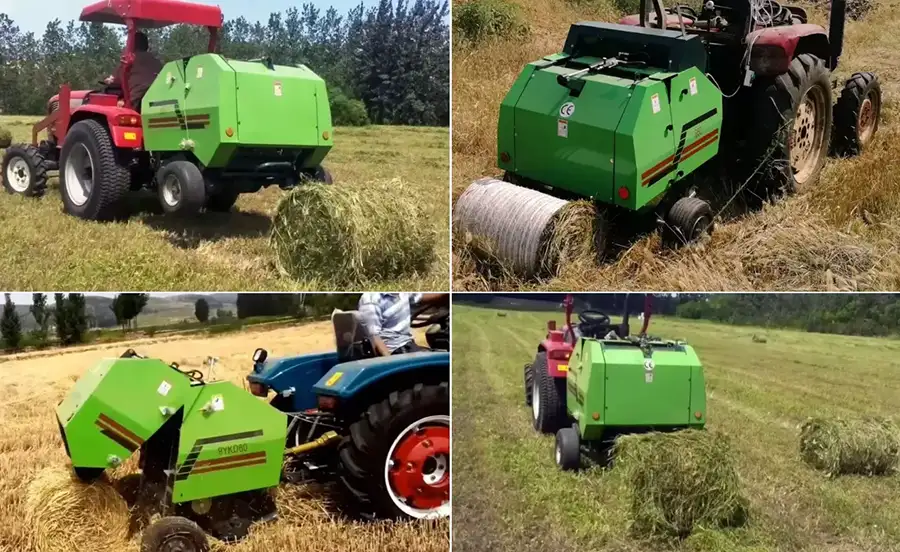
  1. Hay Baling: The primary use of this baler is to pick up and bale various types of hay.
  2. Straw Baling: It can also be used to bale straw, making it a versatile addition to your farming equipment.
  3. Agricultural Waste Management: The baler can be used to manage agricultural waste by bundling it into neat and manageable bales.
  4. Animal Bedding: The bales produced by the baler can be used as bedding for animals, providing a comfortable and hygienic environment for them.
  5. Feed Production: The bales can also be used as feed for animals, providing a cost-effective and convenient feeding solution.
  6. Soil Mulching: The bales can be used as mulch to improve soil quality and promote plant growth.
Miniature Hay Baler for Small Farms

How Does the Tractor Mounted Mini Hay Round Baler Work?

The tractor-mounted mini hay round baler works by attaching the baler to the back of a tractor using a three-point hitch or another attachment mechanism. The tractor provides the power and mobility needed to operate the baler effectively. Here is a step-by-step overview of how the tractor-mounted mini hay round baler typically works:
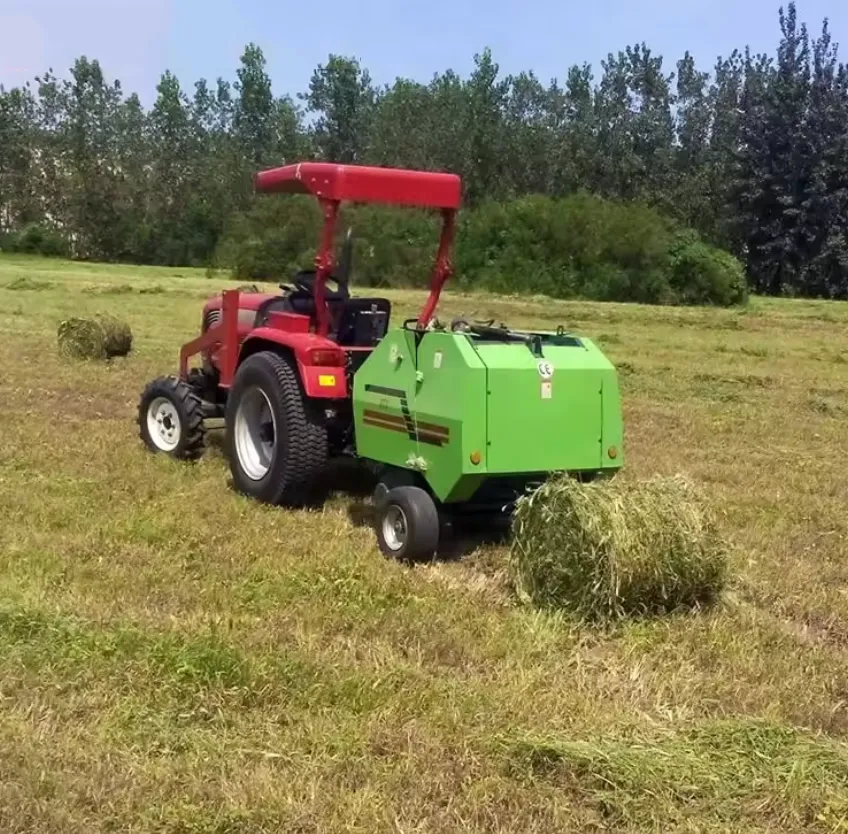
  1. Preparing the Tractor: Ensure that the tractor is properly equipped with the necessary power take-off (PTO) shaft and hydraulic connections to operate the baler. The PTO transfers power from the tractor to the baler, while the hydraulic connections control various functions of the baler.
  2. Hitching the Baler: Attach the baler to the tractor's three-point hitch or other compatible attachment mechanism. Secure the baler to the tractor, ensuring a firm and stable connection.
  3. Adjusting Settings: Set the appropriate baling parameters based on the desired bale size, density, and other factors. These settings may include bale diameter, bale weight, twine tension, and bale density.
  4. Operating the Pickup Attachment: Lower the pickup attachment of the baler onto the ground using the tractor's hydraulic controls. The pickup attachment consists of rotating tines or belts that gather the loose hay or straw from the ground and feed it into the baling chamber.
  5. Bale Formation: As the pickup attachment collects the material, it is conveyed into the baling chamber of the baler. Inside the chamber, the material is compressed and formed into a round bale by a combination of belts and rollers. The belts rotate and wrap around the bale, ensuring it remains intact.
  6. Bale Ejection: Once the bale reaches the desired size and density, it is ejected from the baling chamber and released onto the ground. Some mini hay round balers may have an automatic bale ejection mechanism, while others require manual assistance to remove the bale from the chamber.
Miniature Hay Baler for Small Farms

How to Install the Mini Hay Round Baler to Tractor?

Installing a mini hay round baler to a tractor involves several steps to ensure a secure and effective connection for baling operations. The process typically requires basic mechanical skills and an understanding of your tractor and baler's specific requirements. Here's a general guide on how to install a mini hay round baler to a tractor:
  1. Read the Manuals: Start by reading the operator's manuals for both the tractor and the mini hay round baler. These manuals will provide specific instructions for attaching and operating the equipment, as well as any safety precautions you need to follow. Before attachment, inspect both the tractor and baler for any damage or wear that might affect operation. Ensure all moving parts are in good condition and that the baler is ready for use.
  2. Position the Tractor and Baler: Position the tractor close to the baler so that the PTO shaft on the tractor aligns with the PTO input shaft on the baler. Make sure the ground is level to avoid any unnecessary stress on the equipment during the connection process.
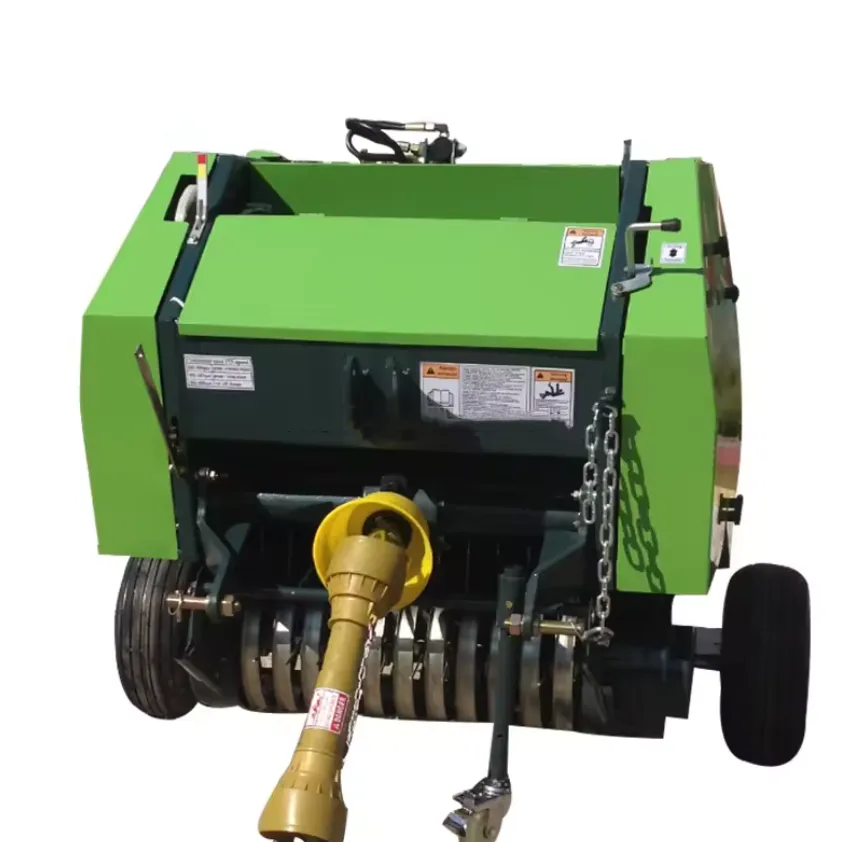
  3. Attach the Baler to the Tractor: If your baler attaches via a three-point hitch, raise the hitch on the tractor and align the hitch arms with the mounting points on the baler. Secure the pins through the arms into the baler's mounting points and attach the top link. Adjust the top link and lift arms to ensure the baler is level. For balers that connect via a drawbar, line up the drawbar of the tractor with the tow bar of the baler and insert the pin through both holes to secure them together.
  4. Connect the PTO Shaft: Slide the PTO shaft from the baler onto the PTO stub on the tractor. Ensure it locks into place; you should hear a click or be able to see that the locking mechanism is engaged. Check that the PTO shaft is the correct length. The shaft should have enough overlap to accommodate the movement when the tractor and baler are in operation but not so much that it could bind or buckle.
  5. Connect Hydraulics (If Applicable): If the baler requires hydraulic connections to operate, connect the hydraulic hoses from the baler to the tractor's hydraulic outputs. Ensure the connections are secure and the hoses are not kinked or under strain.
  6. Test the connections: Before operating the baler, check all the connections, including the hitching mechanism, hydraulic hoses, and PTO shaft, to ensure they are secure and properly fitted. Look for any signs of looseness or misalignment that may affect the baler's operation or safety.
  7. Miniature Hay Baler for Small Farms

Maintenance of the Mini Hay Round Baler

Proper maintenance of a mini hay round baler is essential to ensure its optimal performance, longevity, and safety. Here are some key maintenance tasks to consider:

  1. Regular cleaning: After each use, clean the baler thoroughly to remove any accumulated debris, hay, or straw. Pay attention to the pickup attachment, baling chamber, belts, and rollers. Use compressed air, brushes, or water (if applicable) to remove stubborn residue. Keeping the baler clean helps prevent clogs and reduces the risk of corrosion.
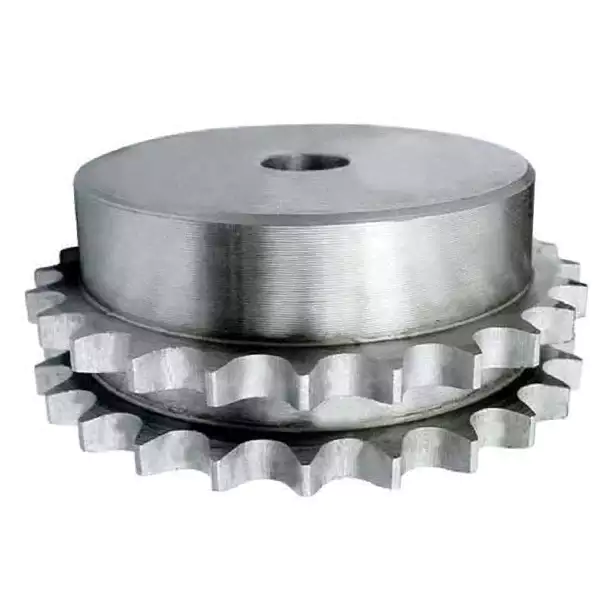
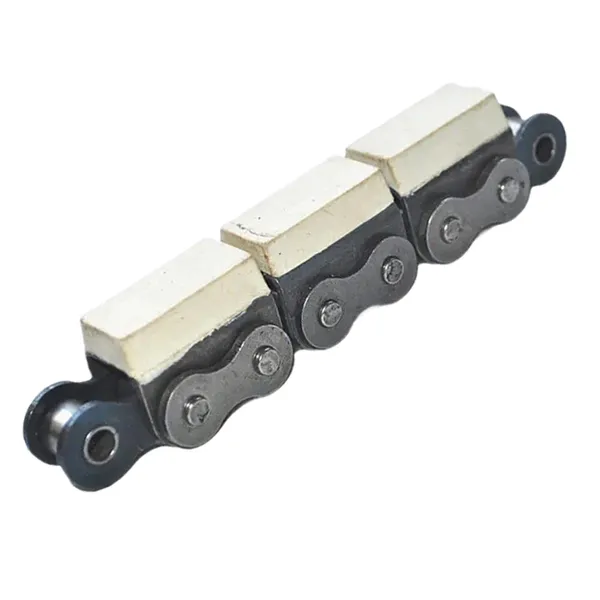
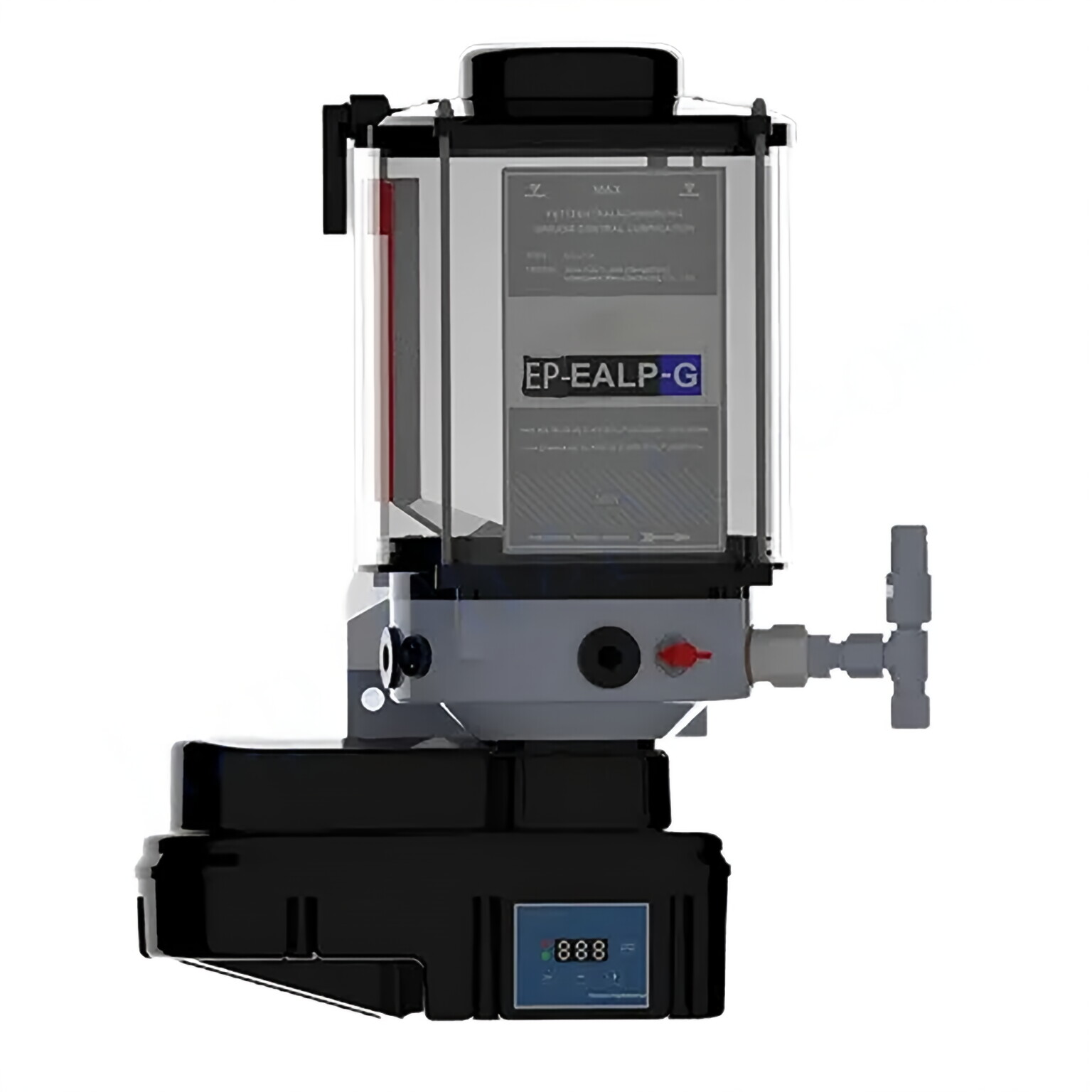
  2. Lubrication: Check the baler's lubrication points and follow the manufacturer's recommendations for lubrication intervals. Apply the appropriate lubricants to the specified areas such as bearings, chains, sprockets, and pivot points. Proper lubrication reduces friction, prevents wear and tear, and ensures smooth operation.
  3. Roller inspection: Inspect the rollers for any signs of damage, misalignment, or excessive wear. Check for loose or missing bolts and ensure that the rollers are clean and free from debris. Adjust or replace rollers as necessary to maintain proper compression during bale formation.
  4. Twine or net wrap system: If your baler uses twine or net wrap for bale tying, inspect the twine or net wrap system regularly. Check for proper tension, functioning of the twine arms or net wrap mechanism, and any signs of wear or damage. Replace or adjust components as needed to ensure consistent and secure bale tying.
  5. PTO maintenance: If the baler is powered by the tractor's power take-off (PTO), inspect the PTO shaft regularly for any signs of wear, damage, or loose connections. Keep the PTO shaft properly lubricated and replace any worn or damaged components. Ensure that the PTO guards are in place and in good condition for operator safety.
  6. Check hydraulic system: If your baler has a hydraulic system, inspect the hoses, fittings, and cylinders for leaks, damage, or signs of wear. Ensure that all connections are tight and secure. Replace any damaged hoses or fittings and address any hydraulic fluid leaks promptly.

Why Choose Raydafon's Mini Hay Round Baler for Agricultural?

When it comes to farming equipment, Raydafon Agricultural Machinery Co., Ltd. stands out as a trusted and reliable provider. With a rich history dating back to 1989, the company has been dedicated to providing high-quality farming equipment that meets the unique needs of small and large farms alike.

Here are some reasons why you should choose Raydafon's Mini Hay Round Baler:

  1. Professionalism: With over 100 employees, including 20 technical staff and five senior R&D personnel, Raydafon boasts a strong team of professionals committed to providing top-notch products and services.
  2. International Certifications: The company's products are certified by international standards, including ISO and CE, providing assurance of their quality and safety.
  3. Customized Services: Raydafon offers customized services, enabling customers to get equipment that fits their specific needs and preferences.
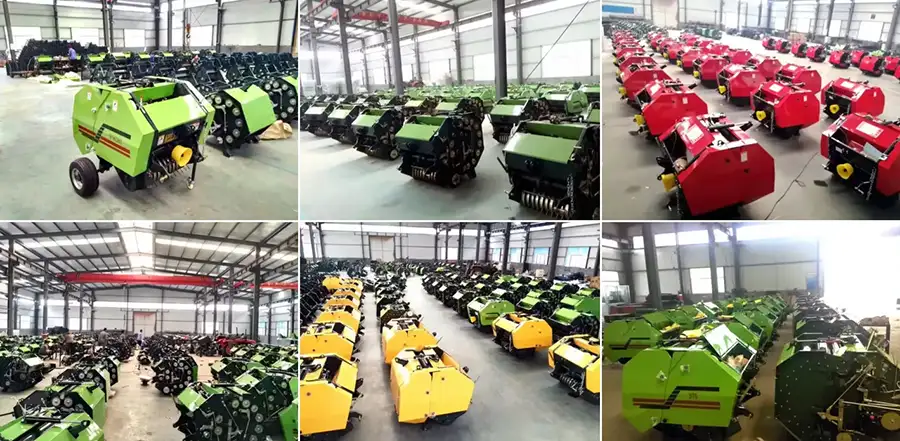
  4. Advanced Production Facilities: The company has advanced production facilities, including casting, forging, machining, heat treatment, and lacquering production lines, which enable it to produce high-quality and durable farming equipment.
  5. After-Sales Services: Raydafon provides excellent after-sales services, ensuring that customers get the necessary support after purchasing their products.

Overall, Raydafon's Mini Hay Round Baler is a reliable, efficient, and versatile solution for your farming needs. Whether you're a small or large farm, you can count on this high-quality equipment to deliver excellent performance and value for your investment.
Miniature Hay Baler for Small Farms

Watch How the Mini Hay Round Baler Works

Want to see the Mini Hay Round Baler in action? Check out this video to get a better understanding of how it works and how it can benefit your farming operations.
Miniature Hay Baler for Small FarmsMiniature Hay Baler for Small Farms

Author: Yjx

Hot Tags: Miniature Hay Baler for Small Farms, Small Farm Hay Baler, Compact Hay Baler Equipment
Send Inquiry
Contact Info
Get customized quotes for transmission components, gearboxes, and machinery. Our engineers will respond within 24 hours.
Online
X
We use cookies to offer you a better browsing experience, analyze site traffic and personalize content. By using this site, you agree to our use of cookies. Privacy Policy
Reject Accept