
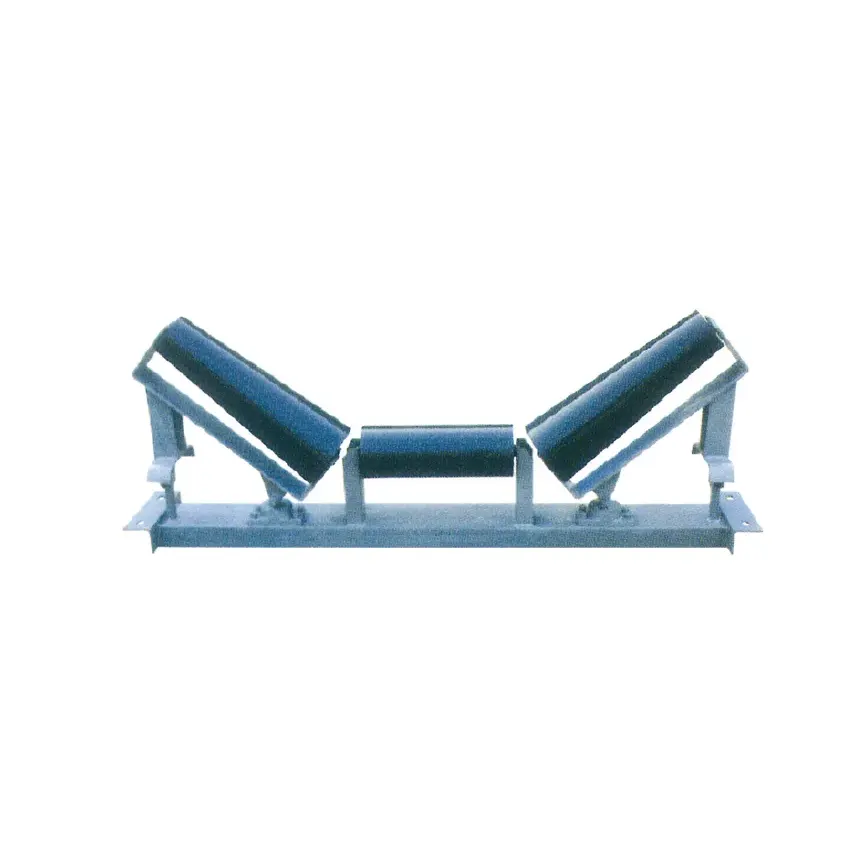

Imagine a conveyor system that runs smoothly, with the belt staying perfectly centered, even under the toughest mining conditions. The TD75 Belt Conveyor Tape Self-Aligning Idler makes this a reality.
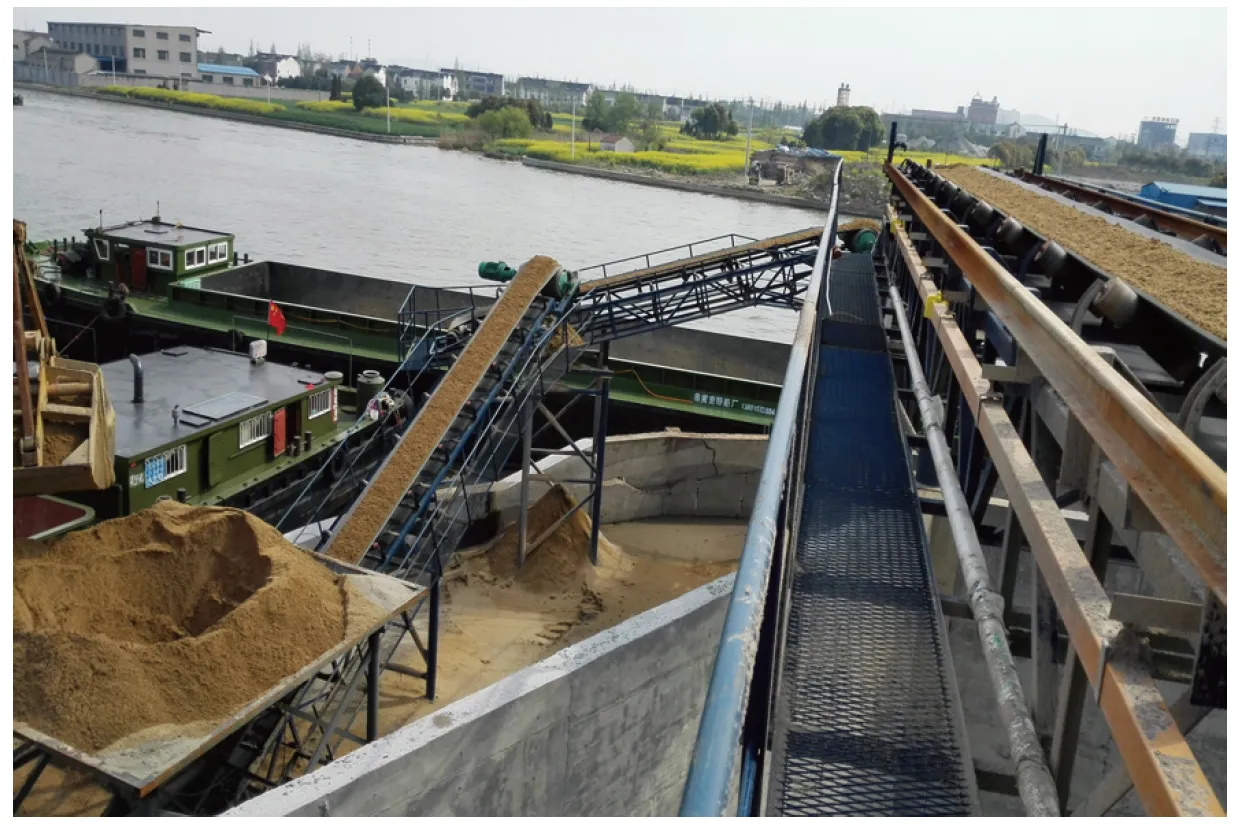
Designed as a key component of the TD75 conveyor system, standardized in 1975, this idler automatically corrects belt misalignment, reducing wear, spillage, and downtime. Used in mining, metallurgy, ports, and beyond, it’s built to handle bulk materials like coal, ore, and aggregates with ease. This product page dives into the features, applications, installation tips, customer stories, and answers to your burning questions, all crafted to help mining professionals optimize their operations.
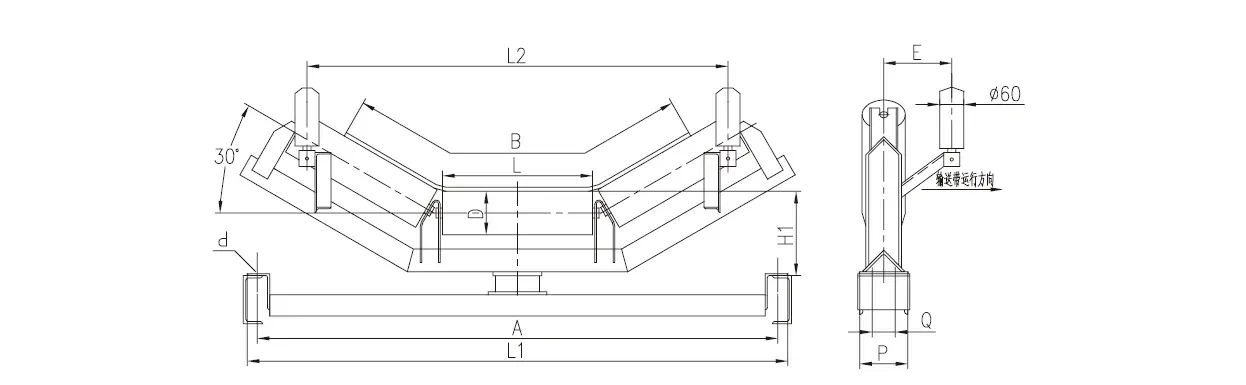 Unit: mm
| B | A | L | L1 | L2 | D | H1 | ≈E | P | Q | d | Rolling bearing model | Drawing No |
| 500 | 720 | 190 | 770 | 588 | 89 | 170 | 170 | 170 | 130 | M12 | 204 | TD1C4 |
| 650 | 870 | 240 | 920 | 728 | TD2C4 | |||||||
| 800 | 1070 | 305 | 1120 | 864 | TD3C4 | |||||||
| 1000 | 1300 | 375 | 1350 | 1088 | 108 | 210 | 230 | 220 | 170 | M16 | 305 | TD4C4 |
| 1200 | 1550 | 455 | 1600 | 1272 | 230 | 260 | 200 | TD5C4 | ||||
| 1400 | 1750 | 525 | 1800 | 1472 | TD6C4 |
The TD75 Self-Aligning Idler is engineered to keep your conveyor belt on track, literally. Its innovative design and robust construction make it a game-changer for mining operations. Here’s what sets it apart:
Automatic Alignment Mechanism
Uses friction resistance and a pivot or swivel system to detect and correct belt deviation instantly.
Features tapered or friction-based rollers that guide the belt back to center, reducing wear and spillage.
Rugged Materials
Roller tubes crafted from Q235 steel (equivalent to SS400/ASTM A36) for strength and durability.
Shafts made from 45# steel (DIN C45/ASTM A1045), quenched and tempered for wear resistance.
High-Performance Bearings
Equipped with deep groove ball bearings (C3 clearance, 2RZ/2Z seals) for low friction and long life.
Triple labyrinth seals protect against dust, moisture, and debris, perfect for dusty mines.
Low Noise and Vibration
Precision manufacturing and dynamic balance testing ensure smooth, quiet operation.
Minimizes stress on the belt and conveyor frame, extending system lifespan.
Corrosion Resistance
Available with baking paint, zinc plating, or epoxy coatings for harsh environments like coastal ports.
Optional stainless steel or composite materials for extreme conditions.
Customizable Options
Available in diameters (50mm to 219mm) and lengths (190mm to 3400mm) to match belt widths (500mm to 2400mm).
Configurations include groove self-aligning, conical self-aligning, and friction self-aligning idlers.
Standards Compliance
Meets TD75, DTII, CEMA, and ISO 9001 standards for quality and safety.
Tested for radial runout, axial movement, and alignment performance.
Installing the TD75 Self-Aligning Idler correctly is key to unlocking its full potential. Here’s a step-by-step guide to ensure a smooth setup:
Preparation
Confirm idler specs (diameter, length, type) match your conveyor’s belt width and load requirements.
Check the conveyor frame for alignment and structural integrity.
Mounting the Idler
Install self-aligning idlers on the carry or return side, typically every 100-150 ft for belts longer than 100 ft.
Use a rotating shaft or pivot mechanism to connect the idler to the frame, allowing it to swivel for alignment correction.
Alignment Setup
Position the idler so its centerline is perpendicular to the belt when centered.
Ensure the friction or tapered rollers are angled (30°-50°) to activate on belt deviation.
Bearing and Seal Check
Verify bearings are lubricated with lithium soap grease and triple labyrinth seals are intact.
Avoid assembling seals together during installation to maintain performance.
Belt Tension Adjustment
Adjust tension to prevent sagging without overloading the idlers. Use:[ T = \frac{P_p \cdot 1000}{v} ] where (T) is belt tension (N), (P_p) is power (kW), and (v) is belt speed (m/s).
Test Run
Run the conveyor at low speed to check alignment correction.
Adjust the idler’s pivot or friction mechanism if the belt doesn’t center properly.
Hire trained technicians to meet safety standards.
Keep a record of installation settings for future maintenance.
Reach out to us for hands-on installation support.
Regular care keeps the TD75 Self-Aligning Idler performing at its best:
Inspect Regularly: Check rollers, bearings, and seals every 3-6 months for wear or damage.
Lubricate Bearings: Use lithium soap grease to minimize friction and extend bearing life.
Clean the Belt: Install belt scrapers to prevent material buildup on idlers.
Monitor Alignment: Ensure the idler’s pivot mechanism functions correctly to correct deviations.
Use OEM Parts: Replace worn components with TD75-compliant spares to maintain performance.
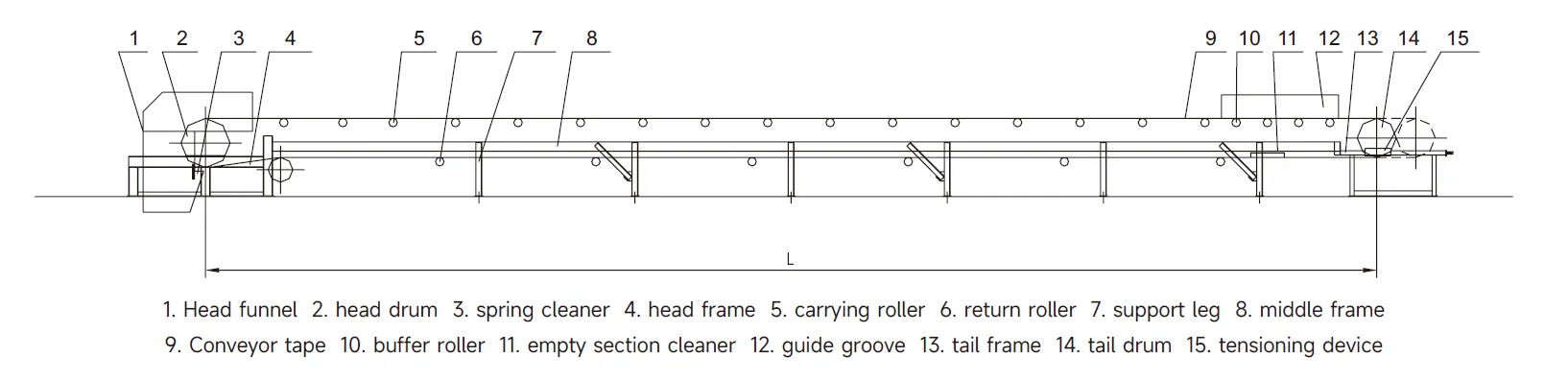
| Roller type | Speed (m/s) | Belt width(mm) | Roller type | Speed (m/s) | Belt width(mm) | ||||||||||
| 500 | 650 | 800 | 1000 | 1200 | 1400 | 500 | 650 | 800 | 1000 | 1200 | 1400 | ||||
| Capacity Q(t/h) | Capacity Q(t/h) | ||||||||||||||
| Trough roller | 0.8 | 78 | 131 | ― | ― | ― | ― | Parallel roller | 0.8 | 41 | 67 | 118 | ― | ― | ― |
| 1 | 97 | 164 | 278 | 435 | 655 | 891 | 1 | 52 | 88 | 147 | 230 | 345 | 469 | ||
| 1.25 | 122 | 206 | 348 | 544 | 819 | 1115 | 1.25 | 66 | 110 | 184 | 288 | 432 | 588 | ||
| 1.6 | 156 | 264 | 445 | 696 | 1048 | 1427 | 1.6 | 84 | 142 | 236 | 368 | 553 | 753 | ||
| 2 | 191 | 323 | 546 | 853 | 1284 | 1748 | 2 | 103 | 174 | 289 | 451 | 677 | 922 | ||
| 2.5 | 232 | 391 | 661 | 1033 | 1556 | 2118 | 2.5 | 125 | 211 | 350 | 546 | 821 | 1117 | ||
| 3.15 | ― | ― | 824 | 1233 | 1858 | 2528 | 3.15 | ― | ― | ― | ― | ― | ― | ||
| 4 | ― | ― | ― | ― | 2202 | 2996 | 4 | ― | ― | ― | ― | ― | ― |
Mining professionals worldwide trust the TD75 Self-Aligning Idler for its reliability and performance. Here’s what they’re saying:
Shanxi Coal Mining Co., China
“The TD75 Self-Aligning Idlers from [Your Company Name] are a lifesaver. Belt deviations are down, and we’ve cut maintenance time by 20%. Their team guided us through setup flawlessly.” – Zhang Wei, Operations Manager
Australian Iron Ore Mine
“These idlers keep our belts on track, even with heavy loads. The alignment mechanism is quick and effective, saving us on belt replacements.” – Sarah Thompson, Site Engineer
South African Port Terminal
“In our salty coastal environment, the corrosion-resistant idlers are perfect. They’ve reduced downtime and kept our operations smooth.” – Thabo Nkosi, Logistics Manager
Indonesian Copper Mine
“The TD75 Self-Aligning Idlers boosted our conveyor efficiency by 15%. The customizable options fit our system perfectly.” – Putra Santoso, Maintenance Supervisor
These stories highlight [Your Company Name]’s dedication to quality and customer success.
Got questions about the TD75 Self-Aligning Idler? We’ve got answers, packed with long-tail keywords for SEO:
1. What is the TD75 Self-Aligning Idler?
A conveyor component that automatically corrects belt misalignment using friction or tapered rollers, used in mining and other industries.
2. How does it prevent belt deviation?
It uses a pivot or friction mechanism to apply lateral force, guiding the belt back to center when it drifts.
3. What materials are used in the TD75 Self-Aligning Idler?
Q235 steel for roller tubes, 45# steel for shafts, with optional corrosion-resistant coatings for harsh environments.
4. How often should I maintain the idler?
Inspect every 3-6 months, lubricate bearings, and clean to prevent buildup. Avoid disassembling seals.
5. Can the idler be customized?
Yes, we offer tailored diameters, lengths, and configurations (groove, conical, friction). Contact [Your Company Name] for details.
6. Which industries use the TD75 Self-Aligning Idler?
Mining, metallurgy, ports, construction, and power plants for bulk material handling.
Address
Luotuo Industrial Area, Zhenhai District, Ningbo City, China
Tel

 Raydafon