
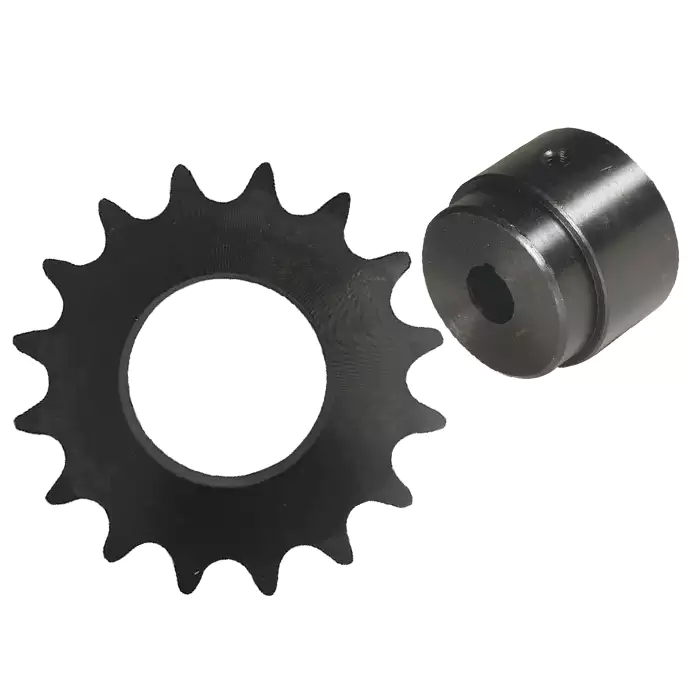
A Weld-on sprocket is a type of sprocket that is attached to a hub by welding. The Weld-on sprocket is designed to provide a secure and permanent attachment to the hub. It is commonly used in heavy-duty machinery and equipment that require high torque and power transmission.
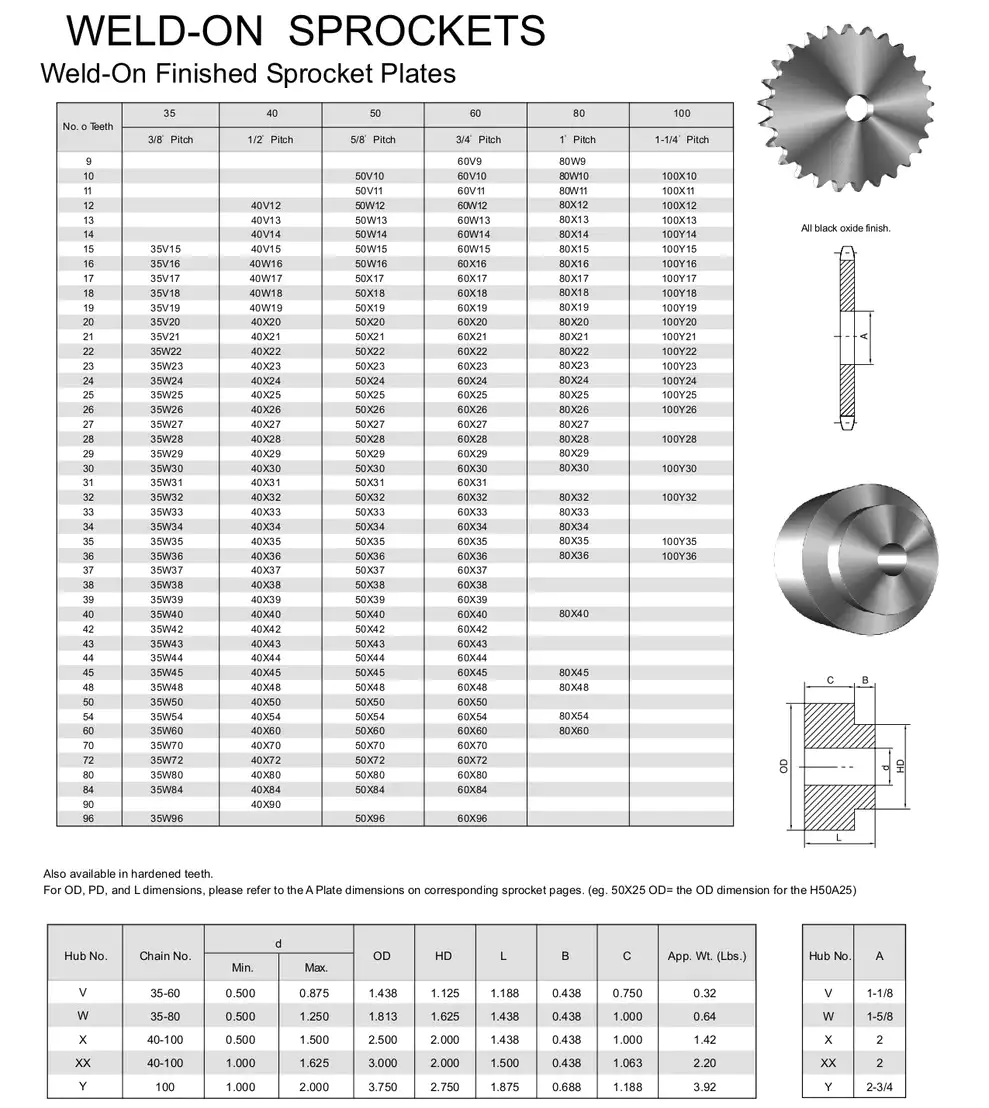
The Weld-on sprocket is made of high carbon steel, alloy steel, or stainless steel. The material used depends on the application and the environment in which the sprocket will be used. The manufacturing process involves material selection, cutting, punching, forging, machining, heat treatment, surface hardening, surface treatment, quality inspection, and packaging.
The material selection process involves choosing the appropriate grade of steel based on the requirements of the sprocket. The cutting process involves cutting the steel into the required length and shape. The punching process involves punching holes in the sprocket for mounting on the hub. The forging process involves shaping the sprocket into the required shape. The machining process involves shaping the teeth of the sprocket to the required shape and size. The heat treatment process involves heating the sprocket to a specific temperature and then cooling it rapidly to increase its hardness. The surface hardening process involves applying a hard surface layer to the sprocket to increase its wear resistance. The surface treatment process involves applying a protective coating to the sprocket to prevent corrosion. The quality inspection process involves checking the sprocket for defects and ensuring its compliance with industry standards.
Weld-on sprockets are used in a variety of applications, including conveyors, industrial machinery, agricultural equipment, and automotive applications. They are suitable for use in applications that require high torque and power transmission. They are also suitable for applications that require high-speed operation and a high degree of accuracy. For applications requiring special design or size, users can choose a suitable hub for welding according to the actual shaft diameter.
Compared to conventional sprockets, Weld-on sprockets have several advantages:
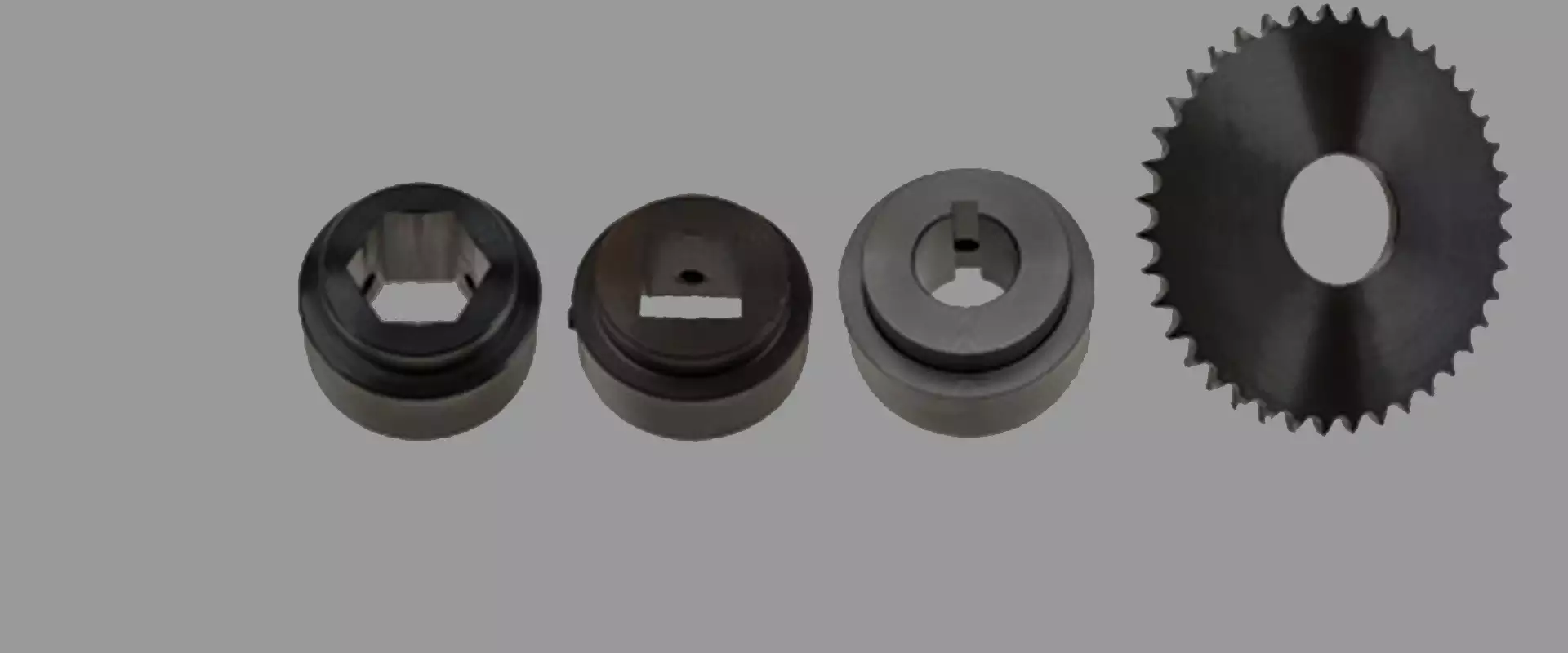
We offer a range of hubs with circular bores to suit different shaft sizes. These hubs are made of high-quality materials and are designed to provide a secure and reliable attachment to the Weld-on sprocket.
Maintaining and troubleshooting Weld-on sprockets is essential to ensure their longevity and proper function. Regular maintenance includes daily inspections, cleaning, lubrication, adjustment, and calibration.
Common problems that may occur with Weld-on sprockets include tooth jumping, breakage, wear, excessive noise, and chain detachment. These problems can be resolved by adjusting the sprocket alignment, replacing worn or damaged sprockets, lubricating the chain, and adjusting the chain tension.
We also offer a range of other sprockets, including platewheel sprockets, QD sprockets, taper lock sprockets, and others. These sprockets are designed to meet the specific requirements of different applications and are available in a range of sizes and materials. We also offer a range of matching chains to suit the sprockets.
Author: Miya
Address
Luotuo Industrial Area, Zhenhai District, Ningbo City, China
Tel

 Raydafon