
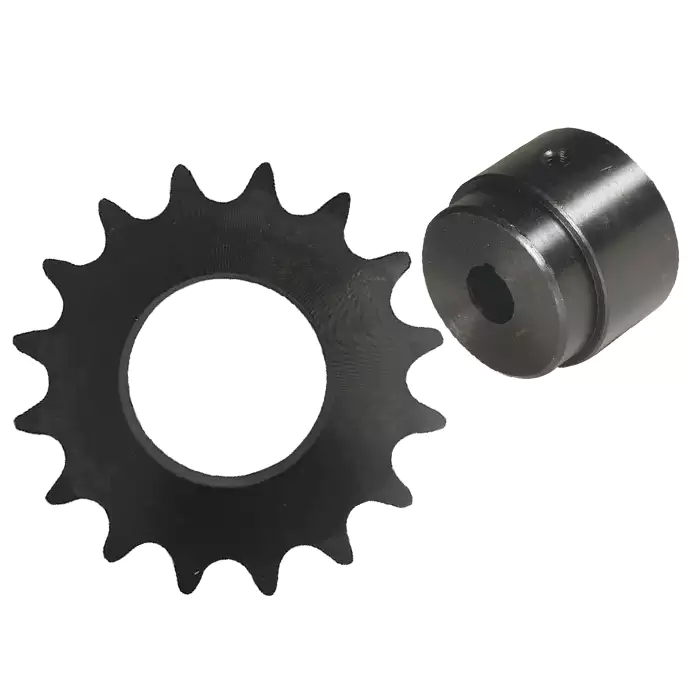
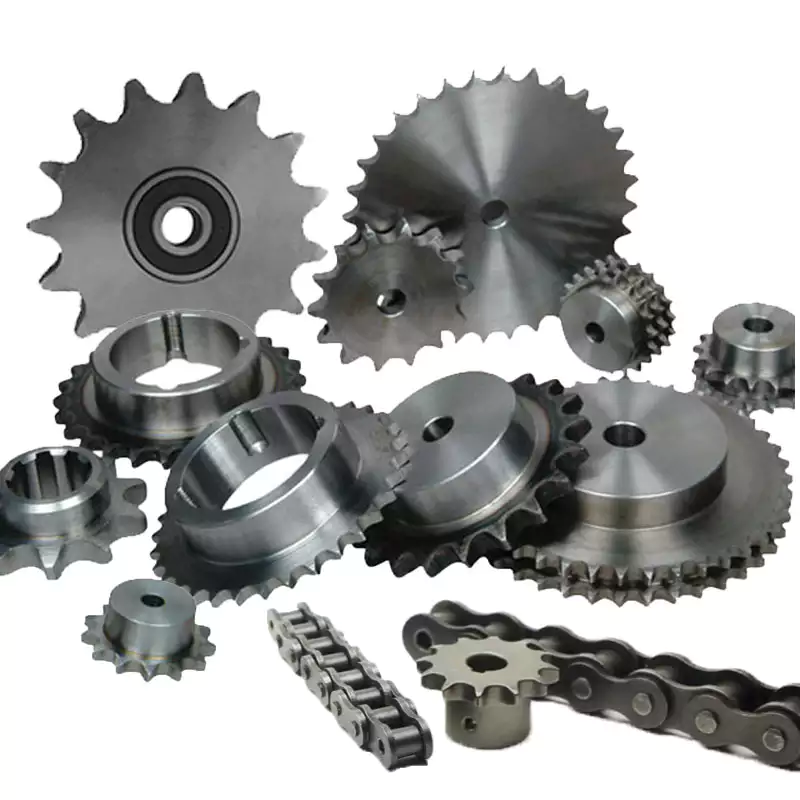
A weld-on sprocket is a type of sprocket that is designed to be welded onto a shaft or hub, typically used in industrial machinery. It is commonly used in heavy-duty applications such as conveyor systems and agricultural equipment.
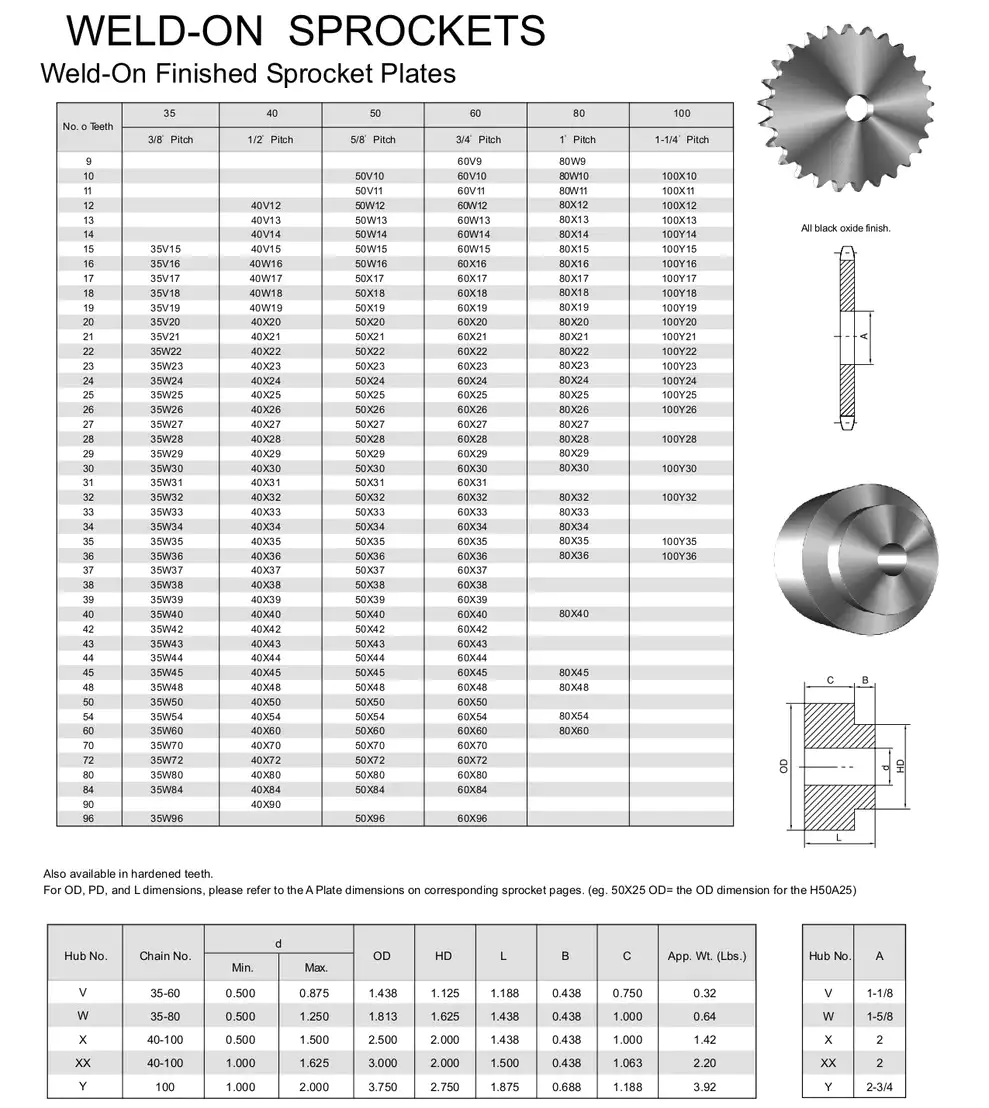
Our 50X43 Weld-on Sprocket with Hub is made of high-quality materials such as high-carbon steel, alloy steel or stainless steel. The manufacturing process includes material selection, cutting, stamping, forging, machining, heat treatment, surface hardening, surface treatment, and quality inspection to ensure the best possible quality.
The material selection process is crucial to ensure the strength and durability of the sprocket. High-carbon steel is used for lower horsepower applications while alloy steel is used for higher horsepower applications. Stainless steel is used for applications where corrosion resistance is required.
After material selection, the sprockets go through a series of processes like cutting, stamping, forging, machining, heat treatment, surface hardening, and surface treatment to achieve the desired specifications. Careful attention is paid to every process to ensure that the sprocket meets the required standards.
Heat treatment is a vital process that imparts strength and durability to the sprocket. It involves heating the sprocket to a specific temperature and then cooling it down. This process alters the structure of the steel to make it stronger and more resistant to wear.
Surface treatment is done to protect the sprocket from rust and corrosion. The sprocket is coated with a protective layer that prevents rust and corrosion from forming on its surface.
Weld-on sprockets are used in a wide range of industries. They are ideal for heavy-duty applications such as conveyor systems, agricultural equipment, and industrial machinery. For special applications or sizes, customers can choose the appropriate hub diameter to weld onto the sprocket.
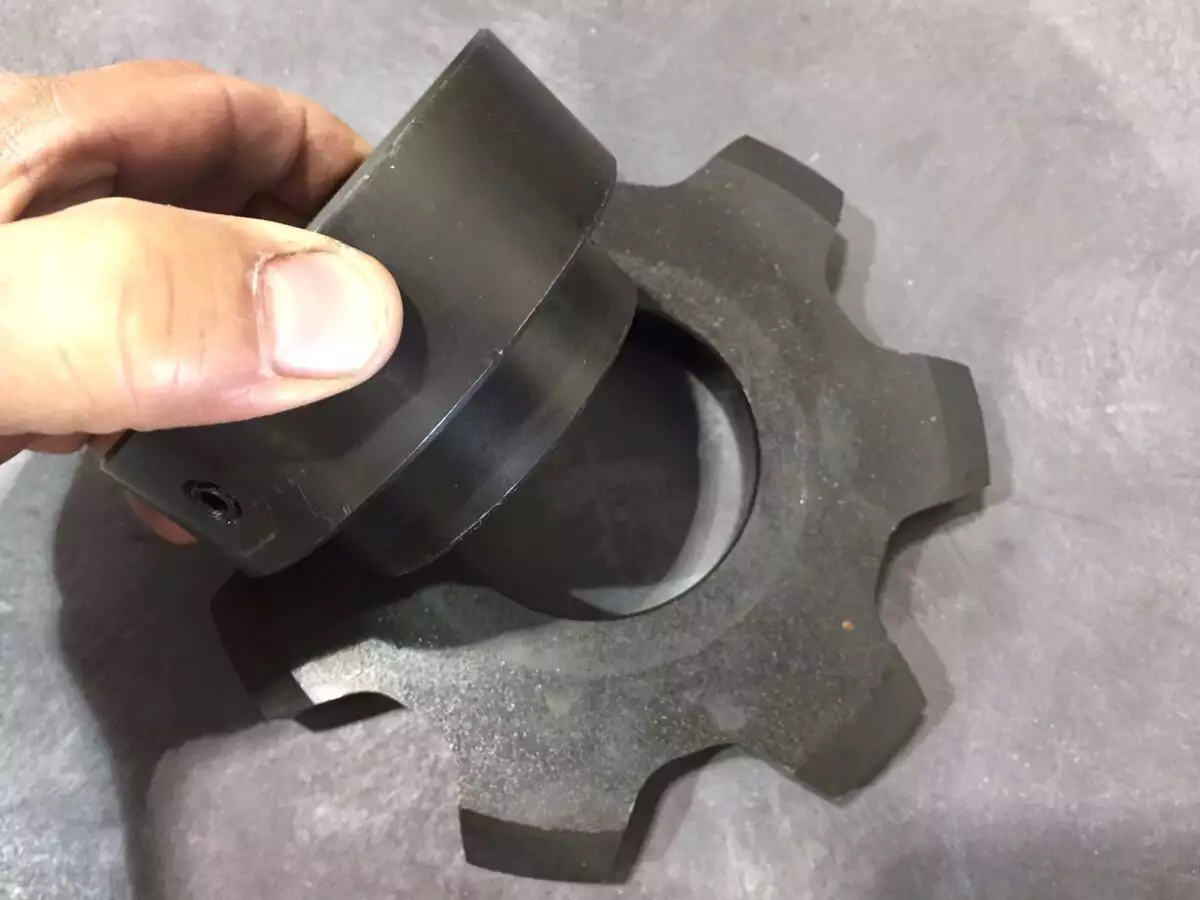
Weld-on sprockets have a higher strength compared to other types of sprockets due to the welding process that is used to attach the sprocket to the hub or shaft.
Weld-on sprockets can be customized to suit specific applications or requirements. Customers can choose the appropriate hub diameter to weld onto the sprocket.
Weld-on sprockets are cost-effective compared to other types of sprockets because they eliminate the need for a separate hub. This reduces the overall cost of the sprocket and makes it more affordable for customers.
Weld-on sprockets are easy to install and require minimal maintenance. They can be easily welded onto the shaft or hub, making them an ideal choice for a wide range of applications.
We offer a range of hubs with different diameters, including circular inner holes, square inner holes, hexagonal inner holes, and taper bore hubs. Customers can choose the appropriate hub diameter to weld onto the sprocket to suit their specific requirements.
Regular maintenance is important to ensure the longevity of the sprocket. Daily inspections, cleaning, lubrication, adjustment, and calibration are recommended to keep the sprocket in good working condition.
If the sprocket is skipping teeth, it's usually a sign of wear or damage to the sprocket or chain. The solution is to replace the worn or damaged parts.
If the sprocket breaks, it's usually due to excessive wear or damage to the sprocket or chain. The solution is to replace the worn or damaged parts.
If the sprocket shows signs of wear, it's usually due to normal wear and tear. The solution is to replace the worn parts.
If the sprocket is making noise, it's usually due to misalignment or wear. The solution is to adjust the sprocket or replace the worn parts.
If the chain is slipping, it's usually due to wear or damage to the sprocket or chain. The solution is to replace the worn or damaged parts.
We also offer other types of sprockets, including platewheel sprockets, QD sprockets, and taper lock sprockets. We also provide matching chains for all of our sprockets.
Author: Miya
Address
Luotuo Industrial Area, Zhenhai District, Ningbo City, China
Tel

 Raydafon