Raydafon Technology Group Co.,Limited
Products
Products
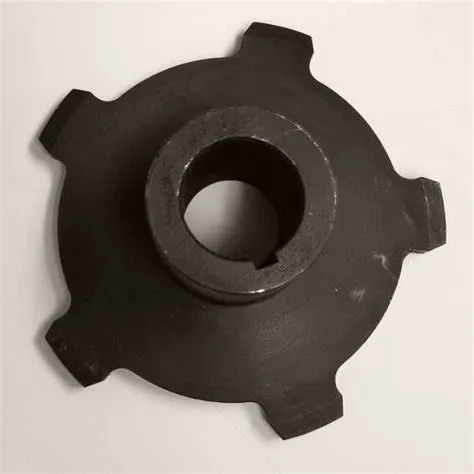
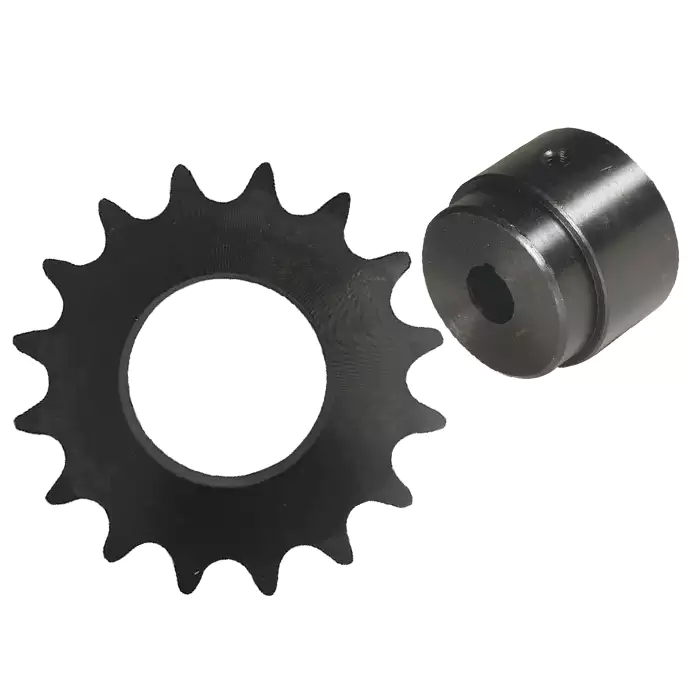
80X40 Weld-on Sprocket with Hub
  • 80X40 Weld-on Sprocket with Hub80X40 Weld-on Sprocket with Hub

80X40 Weld-on Sprocket with Hub

Raydafon Group introduces the 80X40 Weld-on Sprocket with Hub, a precision-engineered part for industrial machinery and conveyor systems. Built with durable materials and a robust design, this sprocket ensures reliable power transfer and extended lifespan, ideal for manufacturers seeking efficiency and reduced downtime. Its unique weld-on hub provides easy installation and superior stability, addressing common wear issues. Experience enhanced performance and peace of mind in demanding applications—choose Raydafon Group for quality you can trust in your operations.

80X40 Weld-on Sprocket with Hub

A Weld-on sprocket is a type of sprocket that is designed to be welded directly onto a shaft or hub. It is a cost-effective solution for applications that require a specific sprocket size or type that is not readily available. Our 80X40 Weld-on Sprocket with Hub is a high-quality sprocket that is designed for heavy-duty applications.
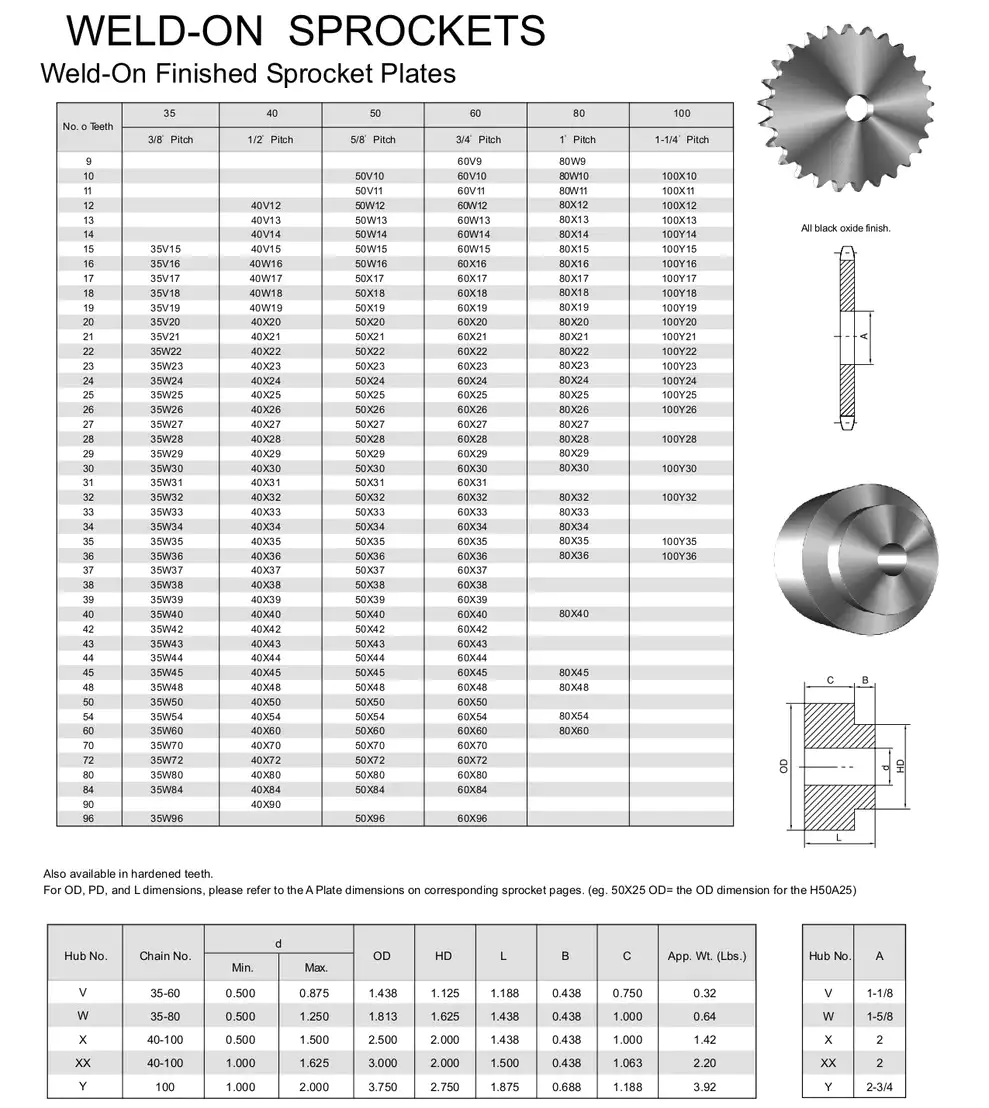
Selection Table

80X40 Weld-on Sprocket with Hub

Materials and Manufacturing Process

Our Weld-on sprocket is made of high-carbon steel, alloy steel, or stainless steel, depending on the specific application requirements. The manufacturing process includes material selection, cutting, stamping, forging, machining, heat treatment, surface hardening, surface treatment, quality inspection, and testing.

  • Material Selection: The material used for the sprocket is selected based on the required strength, wear resistance, and corrosion resistance.
  • Cutting: The raw material is cut to the required size using a cutting machine.
  • Stamping and Forging: The sprocket is formed using stamping or forging process.
  • Machining: The sprocket is machined to the required dimensions using a lathe, milling machine, or drilling machine.
  • Heat Treatment: The sprocket is heat-treated to improve its strength and wear resistance. The process includes quenching, tempering, or annealing.
  • Surface Hardening: The sprocket's surface is hardened to improve its wear resistance. The process includes carburizing, nitriding, or induction hardening.
  • Surface Treatment: The sprocket is treated to prevent corrosion. The process includes plating, painting, or coating.
  • Quality Inspection and Testing: The sprocket is inspected and tested to ensure that it meets the required specifications and quality standards.

Applications of Weld-on Sprocket

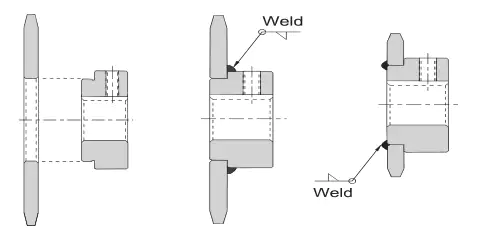
Weld-on sprockets are widely used in various applications, including conveyor systems, agricultural machinery, mining equipment, and heavy machinery. They are particularly useful in applications that require a specific sprocket size or type that is not readily available. For applications that require special design or size, customers can choose the appropriate hub to weld onto the sprocket according to the actual shaft diameter.

Advantages of Weld-on Sprocket

Compared to regular sprockets, Weld-on sprockets have several advantages:
  • Customization: Weld-on sprockets can be customized to meet specific application requirements. This includes size, tooth count, and material.
  • Cost-effective: Weld-on sprockets are a cost-effective solution for applications that require a specific sprocket size or type that is not readily available.
  • High strength: Weld-on sprockets are made of high-quality materials and are designed to withstand heavy loads and high speeds.
  • Easy to install: Weld-on sprockets can be easily installed by welding them directly onto a shaft or hub.
80X40 Weld-on Sprocket with Hub

Hub

We offer a variety of hubs with circular bores to fit our Weld-on sprockets. These hubs are made of high-quality materials and are designed to provide a secure fit for the sprocket.

Maintenance of Sprockets

To ensure the proper functioning and longevity of sprockets, regular maintenance is required. The following are some maintenance tips:

  • Daily Inspection: Check sprockets for damage, wear, and alignment.
  • Cleaning: Clean sprockets regularly to remove dirt and debris.
  • Lubrication: Lubricate sprockets regularly to reduce wear and friction.
  • Adjustment and Calibration: Adjust and calibrate sprockets as needed to ensure proper alignment and tension.

Common problems with sprockets include tooth skipping, breakage, wear, excessive noise, and chain derailing. The following are some solutions to these problems:

  • Tooth Skipping: Check alignment and tension, and replace the sprocket if necessary.
  • Breakage: Check for defects and replace the sprocket if necessary.
  • Wear: Replace the sprocket if the teeth are worn down.
  • Excessive Noise: Check for misalignment, tension, and wear, and adjust or replace the sprocket as needed.
  • Chain Derailing: Check for misalignment, tension, and wear, and adjust or replace the sprocket as needed.

Other Types of Sprockets

In addition to Weld-on sprockets, we also offer other types of sprockets, including platewheel sprockets, qd sprockets, taper lock sprockets, and more. We also provide compatible chains for each type of sprocket.

80X40 Weld-on Sprocket with Hub

Author: Miya

Hot Tags: 80x40 weld-on sprocket, industrial sprocket hub supplier, weld-on sprocket wholesale
Send Inquiry
Contact Info
Get customized quotes for transmission components, gearboxes, and machinery. Our engineers will respond within 24 hours.
Online
X
We use cookies to offer you a better browsing experience, analyze site traffic and personalize content. By using this site, you agree to our use of cookies. Privacy Policy
Reject Accept