
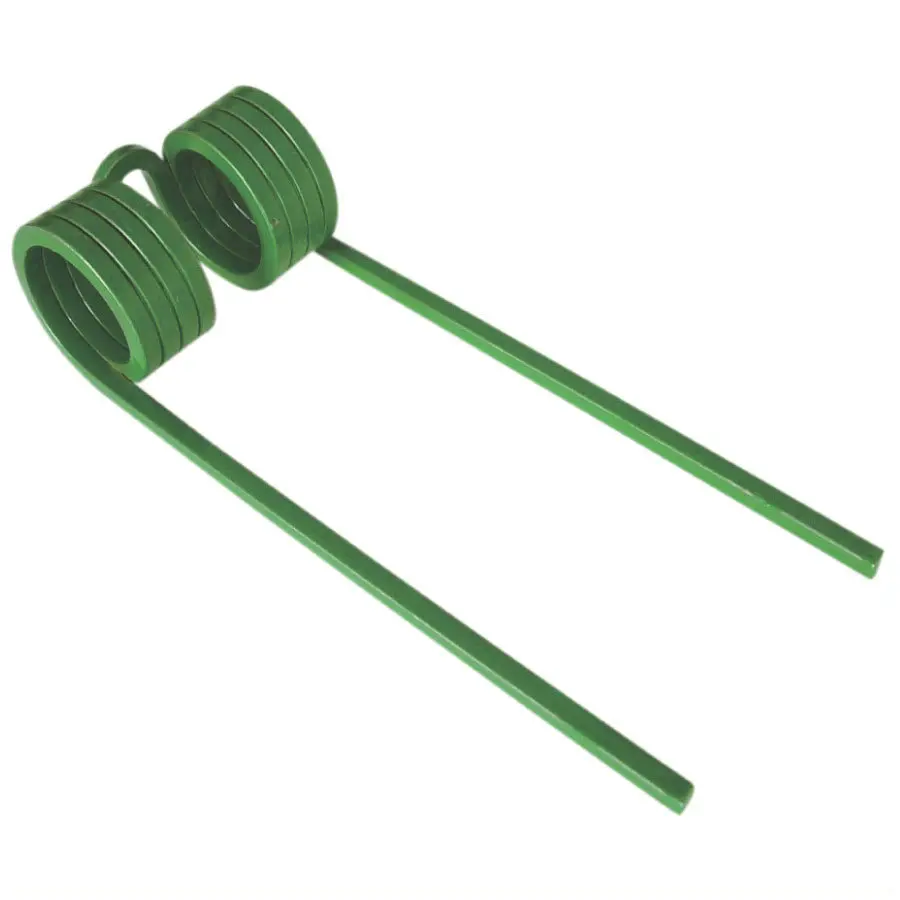
A spring tine refers to a type of farm implement that is used for loosening soil and controlling weeds. It is made of a long, narrow piece of spring steel that has been twisted or coiled to create a tine or prong. The tine is then attached to a farm implement such as a cultivator, harrow, or tiller. The Durable Torsion Spring Harrow Tine Baler Teeth E90235 is a versatile and durable spring tine that is perfect for a variety of farm implements.
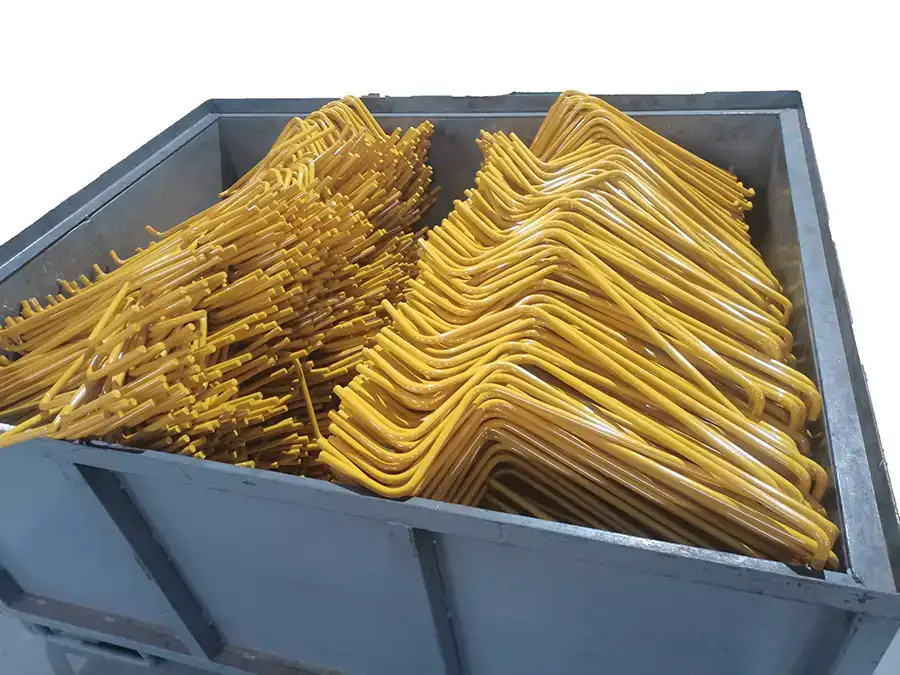
Spring tines are used in a wide variety of agricultural machinery to perform different tasks. Here are some of the common applications:
In light cultivation machinery such as garden plows, seedbed preparers, and shallow cultivators, spring tines are used as loosening components. They help to loosen the soil effectively without damaging the soil structure and also cut the roots of weeds.
Spring tines serve as key components in machines such as mowers, rototillers, and versatile lawnmowers to comb lawns, remove dead grass layers, improve lawn air permeability and drainage, and remove stones and debris from the grass clumps.
When clearing crop residues before sowing and leveling the land, some agricultural machinery uses spring tine structures to crush the crop residues in the surface soil to facilitate the smooth entry and germination of seeds.
Spring tines are commonly used in small and flexible orchard rototillers or specialized orchard sweepers to protect tree trunks from damage and remove weeds and fallen leaves.
During the process of recovering plastic films in farmland residues, some equipment also uses a design with spring tines to scrape and collect the agricultural films on the ground.
The Durable Torsion Spring Harrow Tine Baler Teeth E90235 can be used as a replacement part for different agricultural machinery brands and models. Below is a table showing the compatibility of this spring tine with different farm implements:
[ninja_tables id="412473"]Spring tines, like any other mechanical part, undergo wear and tear during use and may require replacement when the following signs are observed:
Check the tip and body of the spring tine for severe thinning, deformation, breakage, or rusting of the metal blade. If the tine cannot be inserted into the soil or perform its task effectively, it may be worn out and require replacement.
If the spring tine's elasticity weakens and it cannot vibrate up and down freely like a new one to adapt to ground undulations and cut weeds, the spring may have fatigued and failed.
If any of the spring parts twist, break, or become permanently deformed, it may be necessary to replace the spring tine.
If the farm machinery cannot work effectively, such as not reaching the required depth for soil loosening or clearing the crop residues completely, it may be due to the decreased efficacy of the spring tine.
If the spring tine becomes excessively sharp due to wear or deformation, it may cut the roots or stems of crops, leading to unintended damage.
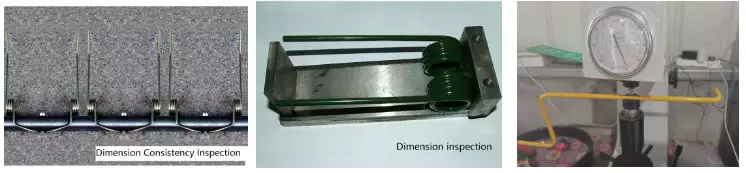
Choosing the right spring tine can make all the difference in the farming process. Here are some factors to consider:
Different types of farming operations require different shapes and hardness levels of spring tines. For example, loosening the soil may require wider and more elastic spring tines, while weed control may require sharper and harder spring tines.
The material used to make the spring tine affects its durability and effectiveness. High-quality spring tines are made of wear-resistant and corrosion-resistant metals such as carbon steel, alloy steel, or stainless steel, and may undergo surface treatment processes such as heat treatment or electroplating to enhance wear resistance and corrosion resistance.
The length, width, and thickness of the spring tine should match the design of the farm machinery to ensure correct installation and effective operation.
The spring's spring force and rebound performance directly affect the spring tine's working effect. While ensuring effective cutting and soil loosening, it is also necessary to prevent soil structure damage or excessive impact on the mechanical system caused by excessive spring force.
Author: Miya
Address
Luotuo Industrial Area, Zhenhai District, Ningbo City, China
Tel

 Raydafon