
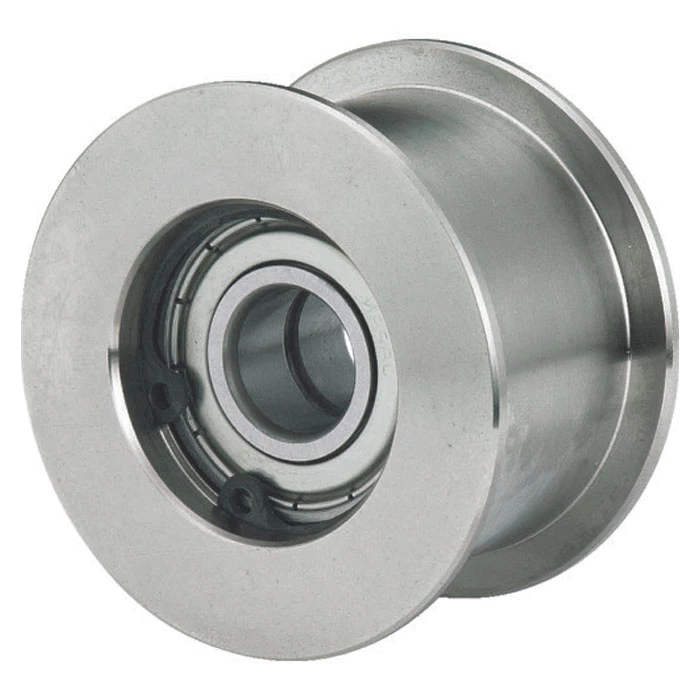

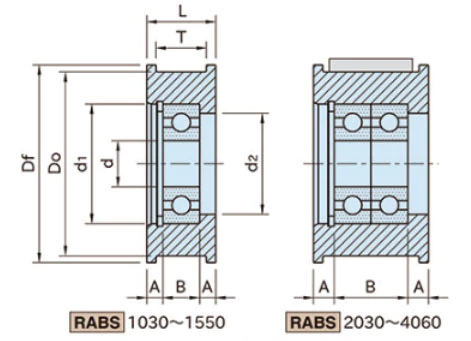
 MaterialPulley:Steel (S45C)electroless nickel platedBearing/retaining ring:Steel
| Part Number | Flange Height | D0 | Df | T | d | B | L | d1 | d2 | A | Bearing | Weight | Proper idler pin |
| RABS1030 | 1.5 | 30 | 33 | 11 | 8 | 7 | 14 | 22 | 18 | 3.5 | 608ZZ | 55 | PID0807 |
| RABS1040 | 40 | 43 | 10 | 8 | 15 | 26 | 22 | 6000ZZ | 115 | PID1008 | |||
| RABS1530 | 1.5 | 30 | 33 | 16 | 8 | 7 | 19 | 22 | 18 | 6 | 608ZZ | 70 | PID0807 |
| RABS1540 | 40 | 43 | 10 | 8 | 20 | 26 | 22 | 6000ZZ | 150 | PID1008 | |||
| RABS1550 | 3 | 50 | 56 | 270 | |||||||||
| RABS2030 | 1.5 | 30 | 33 | 21 | 8 | 14 | 24 | 22 | 18 | 5 | 608ZZX2 | 95 | RLB0814 |
| RABS2040 | 40 | 43 | 10 | 16 | 25 | 26 | 22 | 4.5 | 6000ZZX2 | 200 | PID1016 | ||
| RABS2050 | 3 | 50 | 56 | 22 | 340 | ||||||||
| RABS2540 | 1.5 | 40 | 43 | 26 | 10 | 16 | 30 | 26 | 22 | 7 | 6000ZZX2 | 225 | PID1016 |
| RABS2550 | 3 | 50 | 56 | 400 | |||||||||
| RABS4060 | 3 | 60 | 66 | 41 | 12 | 20 | 45 | 32 | 26 | 12.5 | 6201ZZX2 | 840 |
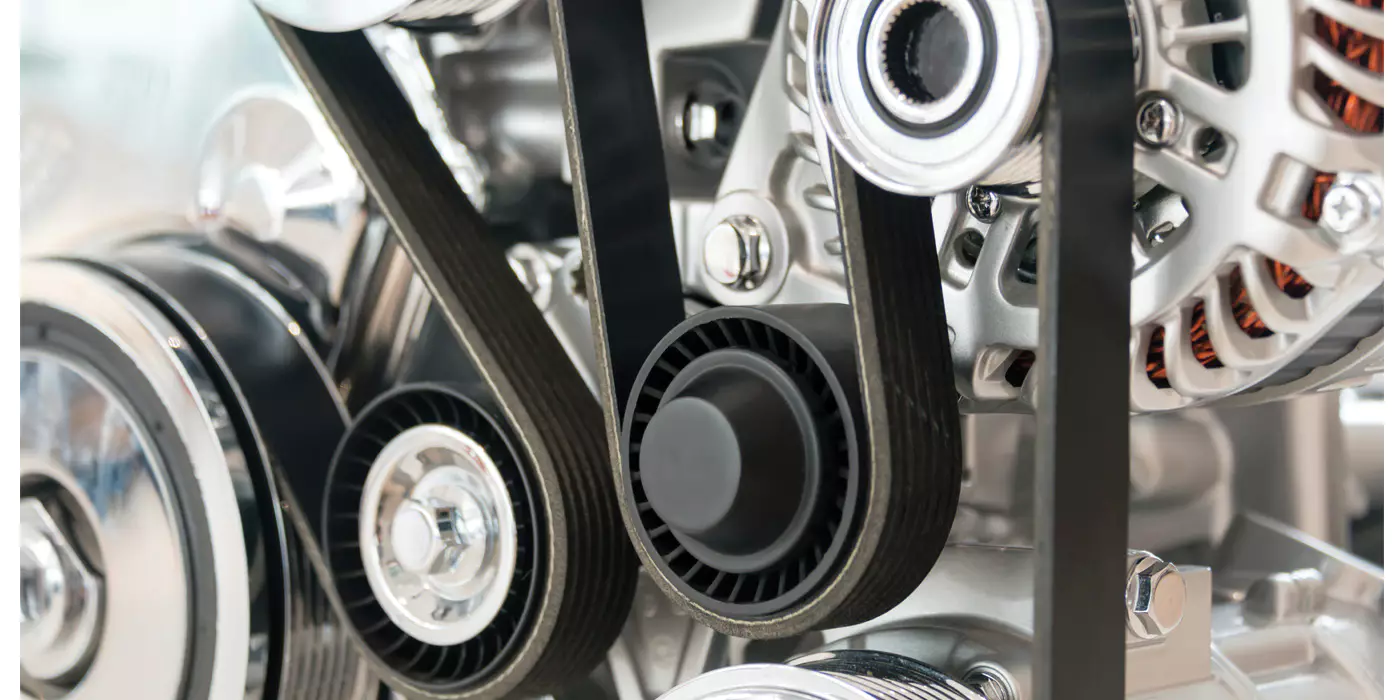
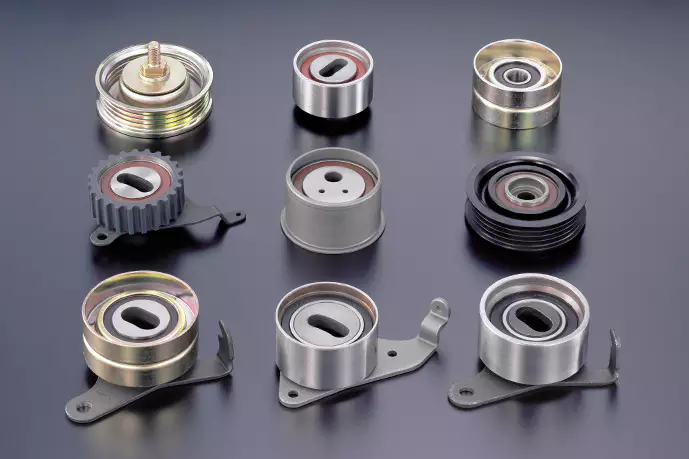 1. Forging: Forging is the process of pressing metal materials into the desired shape by heating them. Using this process, you can make high strength and wear resistant idler pulley, but the production cost is relatively high.2. Casting: Casting is the process of producing items by melting metal and pouring it into a prefabricated casting mold. Large quantities of idler pulley can be made with this process at a relatively low cost, but they may not have the strength and wear resistance of forged pulley.3. Machining: Use machining processes such as turning, milling and drilling to transform the metal block into the shape of idler pulley. This method can produce high precision and high quality idler pulley, but the manufacturing cost is high.4. Injection molding: Injection molding is a process for injecting molten plastic material into a prefabricated mold to form idler pulley shape. The process makes for lightweight, low-cost idler pulley, but they may not have the wear and strength of metal.
Address
Luotuo Industrial Area, Zhenhai District, Ningbo City, China
Tel

 Raydafon