
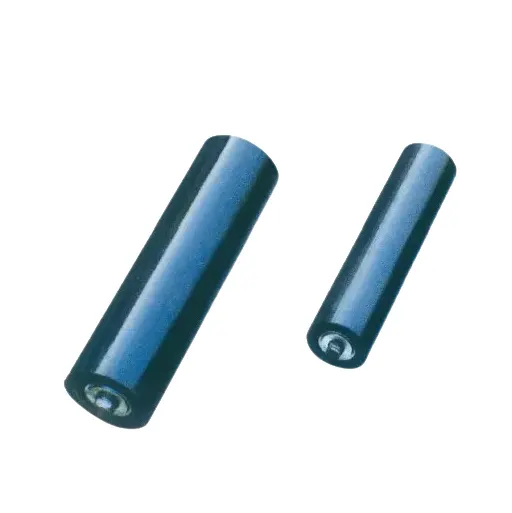

The TD75 Belt Conveyor Roller is a key part of the TD75 conveyor system, a standard design from 1975 used in mining, ports, and other industries. These rollers, also called idlers, support the conveyor belt, keeping it moving smoothly while carrying heavy materials like coal, ore, or gravel.
They come in different types—like carrying, return, or impact rollers—to handle various jobs on the conveyor. Built to last in tough conditions, they help prevent belt sagging, reduce wear, and keep things running efficiently. This page explains what these rollers do, where they’re used, how to install them, what customers say, and answers common questions, all in plain language to help you decide if they’re right for your operation.
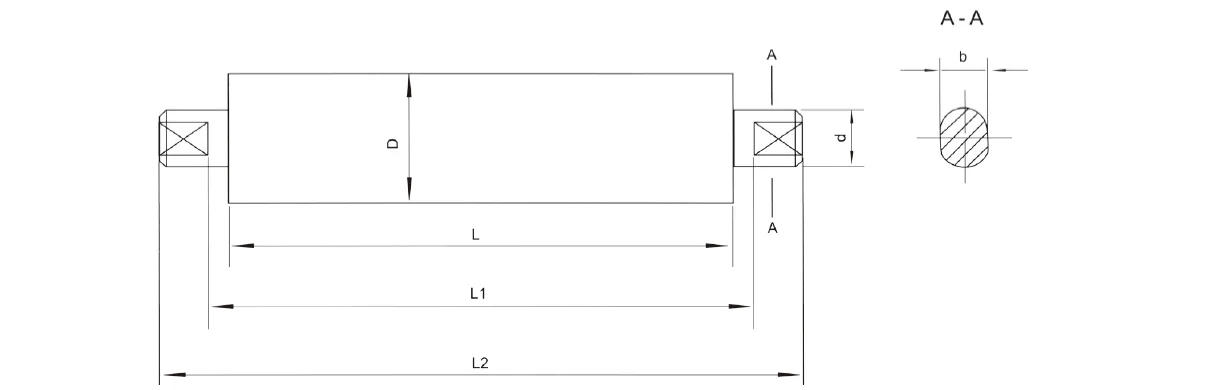 Unit: mm
| Belt width B | L | L1 | L2 | D | d | b | Bearing model |
| 500 | 190 | 200 | 220 | Ø89 | Ø20 | 14 | 4G204 |
| 600 | 610 | 640 | |||||
| 650 | 240 | 250 | 270 | ||||
| 750 | 760 | 790 | |||||
| 800 | 305 | 315 | 335 | ||||
| 950 | 960 | 990 | |||||
| 1000 | 375 | 385 | 408 | Ø108 | Ø25 | 18 | 4G305 |
| 1150 | 1160 | 1200 | |||||
| 1200 | 455 | 465 | 488 | ||||
| 1400 | 1410 | 1450 | |||||
| 1400 | 525 | 535 | 558 | ||||
| 1600 | 1610 | 1650 |
The TD75 Belt Conveyor Roller is used in industries that move bulk materials. Here’s where it fits:
Mining
Supports belts carrying coal, iron ore, copper, or bauxite in underground or open-pit mines.
Handles heavy loads over long distances, like in a 4 km coal conveyor in Shanxi.
Metallurgy
Used in smelting plants for moving raw or processed metals.
Works in high-temperature setups with heat-resistant coatings.
Ports and Terminals
Supports belts for loading/unloading coal, grain, or aggregates.
Rust-resistant options are great for salty coastal environments.
Construction
Moves gravel, sand, or aggregates on job sites.
Fits mobile or fixed conveyors for flexibility.
Power Plants
Handles belts moving coal or ash in power facilities.
Built for dusty, high-load conditions.
Installing TD75 rollers is simple if you follow these steps:
Check Specs
Confirm the roller’s diameter, length, and type (carrying, return, or impact) match your conveyor.
Ensure the conveyor frame is straight and sturdy.
Mount the Rollers
Place carrying rollers on the top side, return rollers on the bottom, and impact rollers at loading points.
Use brackets or frames to secure rollers, typically every 1-1.5m for carrying rollers and 2-3m for return rollers.
Align Properly
Set rollers perpendicular to the belt to avoid mistracking.
For self-aligning rollers, adjust the pivot angle (30°-50°) to correct drift.
Inspect Bearings and Seals
Check that bearings are greased with lithium soap grease and triple labyrinth seals are intact.
Don’t disassemble seals—they protect against dirt and water.
Adjust Belt Tension
Set tension to prevent sagging but avoid overloading rollers. Use:[ T = \frac{P_p \cdot 1000}{v} ] where (T) is tension (Newtons), (P_p) is power (kilowatts), and (v) is belt speed (meters/second).
Test the System
Run the conveyor at low speed to check roller alignment and belt tracking.
Adjust brackets or pivot mechanisms if the belt drifts.
Use trained workers to meet safety standards.
Keep a record of setup details for maintenance.
Contact us for help with installation.
Regular care keeps TD75 rollers working well:
Inspect Regularly: Check rollers, bearings, and seals every 3-6 months for wear or damage.
Grease Bearings: Use lithium soap grease to keep them spinning smoothly.
Clean the Belt: Use scrapers to prevent material buildup on rollers.
Check Alignment: Ensure rollers are straight to avoid belt drift.
Use OEM Parts: Replace with TD75-compliant parts for best performance.
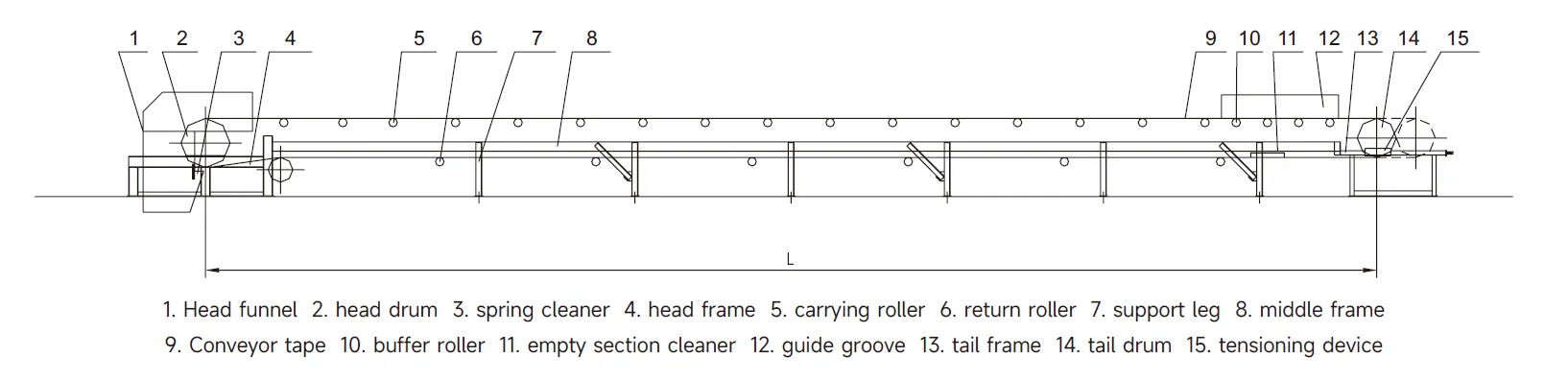
| Roller type | Speed (m/s) | Belt width(mm) | Roller type | Speed (m/s) | Belt width(mm) | ||||||||||
| 500 | 650 | 800 | 1000 | 1200 | 1400 | 500 | 650 | 800 | 1000 | 1200 | 1400 | ||||
| Capacity Q(t/h) | Capacity Q(t/h) | ||||||||||||||
| Trough roller | 0.8 | 78 | 131 | ― | ― | ― | ― | Parallel roller | 0.8 | 41 | 67 | 118 | ― | ― | ― |
| 1 | 97 | 164 | 278 | 435 | 655 | 891 | 1 | 52 | 88 | 147 | 230 | 345 | 469 | ||
| 1.25 | 122 | 206 | 348 | 544 | 819 | 1115 | 1.25 | 66 | 110 | 184 | 288 | 432 | 588 | ||
| 1.6 | 156 | 264 | 445 | 696 | 1048 | 1427 | 1.6 | 84 | 142 | 236 | 368 | 553 | 753 | ||
| 2 | 191 | 323 | 546 | 853 | 1284 | 1748 | 2 | 103 | 174 | 289 | 451 | 677 | 922 | ||
| 2.5 | 232 | 391 | 661 | 1033 | 1556 | 2118 | 2.5 | 125 | 211 | 350 | 546 | 821 | 1117 | ||
| 3.15 | ― | ― | 824 | 1233 | 1858 | 2528 | 3.15 | ― | ― | ― | ― | ― | ― | ||
| 4 | ― | ― | ― | ― | 2202 | 2996 | 4 | ― | ― | ― | ― | ― | ― |
Here’s what people using TD75 rollers say:
Shanxi Coal Mining Co., China
“These rollers from Raydafon keep our belts running smoothly. We’ve cut maintenance time and costs significantly.” – Zhang Wei, Operations Manager
Australian Gold Mine
“The rollers handle heavy loads without issues. They’ve saved us money on belt replacements.” – Sarah Thompson, Site Engineer
South African Port Terminal
“The rust-resistant rollers work great by the coast. We barely need to touch them.” – Thabo Nkosi, Logistics Manager
Chilean Copper Mine
“These rollers improved our conveyor’s uptime by 15%. They’re reliable and easy to maintain.” – Juan Morales, Maintenance Supervisor
These comments show [Your Company Name] delivers quality rollers that customers rely on.
Here are answers to common questions, with keywords to help you find us:
1. What’s a TD75 Belt Conveyor Roller?
A roller (or idler) that supports the conveyor belt in mining, carrying or returning materials like coal or ore.
2. What types of rollers are available?
Carrying rollers for the loaded belt, return rollers for the empty belt, and impact rollers for loading zones.
3. What are they made of?
Q235 steel for tubes, 45# steel for shafts, with optional coatings like zinc or epoxy for rust protection.
4. How often should I maintain them?
Check every 3-6 months, grease bearings, and clean off buildup. Don’t touch the seals.
5. Can they be customized?
Yes, we offer different sizes, types, and coatings to fit your conveyor. Contact [Your Company Name].
6. Where are they used?
Mining, metallurgy, ports, construction, and power plants for moving bulk materials.
7. How do they improve my conveyor?
They reduce belt wear, prevent sagging, and cut downtime for better efficiency.
Address
Luotuo Industrial Area, Zhenhai District, Ningbo City, China
Tel

 Raydafon