
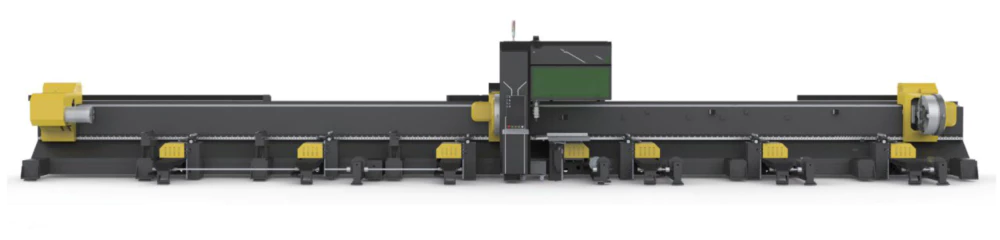
 Basic DesignThree Jaws: As the name suggests, it features three jaws or chuck grips. These are typically arranged in a circular pattern and can be adjusted radially (inward and outward) to hold various sizes ofworkpieces.vertical Orientation: Unlike traditional horizontal chucks, in a vertical three-chuck system, the workpiece is held vertically. This orientation can be beneficial for certain types of machining operations.FunctioningClamping Mechanism: The three jaws move simultaneously and symmetrically when actuated. They converge towards the center of the chuck, gripping the workpiece firmly from three equidistant points. This ensures a balanced and secure hold on the workpiece.Workpiece Positioning: The vertical orientation and three-point grip facilitate precise centering of the workpiece, which is essential for operations requiring high accuracy, such as CNC machining.ApplicationsMachining Operations: Commonly used in turning, drilling, milling, and other machining operations where vertical access to the workpiece is required or preferred.Handling Symmetrical Workpieces: Particularly suitable for cylindrical or round objects that need to be machined symmetrically or require end-face machining.AdvantagesStability: The vertical orientation, aided by gravity, can offer more stability for certain workpieces, especially those that are long or unwieldy.Space Efficiency: Vertical chucks typically have a smaller footprint compared to horizontal setups, which can be advantageous in space-constrained workshops.Ergonomics: For some operations, vertical chucks can be more ergonomic to work with, as they may offer easier access to the workpiece.Types of Vertical Three-ChucksManual and Power Operated: They can be manually operated with a chuck key or power-actuated using hydraulic, pneumatic, or electric means.
Address
Luotuo Industrial Area, Zhenhai District, Ningbo City, China
Tel

 Raydafon