Raydafon Technology Group Co.,Limited
Products
Products
04B-1 Standard Bore Sprocket
  • 04B-1 Standard Bore Sprocket04B-1 Standard Bore Sprocket

04B-1 Standard Bore Sprocket

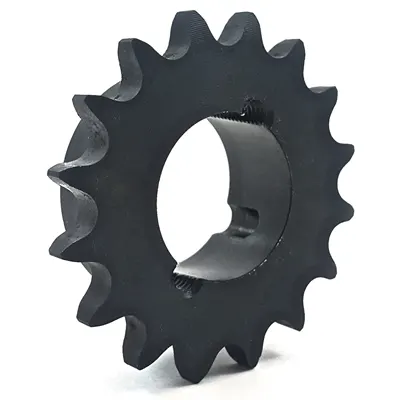
Raydafon Group's 04B-1 Standard Bore Sprocket effortlessly drives precision machinery with superior durability and seamless compatibility. Crafted from high-strength steel, it ensures reliable performance in industrial applications, enhancing efficiency and reducing downtime for engineers and maintenance teams. Experience smooth operation and long-lasting value—your trusted partner for seamless power transmission.

04B-1 Standard Bore Sprocket

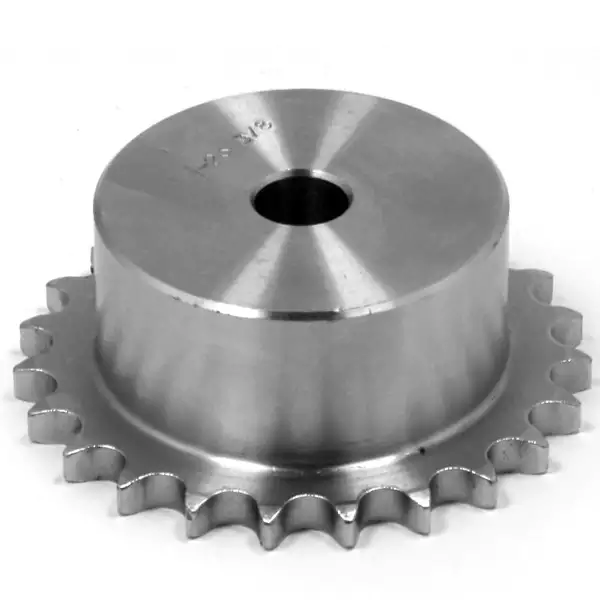
A standard bore sprocket is a mechanical device used to transmit power and motion between rotating shafts with the help of a chain. It is a common component in many industrial applications and can be found in various machines and equipment. The 04B-1 Standard Bore Sprocket is a type of sprocket that conforms to the 04B-1 British standard.
04B-1 Standard Bore Sprocket

Basic Structure and Customization of Sprockets

A standard bore sprocket consists of teeth or cogs that engage with the chain, a bore or hole in the center that fits onto the shaft, and a keyway or key slot that aligns the sprocket to the shaft. When it comes to customizing sprockets, the following factors need to be determined:

  • Material: The most common materials used for sprockets are high carbon steel, alloy steel, and stainless steel. The material chosen depends on the environment, load, and speed of the application.
  • Tooth Profile: The tooth profile determines how the sprocket engages with the chain and affects the smoothness and efficiency of the power transmission.
  • Number of Teeth: The number of teeth on the sprocket determines the speed ratio between the driver and driven shafts.
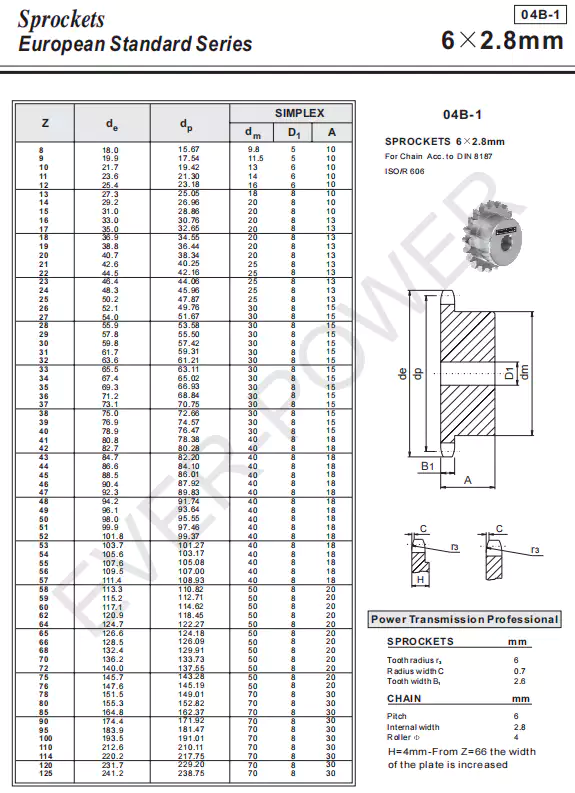
  • Dimensions: The dimensions of the sprocket, including the pitch diameter, outside diameter, and thickness, depend on the chain size and application requirements.
  • Center Bore: The center bore is the hole in the center of the sprocket that fits onto the shaft. It needs to be sized and keyed properly to prevent slippage or misalignment.
  • Keyway: The keyway is a slot or groove in the bore that accommodates the key to transmit torque between the sprocket and shaft.
  • Surface Treatment: Surface treatment such as heat treatment, hardening, and coating can enhance the durability, wear resistance, and corrosion resistance of the sprocket.

Materials and Processes Used in Our Sprockets

Our sprockets are made of high-quality materials and undergo a series of processes to ensure the highest performance and reliability. The material options we offer include:

  • High Carbon Steel: This material is cost-effective and provides good wear resistance and strength. It is suitable for moderate to high load and speed applications.
  • Alloy Steel: This material has higher strength and toughness than high carbon steel and can withstand higher loads and speeds. It is suitable for heavy-duty applications.
  • Stainless Steel: This material has excellent corrosion resistance and is suitable for applications in harsh environments or where hygiene is critical.

The processes we use in the production of our sprockets include:

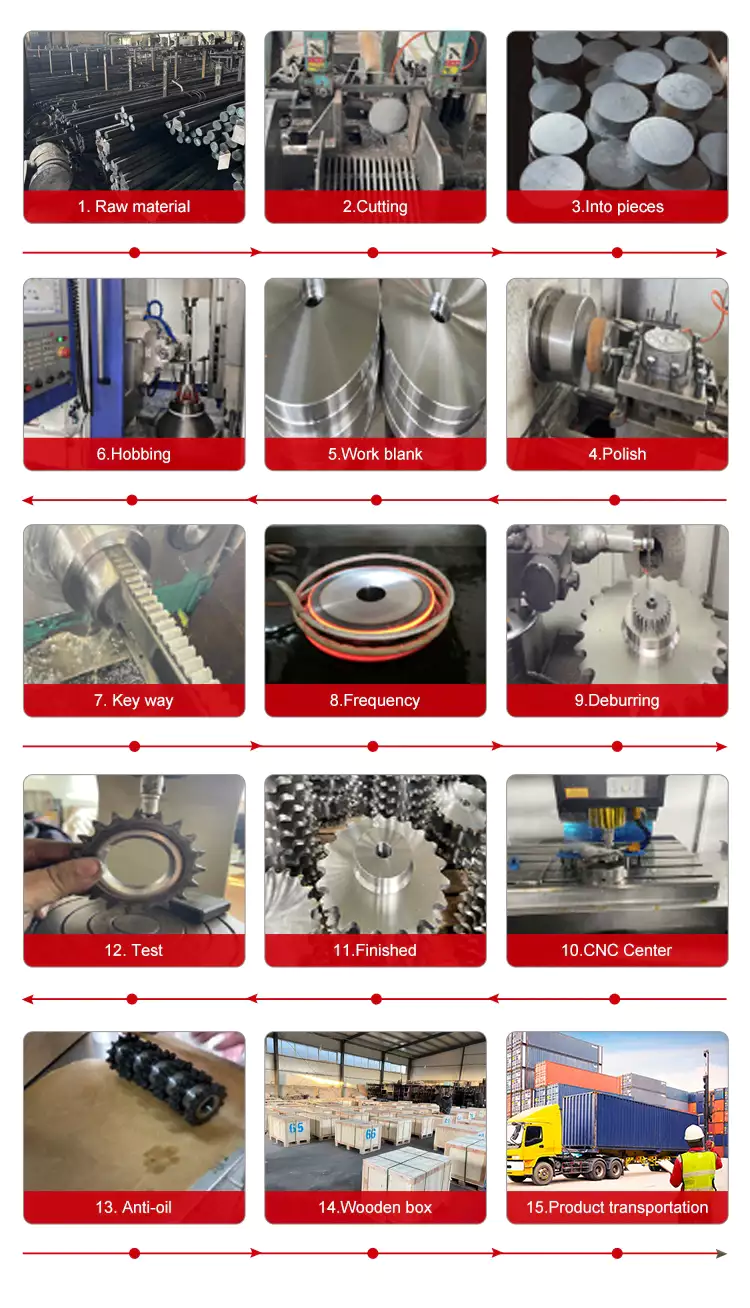
  • Material Selection and Cutting: We carefully select the appropriate material based on the application requirements and use advanced cutting tools to ensure precision and consistency.
  • Forging or Stamping: We use forging or stamping techniques to shape the sprocket teeth and profile, which ensures a high degree of accuracy and strength.
  • Machining: We use CNC machining centers and lathes to finish the sprocket to the required dimensions and tolerances.
  • Heat Treatment: We use heat treatment techniques such as quenching and tempering to enhance the hardness and toughness of the sprocket.
  • Surface Treatment: We use various surface treatment methods such as nitriding, black oxide coating, and zinc plating to improve the wear resistance, corrosion resistance, and appearance of the sprocket.
  • Quality Check: We perform rigorous quality checks throughout the production process to ensure that the sprocket meets the required standards and specifications.

Applications of Standard Bore Sprockets

Standard bore sprockets are widely used in various industries and applications, including:
  • Heavy Machinery and Equipment: Sprockets are used in cranes, excavators, bulldozers, and other heavy machinery to transmit power and motion.
  • Food Processing and Packaging: Sprockets made of stainless steel are used in food processing and packaging equipment where hygiene and corrosion resistance are critical.
  • Chemical and Pharmaceutical: Sprockets are used in chemical and pharmaceutical processing equipment where resistance to corrosion and harsh chemicals is required.
  • Assembly Lines: Sprockets are used in assembly lines to move products and components along the line.
  • Logistics and Warehousing: Sprockets are used in conveyor systems to move goods and materials between different areas of the warehouse or facility.
04B-1 Standard Bore Sprocket

Maintenance and Troubleshooting of Sprockets

Proper maintenance and inspection of sprockets can extend their lifespan and ensure optimal performance. The following are some maintenance tips:

  • Daily Inspection: Inspect the sprocket daily for any signs of wear, damage, or misalignment. Check the chain tension and alignment as well.
  • Cleaning: Clean the sprocket regularly using a wire brush or solvent to remove any dirt, debris, or rust. This helps to prevent corrosion and wear.
  • Lubrication: Apply a suitable lubricant to the sprocket and chain to reduce friction and wear. Use a lubricant that is compatible with the material and environment.
  • Adjustment and Calibration: Adjust the chain tension and alignment as needed to ensure smooth operation. Calibrate the sprocket and chain to the correct speed ratio and tooth profile.

Some common problems that can occur with sprockets include:

  • Jumping Teeth: This can happen when the chain tension is too loose or the sprocket teeth are worn. Adjust the tension or replace the sprocket if necessary.
  • Broken Teeth: This can happen due to excessive load or impact. Replace the sprocket or reduce the load if necessary.
  • Wear: Normal wear can occur over time due to friction and stress. Replace the sprocket if the wear exceeds the allowable limits.
  • Noise: Excessive noise can be caused by misalignment, worn teeth, or lack of lubrication. Address the root cause of the noise and take appropriate action.
  • Chain Slippage: This can happen when the chain tension is too loose or the sprocket teeth are worn. Adjust the tension or replace the sprocket if necessary.

Other Types of Sprockets and Chains

In addition to standard bore sprockets, we also offer other types of sprockets such as platewheel sprocket, idler sprocket, QD sprocket, and taper lock sprocket. These sprockets have different features and applications and can be used in conjunction with different types of chains. We also offer a wide range of chains that are compatible with our sprockets, including roller chain, conveyor chain, leaf chain, and specialty chain.
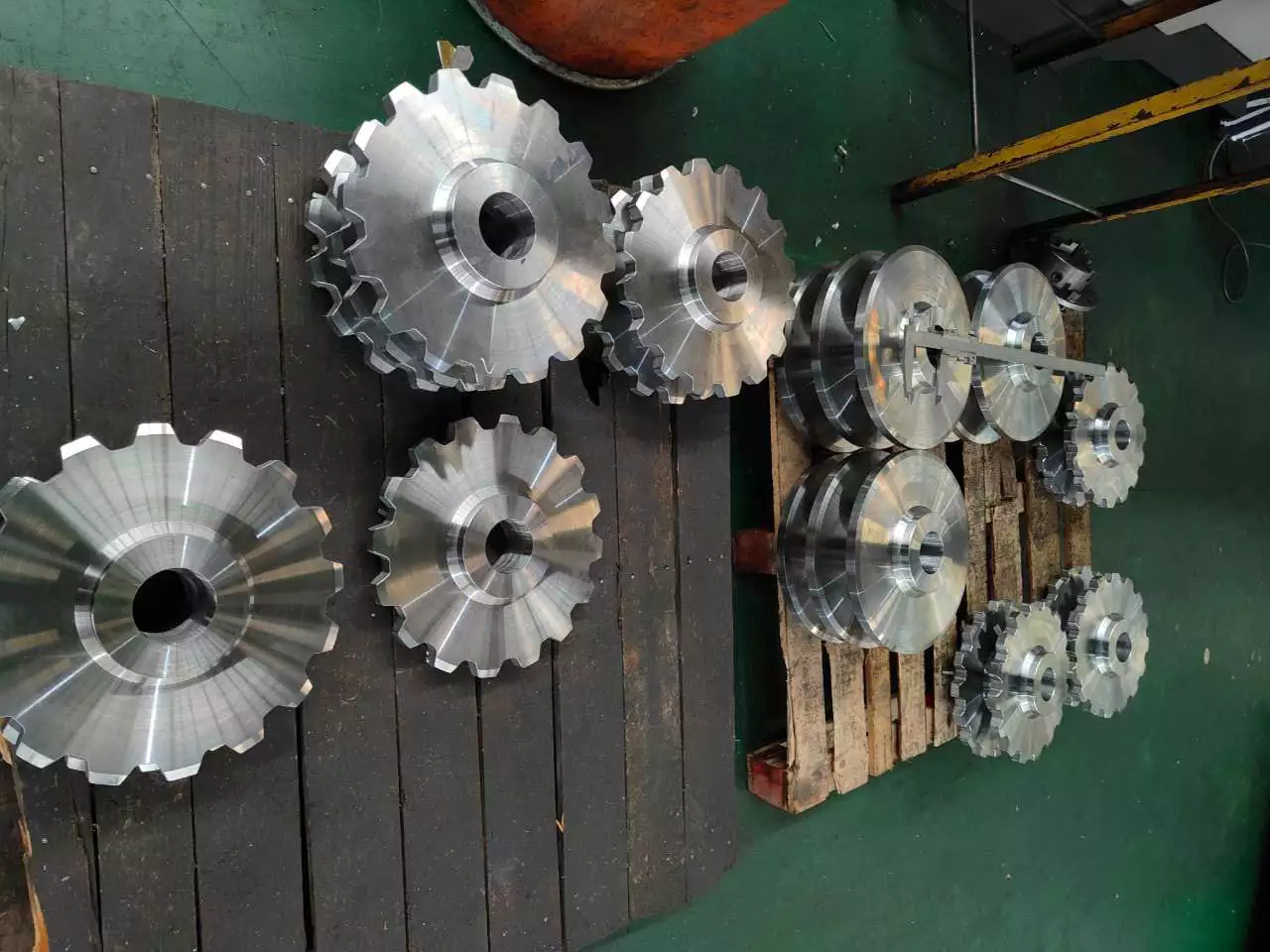
04B-1 Standard Bore Sprocket

Author: Miya

Hot Tags: 04B-1 Standard Bore Sprocket Manufacturer, Standard Bore Sprocket Wholesale, Custom Industrial Sprockets
Send Inquiry
Contact Info
Get customized quotes for transmission components, gearboxes, and machinery. Our engineers will respond within 24 hours.
Online
X
We use cookies to offer you a better browsing experience, analyze site traffic and personalize content. By using this site, you agree to our use of cookies. Privacy Policy
Reject Accept