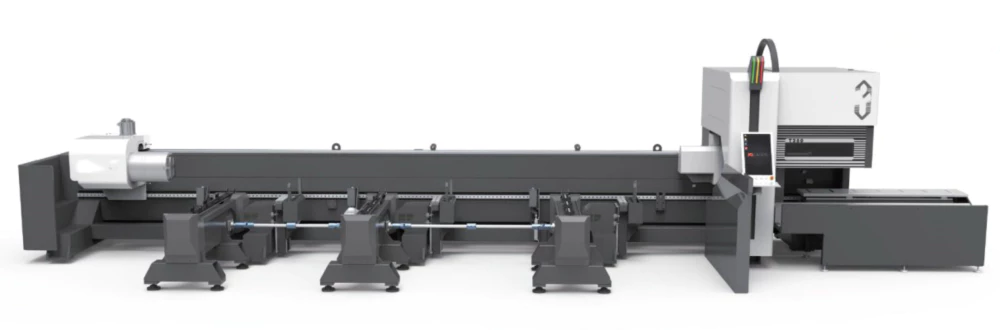
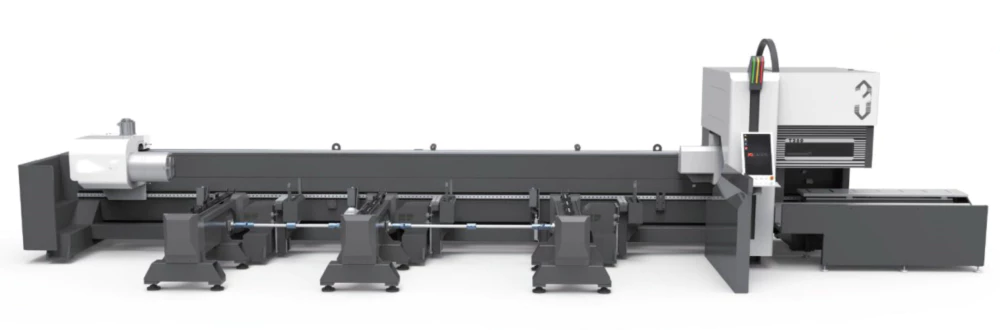
Discover the Raydafon Group's Fiber Laser Pipe Cutting Machine T350, a cutting-edge solution for fabricating metal pipes with unparalleled precision. This machine excels with its durable construction, advanced laser technology for clean cuts, and user-friendly design, offering fast operation and minimal waste. Perfect for manufacturers, engineers, and workshops, it enhances production efficiency and versatility in industrial settings. Users experience reduced downtime, cost savings, and heightened satisfaction through reliable performance. Stand out from competitors with its energy-efficient system, compact footprint, and superior cutting quality. Experience innovation—upgrade your workflow today with Raydafon Group's trusted engineering.
How does a fiber laser machine handle pipes of different sizes and shapes?
Adjustable Chuck and Clamping SystemAdaptive Chuck: The machine typically features a chuck system that can adjust to accommodate different pipe diameters. This system can securely clamp a wide range of pipe sizes.Three-Jaw Chuck: Many fiber laser machines use a three-jaw chuck design, which provides even clamping force and stability for round pipes and tubes.Programmable CNC ControlSoftware Flexibility: The machine is controlled by CNC (Computer Numerical Control) software, which can be programmed to handle pipes of various sizes and shapes. The software dictates the movement of the laser head and the rotation of the pipe to execute precise cuts.Customizable Cutting Paths: Operators can input specific dimensions and cutting paths into the software, allowing for customized processing of different pipe profiles.Support Systems for Long PipesSupport Structures: To handle long pipes, the machine may include support structures or conveyors that stabilize the pipe during the cutting process, preventing sagging or bending.Advanced Laser Head MovementMulti-Axis Movement: The laser head in many fiber laser machines can move along multiple axes. This allows it to make complex cuts on pipes, including angled and contoured cuts.Automatic Focusing: Some machines have auto-focusing capabilities, adjusting the laser focus for pipes of different thicknesses.Specialized Software for Tubular ComponentsDedicated Pipe Cutting Software: Many fiber laser machines come with software specifically designed for cutting tubular materials, which can automatically calculate the cutting path for different shapes, including round, square, rectangular, and oval pipes.Versatility in ShapesProfile Cutting: Besides round pipes, these machines can handle square, rectangular, and other profiled tubes, making them versatile for a range of applications.Safety and PrecisionSafety Mechanisms: For different sizes and shapes, the machine maintains its safety standards, ensuring that the cutting process is not only precise but also safe for operators.
How does the fiber laser pipe cutting machine work
Laser Generation and TransmissionFiber Laser Source: The machine generates a laser beam through a fiber optic cable. The core of the cable is doped with rare-earth elements like ytterbium, which amplify the light.Beam Delivery: The laser beam is transmitted to the cutting head via a flexible fiber optic cable, which makes it easy to maneuver and direct the beam.Cutting ProcessFocusing the Laser: The cutting head focuses the laser beam onto the pipe. This concentrated beam has a small focal diameter and high intensity, enabling it to melt, burn, or vaporize the material.Manipulating the Pipe: Pipes are held and rotated using a chuck or similar holding mechanism. This allows the laser to cut the pipe circumferentially or along its length as required.Control and PrecisionCNC System: The machine is typically controlled by a Computer Numerical Control (CNC) system, which precisely guides the laser head and manages the rotation of the pipe for accurate cuts.Programmable Cutting: Operators can program the machine to execute specific patterns, shapes, and designs. The software can also adjust parameters like laser power, speed, and focus.Material HandlingAdaptability: The machine can handle a variety of pipe diameters and lengths, and its settings can be adjusted to accommodate different material types and thicknesses.Support Systems: For longer pipes, support systems or conveyors may be used to maintain stability during the cutting process.Safety and EfficiencyExtraction System: To manage fumes and particles generated during cutting, the machine is equipped with an extraction system.Safety Features: Enclosures, safety interlocks, and sensors are often included to ensure operator safety.
We use cookies to offer you a better browsing experience, analyze site traffic and personalize content. By using this site, you agree to our use of cookies.Privacy Policy


 Raydafon