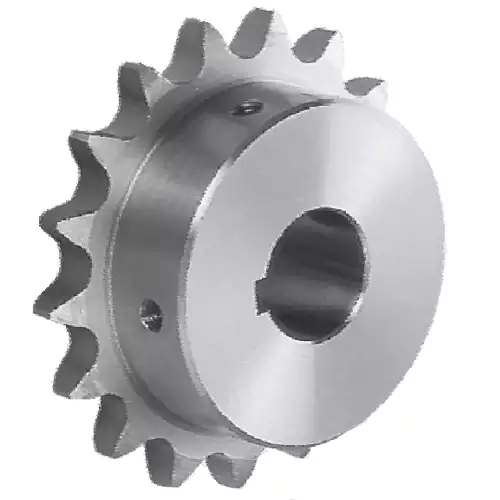
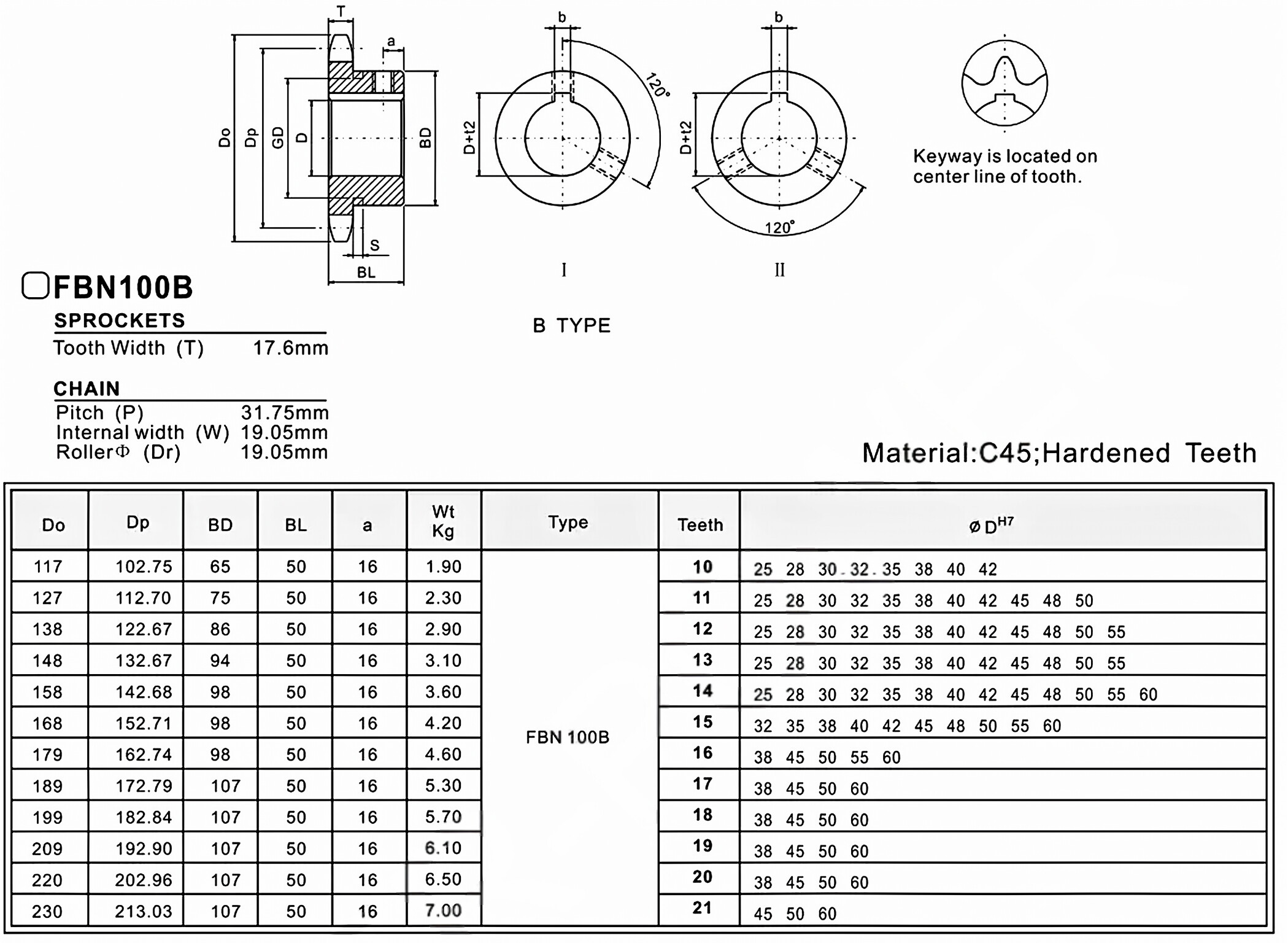
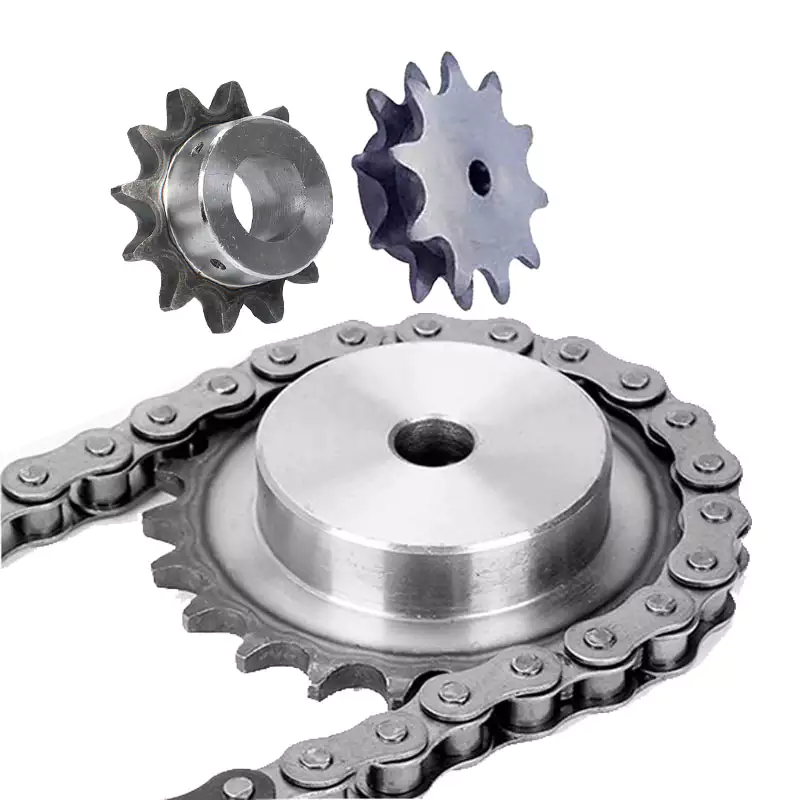
Discover the Raydafon Group's Finished Bore Sprocket FBN100B Asian Standard, a durable component designed for seamless power transmission in machinery applications. Crafted from high-quality materials with precision engineering, it ensures reliable performance and long service life under demanding conditions. Ideal for industries like manufacturing and automotive, this sprocket meets Asian standards for compatibility and efficiency, offering users peace of mind by reducing downtime and maintenance costs. Its superior design and proven reliability set it apart from competitors. Choose Raydafon Group for robust, high-performance solutions—explore this sprocket today and enhance your operational efficiency!
A finished bore sprocket is a type of sprocket that has a pre-machined hole to fit onto a specific shaft size. The FBN100B Asian Standard finished bore sprocket is one of the most widely used types of sprockets in various industries. It is known for its high precision, durability, and ease of installation.
Materials and Manufacturing Process
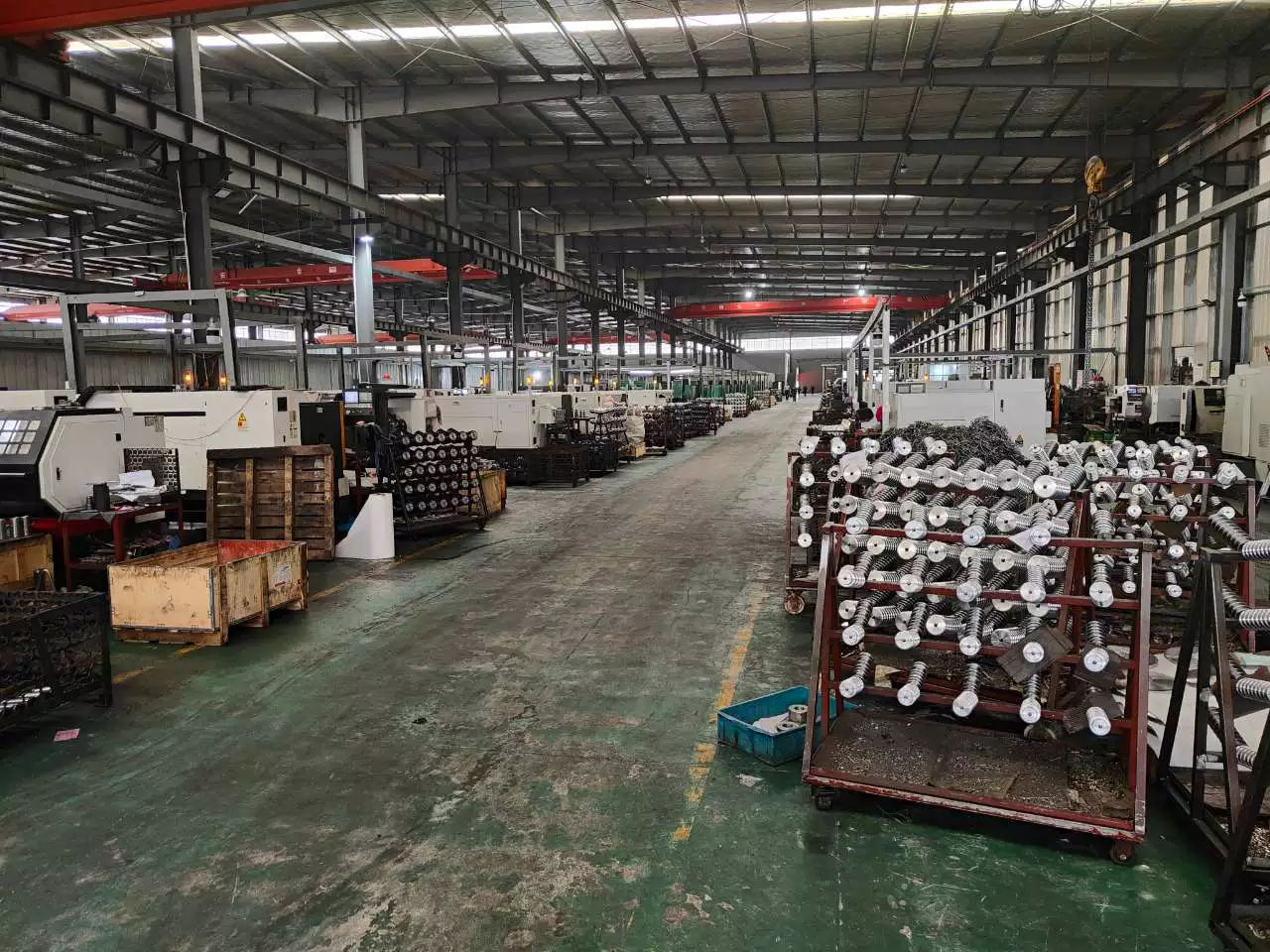
The FBN100B Asian Standard finished bore sprocket is made of high-quality materials such as high-carbon steel, alloy steel, or stainless steel. The selection of materials is based on the specific application and working conditions. The manufacturing process involves material selection, cutting, stamping, forging, machining, heat treatment, surface hardening, rust prevention, and quality testing.
Material Selection: The selection of materials is based on the specific application and working conditions. High-carbon steel is used for applications that require high strength and durability. Alloy steel is used for applications that require increased wear resistance and corrosion resistance. Stainless steel is used for applications that require rust prevention and hygiene.
Cutting: Cutting is the process of cutting the material into the desired shape and size. This is done using various cutting tools such as saws, laser cutters, or water jets.
Stamping: Stamping is the process of punching or pressing the material into a specific shape using a stamping die.
Forging: Forging is the process of shaping the material by applying pressure with a hammer or press.
Machining: Machining is the process of cutting the material to the desired dimensions and shape using various cutting tools such as lathes, milling machines, or drills.
Heat Treatment: Heat treatment is the process of heating and cooling the material to improve its mechanical properties. The FBN100B sprocket undergoes a quenching and tempering process to achieve the desired hardness and toughness.
Surface Hardening: Surface hardening is the process of hardening the surface of the sprocket to improve its wear resistance. The FBN100B sprocket undergoes induction hardening to achieve a hardened surface layer.
Rust Prevention: Rust prevention is the process of applying a coating or treatment to the material to prevent rust. The FBN100B sprocket undergoes a rust prevention treatment to ensure long-lasting service life.
Quality Testing: Quality testing is the process of ensuring that the finished product meets the required specifications. The FBN100B sprocket undergoes various quality tests such as dimensional inspection, hardness testing, and surface inspection before being shipped to the customer.
Applications of Plate Wheel Sprocket
Plate wheel sprockets are used in various industries such as heavy machinery and equipment, food processing and packaging, chemical and pharmaceutical, assembly lines, logistics, and warehousing.
Heavy Machinery and Equipment: Plate wheel sprockets are widely used in various types of heavy machinery and equipment, such as construction machinery, mining machinery, and agricultural machinery.
Food Processing and Packaging: Plate wheel sprockets are used in various types of food processing and packaging equipment, such as conveyor systems, filling machines, and labeling machines.
Chemical and Pharmaceutical: Plate wheel sprockets are used in various types of chemical and pharmaceutical equipment, such as mixing machines, drying machines, and tablet presses.
Assembly Lines: Plate wheel sprockets are used in various types of assembly line equipment, such as conveyor systems, sorting machines, and packaging machines.
Logistics and Warehousing: Plate wheel sprockets are used in various types of logistics and warehousing equipment, such as conveyor systems, palletizers, and stackers.
Maintenance and Troubleshooting
Proper maintenance and troubleshooting are essential to ensure the long-lasting service life of the FBN100B sprocket.
Daily Inspection: Daily inspection involves checking the sprocket for any signs of wear, damage, or misalignment. Any issues should be addressed immediately to prevent further damage.
Cleaning: Cleaning the sprocket regularly helps remove any dirt, debris, or contaminants that can cause damage or wear.
Lubrication: Proper lubrication helps reduce friction and wear between the sprocket and the chain. Lubrication should be done according to the manufacturer's recommendations.
Adjustment and Calibration: Proper adjustment and calibration help ensure that the sprocket and chain are working together correctly. Any misalignment or calibration issues should be addressed immediately.
Common issues that can arise with sprockets include tooth skipping, breakage, wear, noise, and chain derailment. These issues can be caused by various factors such as improper installation, improper lubrication, or incorrect chain tension. The appropriate solution will depend on the specific issue.
Other Types of Sprockets and Chains
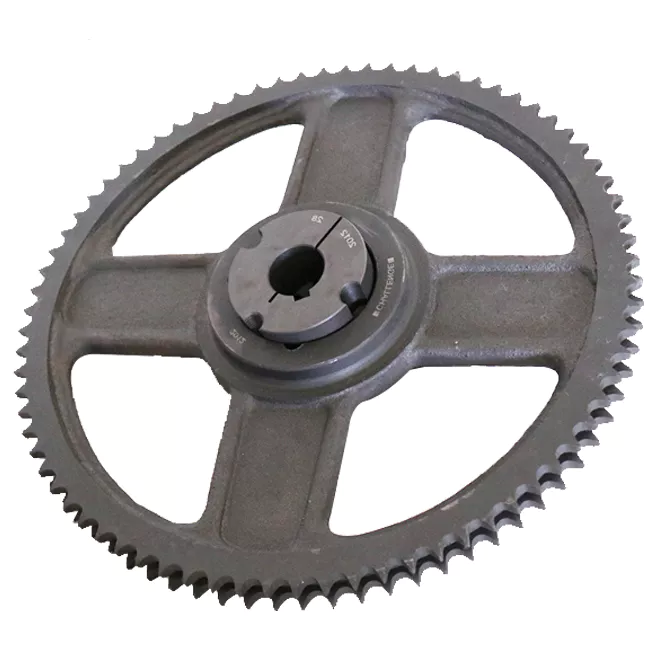
In addition to the FBN100B Asian Standard finished bore sprocket, we also offer other types of sprockets such as taper lock sprockets, QD sprockets, idler sprockets, and various types of chains. Author: Miya
Hot Tags: Finished Bore Sprocket FBN100B Asian Standard, Custom Sprocket Supplier, Asian Standard Sprocket Wholesale
We use cookies to offer you a better browsing experience, analyze site traffic and personalize content. By using this site, you agree to our use of cookies. Privacy Policy

 Author: Miya
 Raydafon