
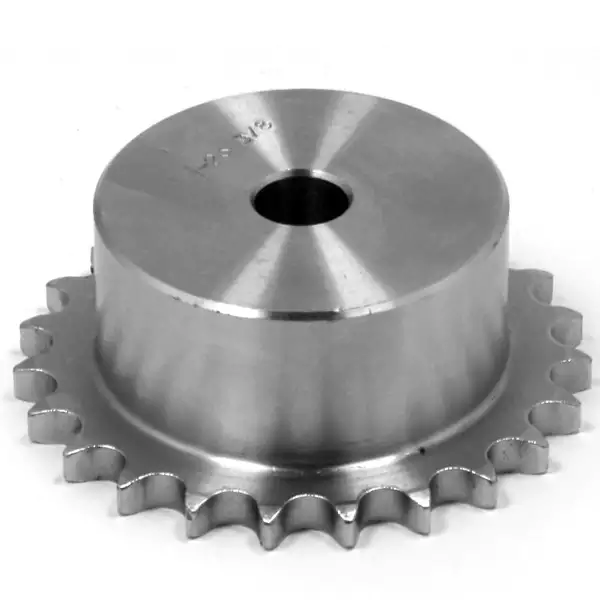
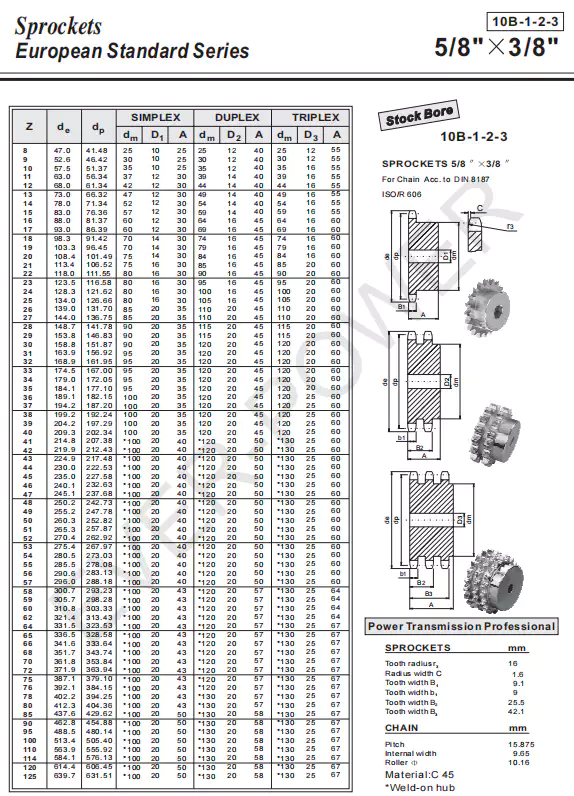
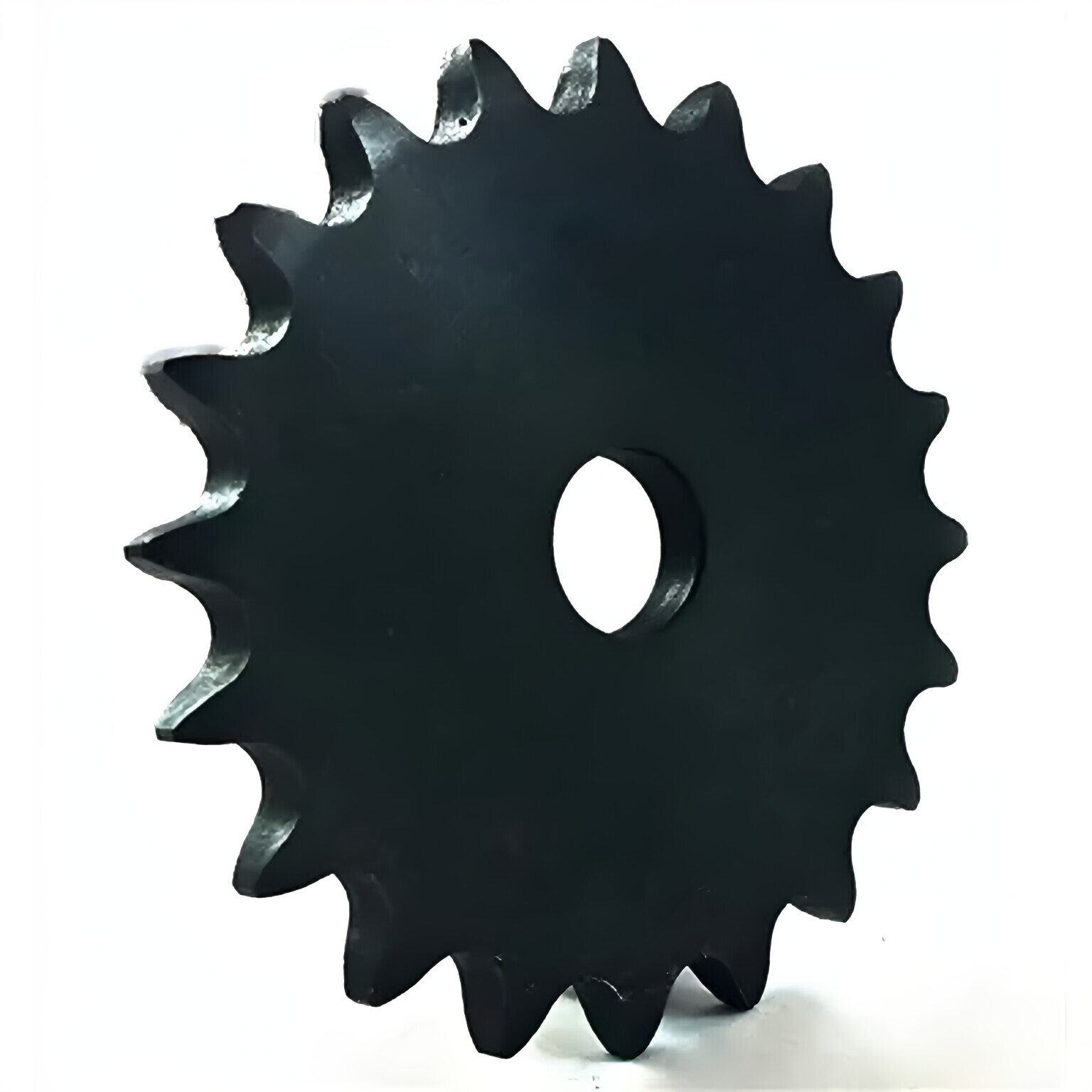
A standard bore sprocket is a type of sprocket that is commonly used in various industrial applications. It is designed for use with roller chains and is used to transmit power between rotating shafts.
A sprocket consists of teeth, a bore, and sometimes keyways. The teeth engage with the rollers of the chain to transmit motion and power. When customizing a sprocket, several factors need to be considered:
The material used for the sprocket depends on the specific application. It can be made of high carbon steel, alloy steel, or stainless steel.
The tooth profile determines how the sprocket engages with the chain. The most common tooth profiles are ANSI standard and British standard.
The number of teeth on the sprocket affects the speed and torque transmission ratio.
The dimensions of the sprocket, such as outer diameter and width, are determined based on the specific requirements of the application.
The bore is the central hole in the sprocket that fits onto the shaft. It needs to be properly sized to ensure a secure fit.
A keyway is a slot in the bore that allows a key to be inserted to prevent rotation between the sprocket and the shaft.
The surface of the sprocket can be treated to improve its durability and resistance to wear and corrosion.
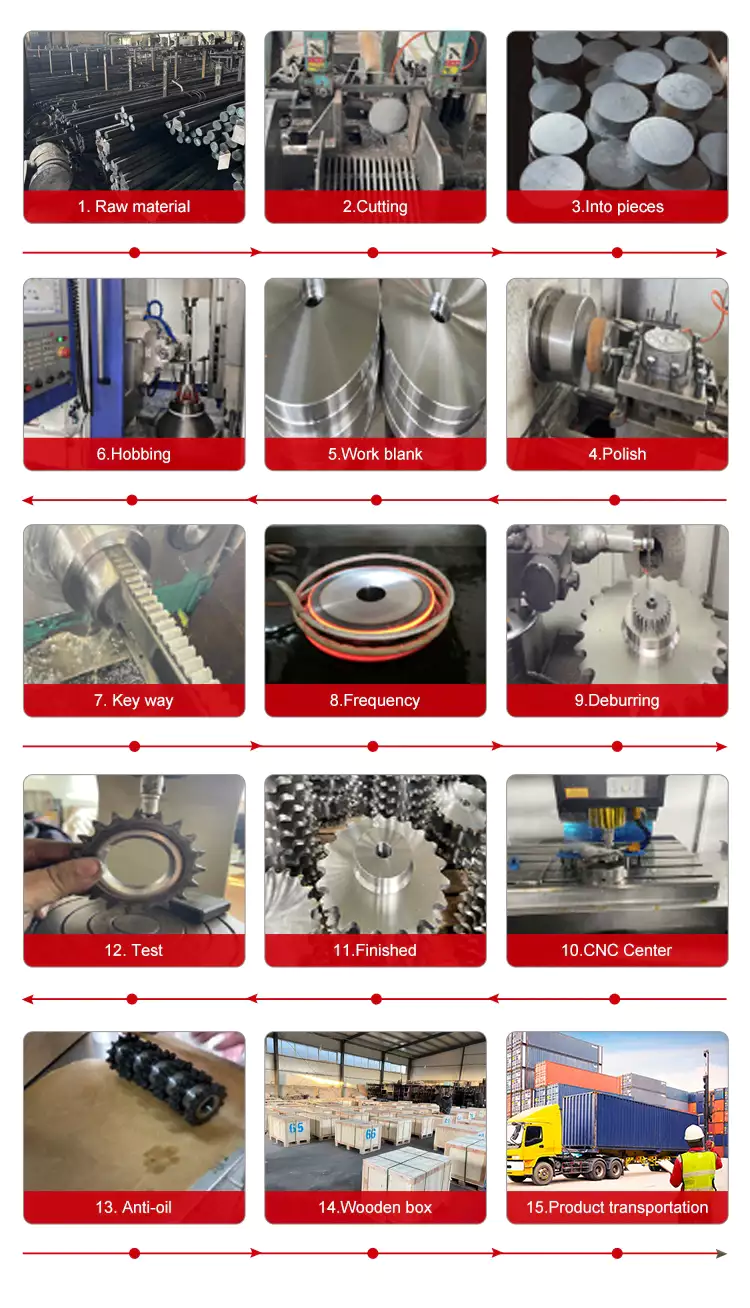
Our sprockets are made from high carbon steel, alloy steel, or stainless steel. The manufacturing process involves material selection, cutting, stamping or forging, machining (turning, milling, drilling), heat treatment (quenching, tempering, surface hardening), surface treatment (anti-rust treatment), and quality inspection.
Our sprockets are widely used in various industries, including:
Proper maintenance of sprockets is essential for their longevity and optimal performance. The following points should be considered:
Regularly inspect the sprocket for any signs of damage, wear, or misalignment.
Clean the sprocket to remove dirt, debris, and lubricant build-up.
Apply appropriate lubrication to ensure smooth operation and reduce wear.
Periodically check and adjust the tension and alignment of the chain to maintain proper engagement with the sprocket.
Common problems with sprockets include tooth skipping, breakage, wear, excessive noise, and chain detachment. These issues can be addressed by:
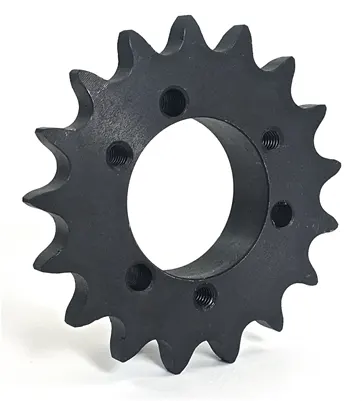
In addition to the 10B-1-2-3 Standard Bore Sprocket, we also offer a variety of other sprockets such as platewheel sprockets, idler sprockets, qd sprockets, and taper lock sprockets. We also provide compatible chains.

Author: Miya
Address
Luotuo Industrial Area, Zhenhai District, Ningbo City, China
Tel

 Raydafon