
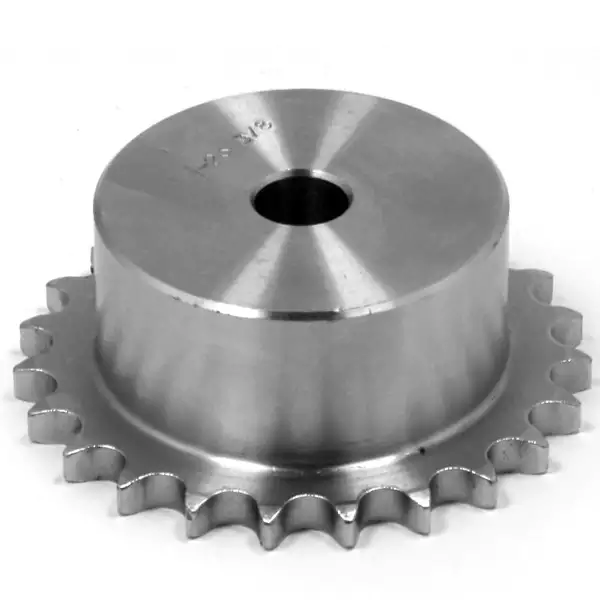
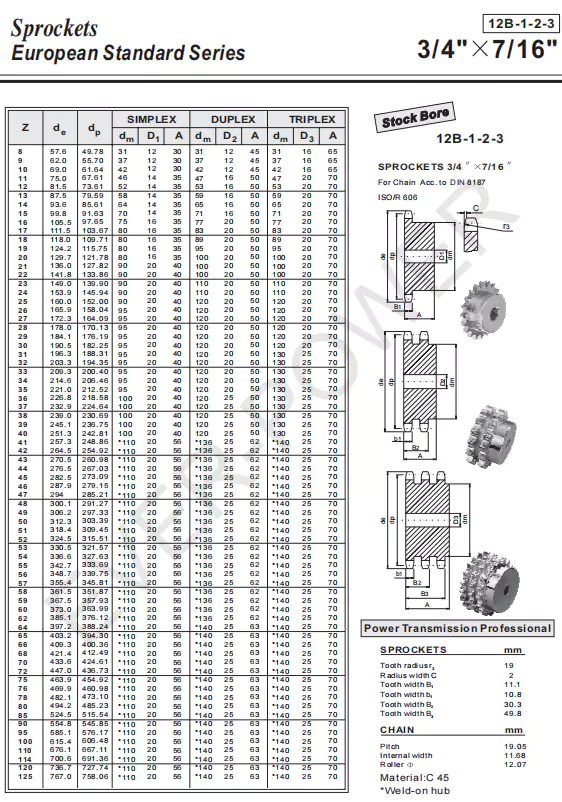
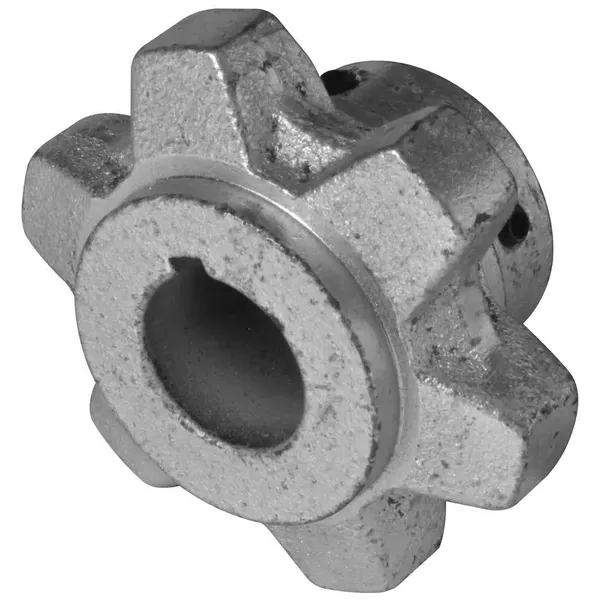
A standard bore sprocket is a vital component in power transmission machinery. It is a toothed wheel that engages with a chain to transmit power between two shafts. The 12B-1-2-3 sprocket is a type of standard bore sprocket that is commonly used in various industries due to its durability and efficiency. The sprocket has hardened teeth that can withstand high torque loads and resist wear and tear. Below is a selection table for the 12B-1-2-3 Standard Bore Sprocket:
A sprocket consists of a hub, teeth, and a bore. The bore is a hole in the center where the sprocket fits onto the shaft. When customizing a sprocket, several factors must be considered to ensure optimal performance. These factors include:
Sprockets can be made of high carbon steel, alloy steel, or stainless steel. Each material has unique properties that make it suitable for specific applications. High carbon steel is commonly used in applications that require high strength and durability. Alloy steel is ideal for applications that require resistance to wear and corrosion. Stainless steel is commonly used in applications that require resistance to high temperatures and chemicals.
The tooth profile and number of teeth determine the speed and torque of the sprocket. The teeth profile can be either straight, offset, or curved. The number of teeth determines the gear ratio of the sprocket.
The size of the sprocket is determined by the pitch diameter. It is essential to ensure that the sprocket size is compatible with the chain pitch diameter.
The bore and keyway of the sprocket must be customized to match the shaft's diameter and keyway.
The surface treatment of the sprocket can be heat treatment, surface hardening, or corrosion-resistant coatings. Heat treatment can improve the sprocket's hardness and wear resistance. Surface hardening can enhance the sprocket's surface durability. Corrosion-resistant coatings can protect the sprocket from rust and other forms of corrosion.
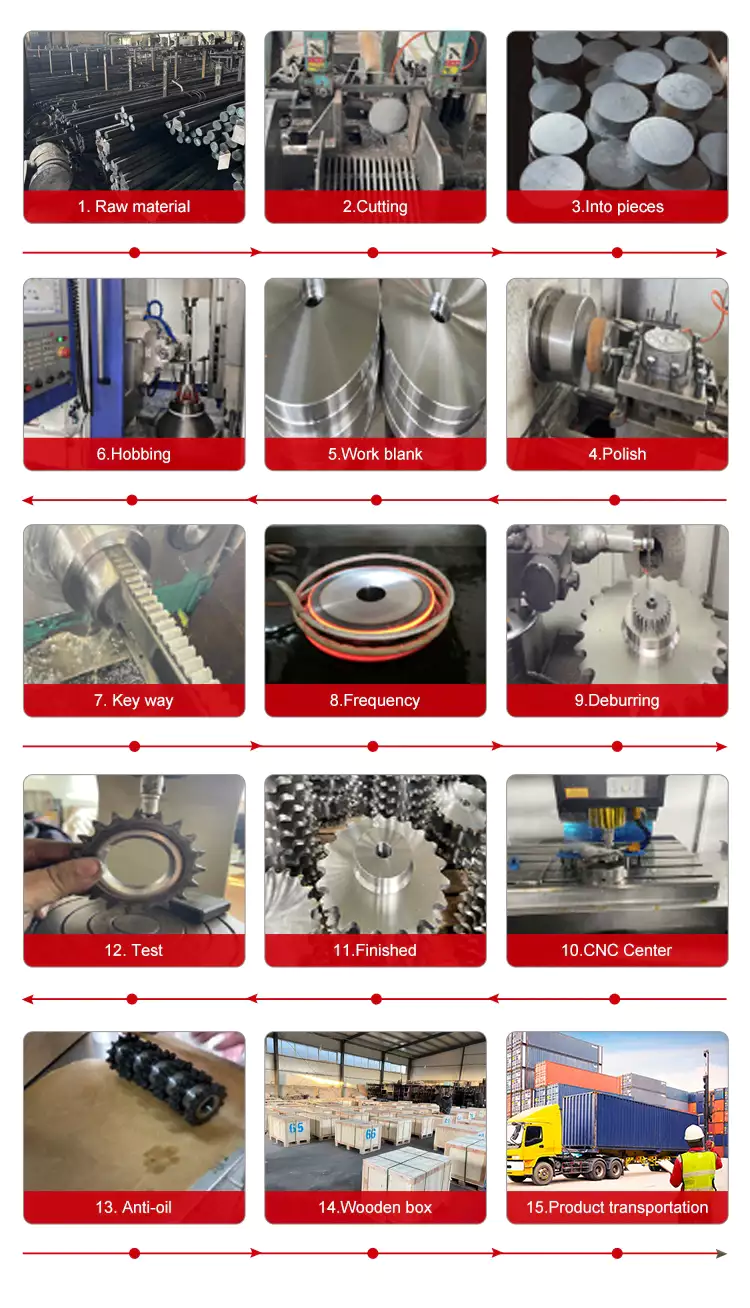
Our sprockets are made of high-quality materials, such as high carbon steel, alloy steel, and stainless steel. We use various manufacturing processes to ensure that our sprockets meet the highest standards of quality and durability.
We use computerized material selection to choose the best material for each sprocket. The material is then cut into the required shape and size using CNC machines.
The sprocket is then forged to improve its strength and durability. It is then machined to create the teeth profile, bore, and keyway.
The sprocket is heat-treated to improve its hardness and wear resistance. It is then quenched in oil or water to achieve the required hardness.
The sprocket is then treated with a surface coating to prevent rust and corrosion. We use various surface treatments, such as black oxide, phosphate, and zinc plating.
We subject our sprockets to rigorous quality control to ensure that they meet the highest standards of durability and performance. We use various testing methods, such as hardness testing, tensile testing, and impact testing.
The 12B-1-2-3 Standard Bore Sprocket has a wide range of applications in various industries, including:
The sprocket is used in heavy machinery and equipment, such as cranes, bulldozers, and excavators.
The sprocket is used in food processing and packaging equipment, such as conveyor belts, mixers, and packaging machines.
The sprocket is used in chemical and pharmaceutical processing equipment, such as mixers, reactors, and agitators.
The sprocket is used in assembly line equipment, such as conveyor belts, rotary tables, and indexing tables.
The sprocket is used in logistics and warehousing equipment, such as conveyor belts, hoists, and lifts.

Proper maintenance of sprockets is essential to ensure their longevity and optimal performance. Below are some of the maintenance and common issues of sprockets.
Inspect the sprocket daily for signs of wear, damage, or misalignment. Check the teeth for signs of wear or damage.
Clean the sprocket regularly to remove dirt, dust, and debris. Use a wire brush or compressed air to clean the teeth and bore.
Lubricate the sprocket regularly to reduce friction and wear. Use a high-quality lubricant that is suitable for the application.
Adjust and calibrate the sprocket regularly to ensure that it is aligned and positioned correctly.
Some common issues with sprockets include:
This occurs when the sprocket teeth do not engage properly with the chain. The solution is to adjust the chain tension or replace the sprocket.
This occurs when the sprocket is subjected to high loads or impact. The solution is to replace the sprocket with a stronger one.
This occurs when the sprocket teeth wear down over time. The solution is to replace the sprocket or teeth with a new one.
This occurs when the sprocket teeth do not engage smoothly with the chain. The solution is to adjust the chain tension or replace the sprocket.
This occurs when the chain slips off the sprocket. The solution is to adjust the chain tension or replace the sprocket.
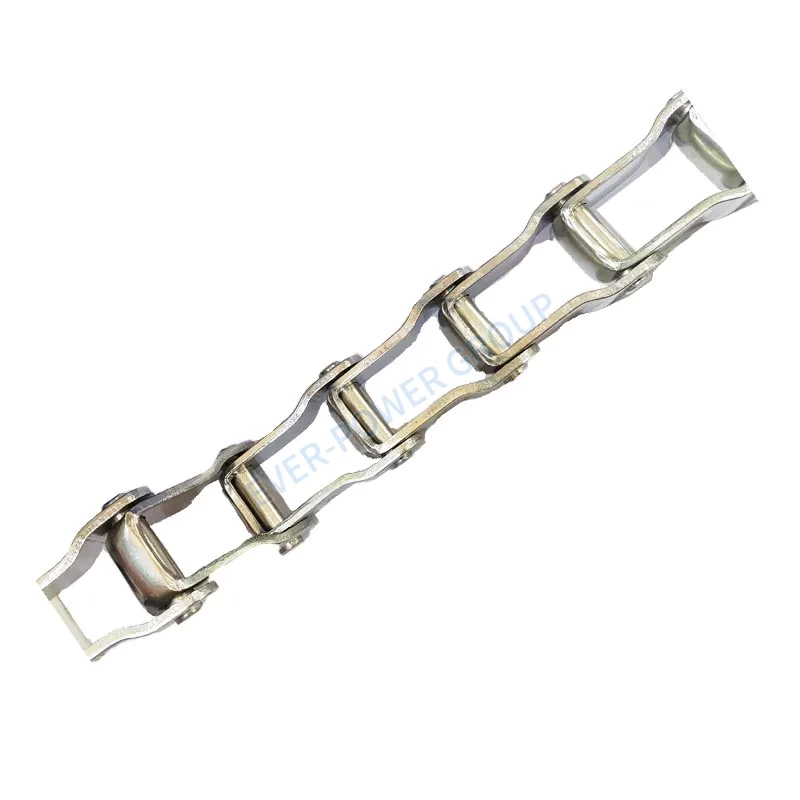
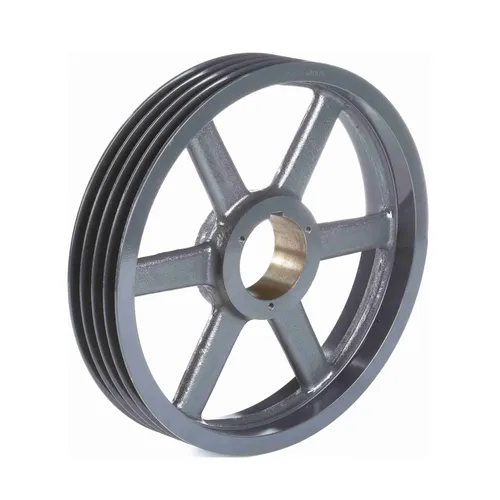
Aside from the 12B-1-2-3 Standard Bore Sprocket, we also offer other types of sprockets, such as platewheel sprocket, idler sprocket, QD sprocket, taper lock sprocket, and more. We also provide matching chains for these sprockets.
Address
Luotuo Industrial Area, Zhenhai District, Ningbo City, China
Tel

 Raydafon