Raydafon Group's No.40 Standard Bore Sprocket delivers precision power transmission for industrial machinery and equipment. With a durable steel construction, smooth operation, and reliable design, it minimizes wear and downtime, making it ideal for engineers, mechanics, and manufacturers seeking efficiency. The sprocket solves power transmission issues with a robust build, offering superior performance and long-term value. Stand out with Raydafon Group's commitment to quality—upgrade your setup today for seamless, dependable results.
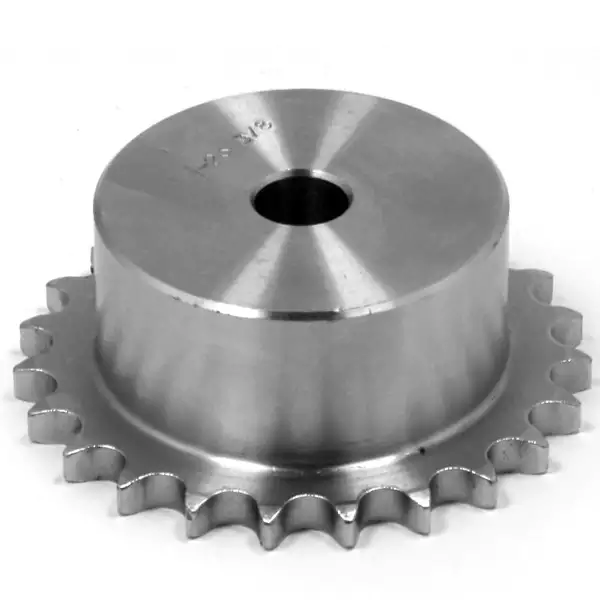
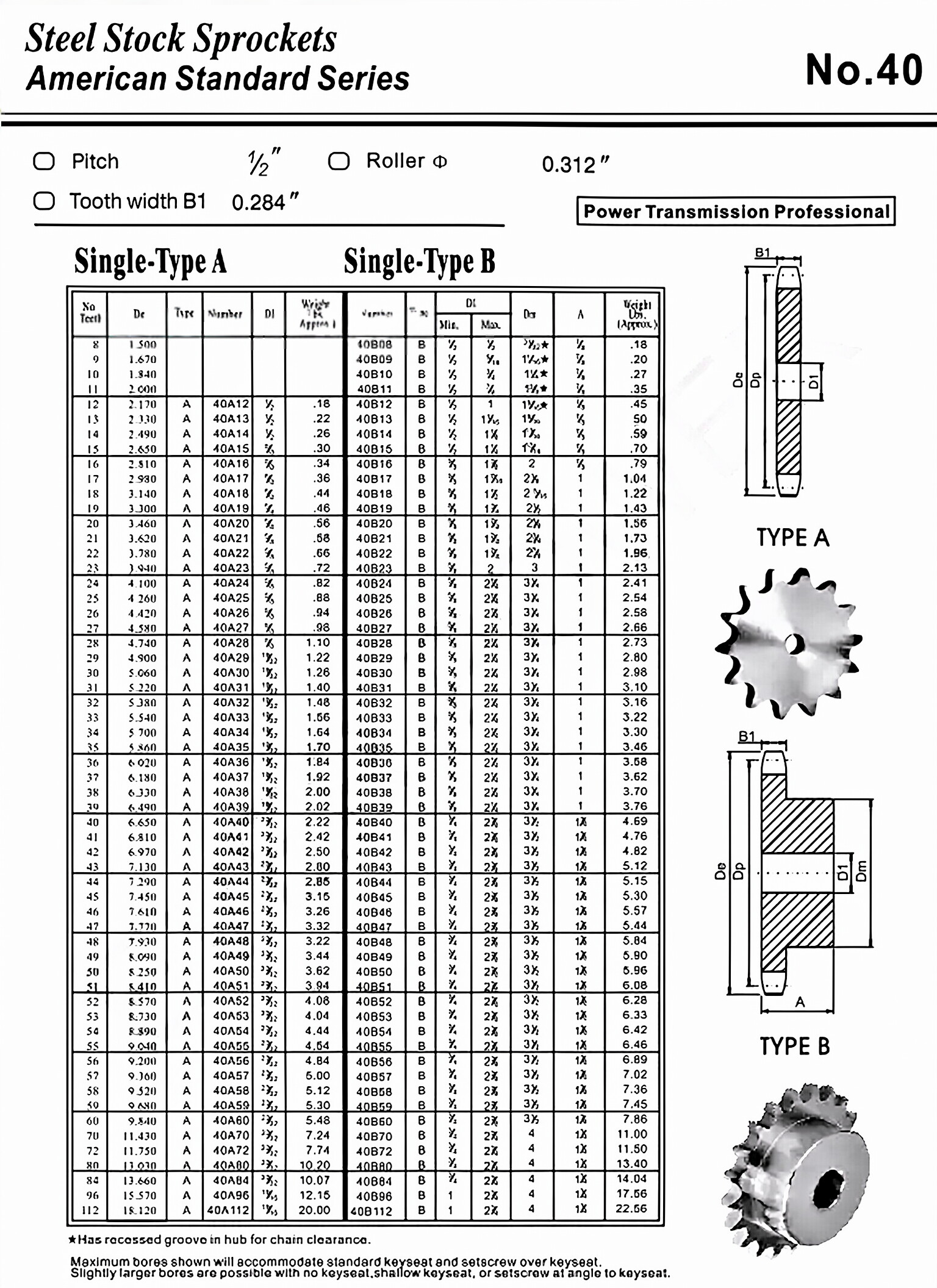
No.40 Standard Bore Sprocket is a type of sprocket commonly used in various industries. It is a power transmission component that meshes with a chain to transfer rotary motion between two shafts. The standard bore sprocket is designed with specific dimensions and features that allow it to function effectively in different applications.To better understand the No.40 Standard Bore Sprocket, refer to the selection table image below:
Basic Structure of Sprocket
When customizing a sprocket, several key aspects need to be considered. These include the material, tooth profile, number of teeth, dimensions, center bore, keyway, and surface treatment. Let's delve into each point in detail:1. Material: The sprocket can be made of high carbon steel, alloy steel, or stainless steel, depending on the specific application requirements.2. Tooth Profile: The tooth profile of the sprocket determines how it meshes with the chain. Different tooth profiles offer varying levels of power transmission efficiency and durability.3. Number of Teeth: The number of teeth on the sprocket affects the speed ratio and torque transmission capabilities.4. Dimensions: The dimensions of the sprocket, such as outer diameter and hub width, are crucial for proper installation and alignment with the chain.5. Center Bore: The center bore of the sprocket ensures a precise fit onto the shaft.6. Keyway: The presence of a keyway enables secure attachment of the sprocket to the shaft.7. Surface Treatment: Sprockets undergo surface treatments like rust prevention to enhance their durability and resistance to wear.
Material and Production Process
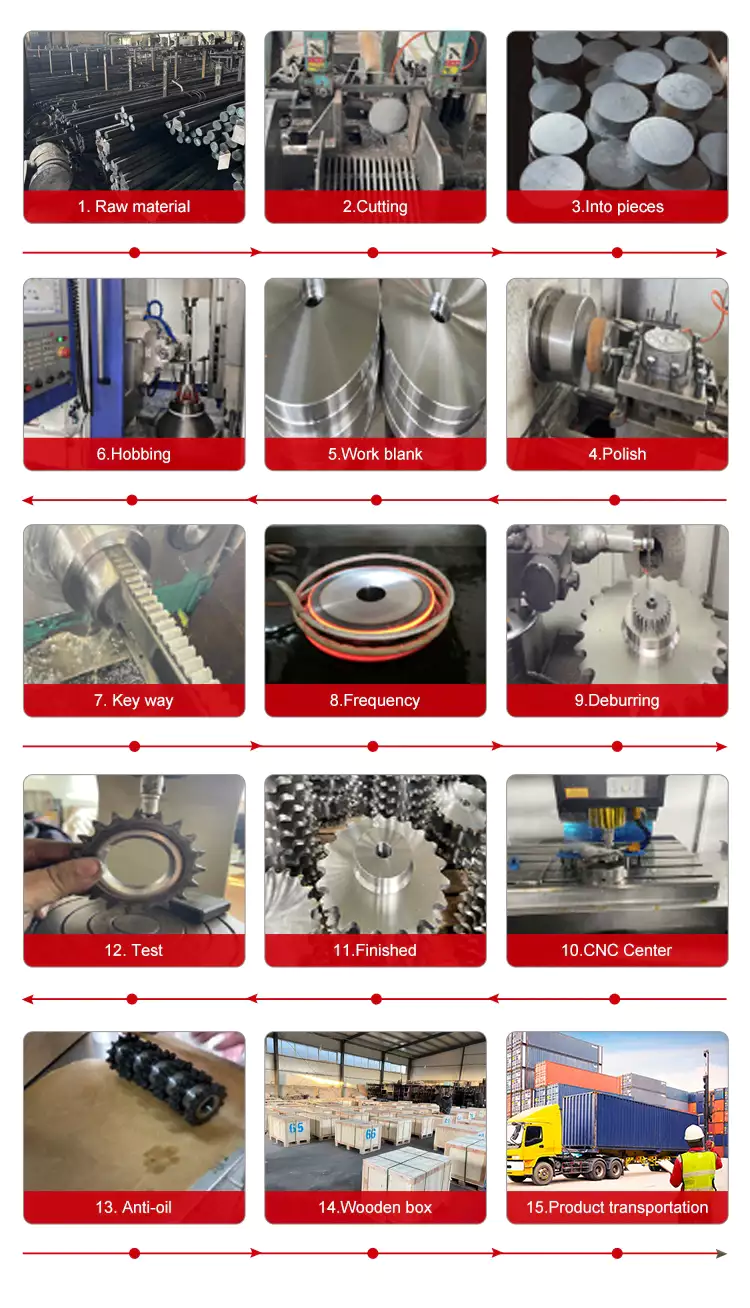
Our sprockets are manufactured using high-quality materials and advanced production processes. Here's an overview of the materials and production techniques employed:1. Material: We use high carbon steel, alloy steel, or stainless steel based on the specific application requirements. These materials offer excellent strength and durability.2. Production Process: Our production process includes material selection, cutting, stamping, forging, machining (turning, milling, drilling), heat treatment (quenching, tempering, surface hardening), surface treatment (rust prevention), and quality inspection.
Applications
No.40 Standard Bore Sprockets find application in various industries, including:1. Heavy Machinery and Equipment: These sprockets are commonly used in heavy-duty machinery and equipment for power transmission.2. Food Processing and Packaging: The sprockets are suitable for conveyors and other machinery used in the food processing and packaging industry.3. Chemical and Pharmaceutical: In chemical and pharmaceutical industries, these sprockets are utilized in various equipment and machinery.4. Assembly Lines: Sprockets play a crucial role in assembly line systems, ensuring smooth and efficient movement of products.5. Logistics and Warehousing: The sprockets are widely used in conveyor systems for material handling and transportation.For a visual representation, refer to the image below:
Maintenance and Troubleshooting
To ensure optimal performance and longevity of the sprocket, it is essential to follow a maintenance routine. Here are some key maintenance practices:1. Daily Inspection: Regularly check the sprocket for any signs of damage, misalignment, or wear.2. Cleaning: Keep the sprocket clean from dirt, debris, and contaminants that may hinder its performance.3. Lubrication: Apply appropriate lubrication to reduce friction and enhance the smooth operation of the sprocket.4. Adjustment and Calibration: Periodically adjust and calibrate the sprocket to maintain proper tension and alignment with the chain.Common problems that may occur with sprockets include tooth skipping, breakage, wear, excessive noise, and chain slippage. Here are some troubleshooting steps for each issue:1. Tooth Skipping: Check for misalignment, worn-out chain, or excessive load. Adjust or replace components as necessary.2. Breakage: Inspect for any signs of fatigue or overload. Replace the sprocket if it shows signs of structural damage.3. Wear: Measure the sprocket's wear using appropriate tools. Replace the sprocket if it exceeds the recommended wear limit.4. Excessive Noise: Ensure proper lubrication and alignment. Check for damaged teeth or worn-out components.5. Chain Slippage: Verify the tension and alignment of the chain. Adjust or replace components as needed.
Other Types of Sprockets
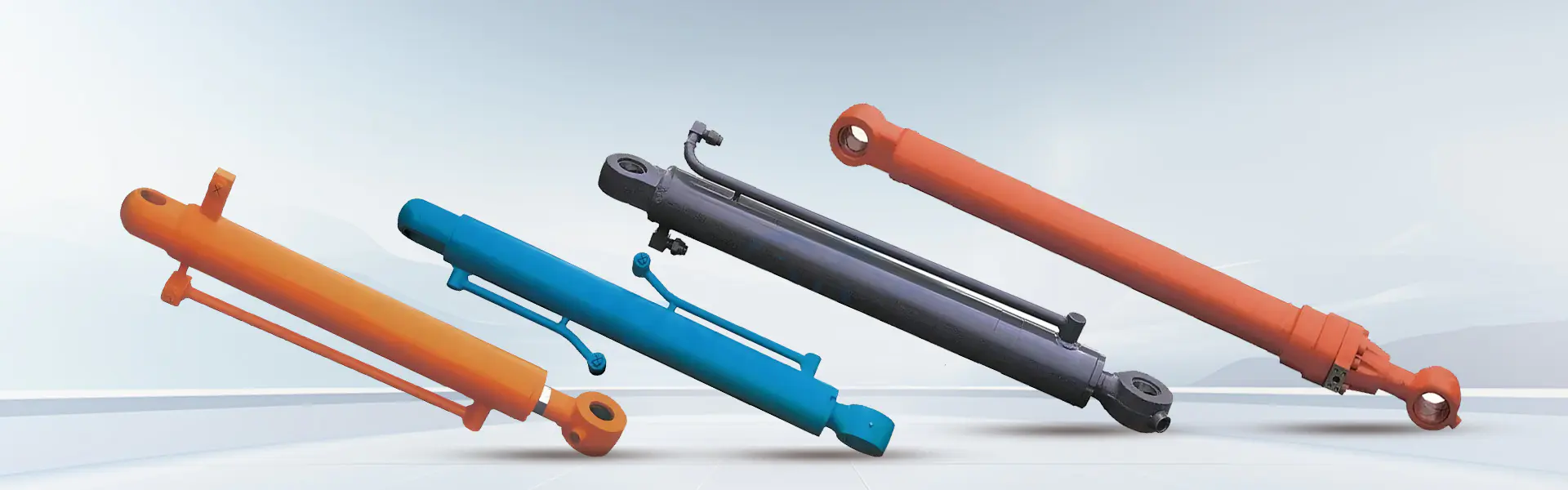
Apart from the No.40 Standard Bore Sprocket, we also offer a range of other sprockets to cater to diverse customer needs. These include platewheel sprockets, idler sprockets, QD sprockets, taper lock sprockets, and more. We also provide compatible chains for these sprockets.For a glimpse of our other sprocket offerings, refer to the image below:Author: Miya
Hot Tags: No.40 standard bore sprocket manufacturer, custom sprocket factory, bulk industrial sprockets supplier
We use cookies to offer you a better browsing experience, analyze site traffic and personalize content. By using this site, you agree to our use of cookies.Privacy Policy


 Author: Miya
 Raydafon