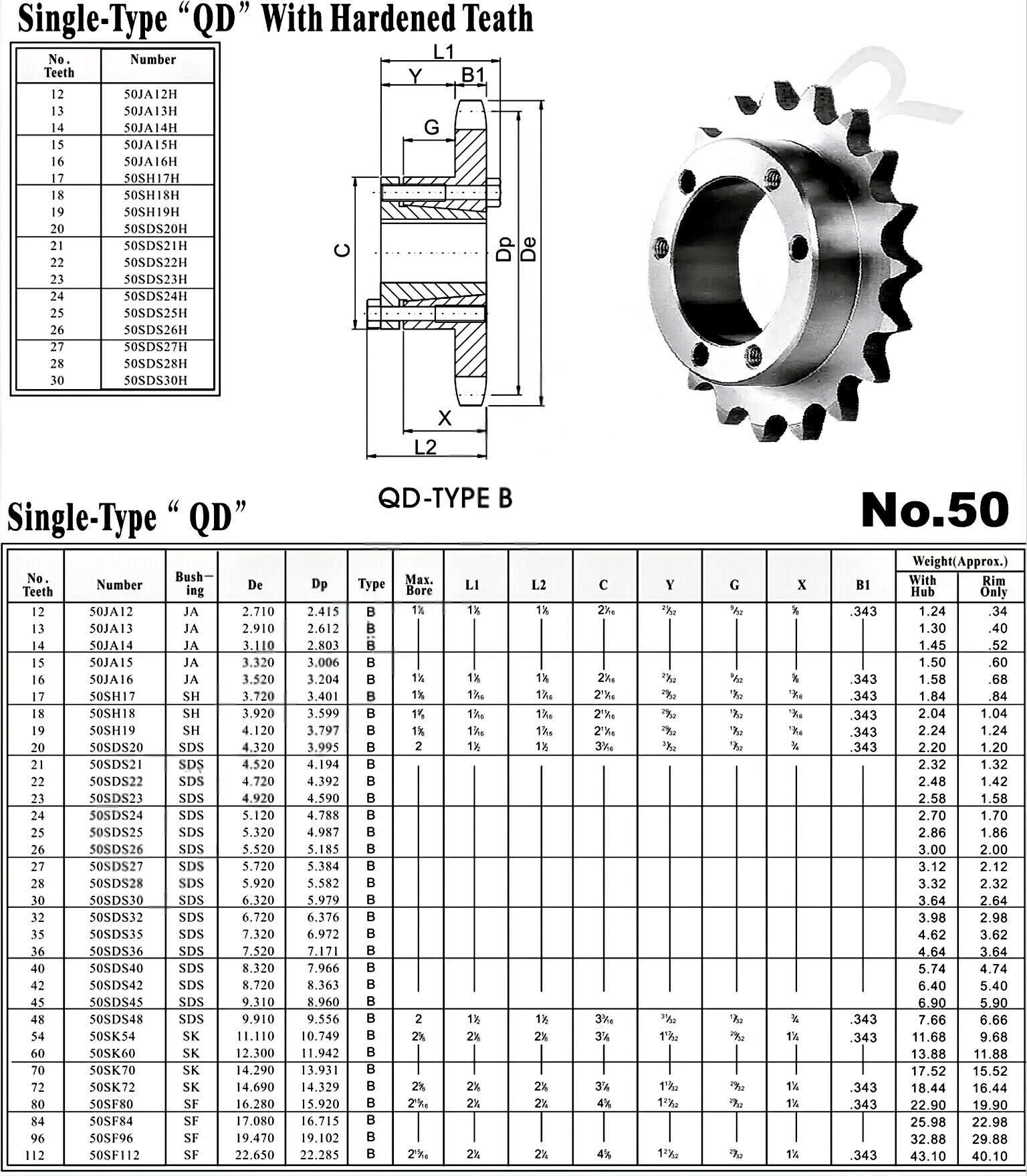
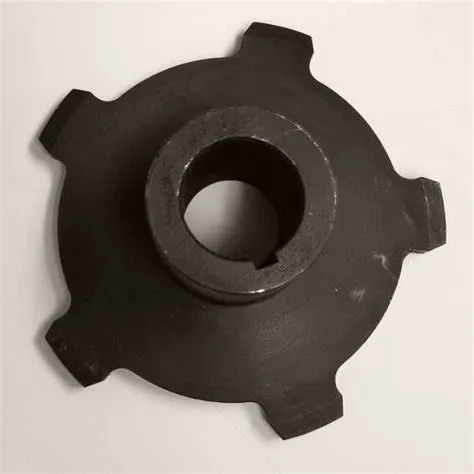
Raydafon Group presents the QD Sprocket No.50 Single Type, a durable and efficient chain drive component designed for smooth transmission in industrial machinery. With high-quality materials and precision engineering, this sprocket offers long-lasting performance and reduced maintenance needs, making it ideal for engineers and manufacturers seeking reliable power solutions. Experience enhanced productivity and peace of mind with this standout choice for seamless operations.
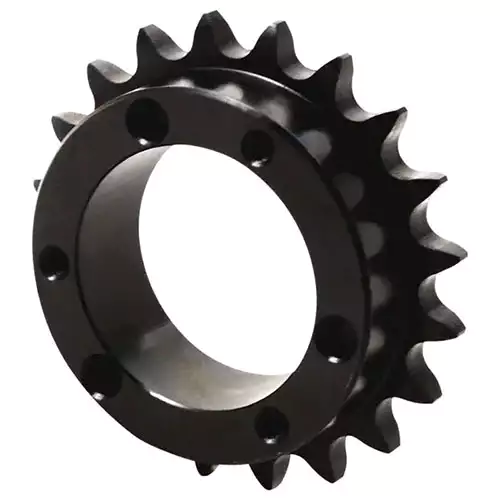
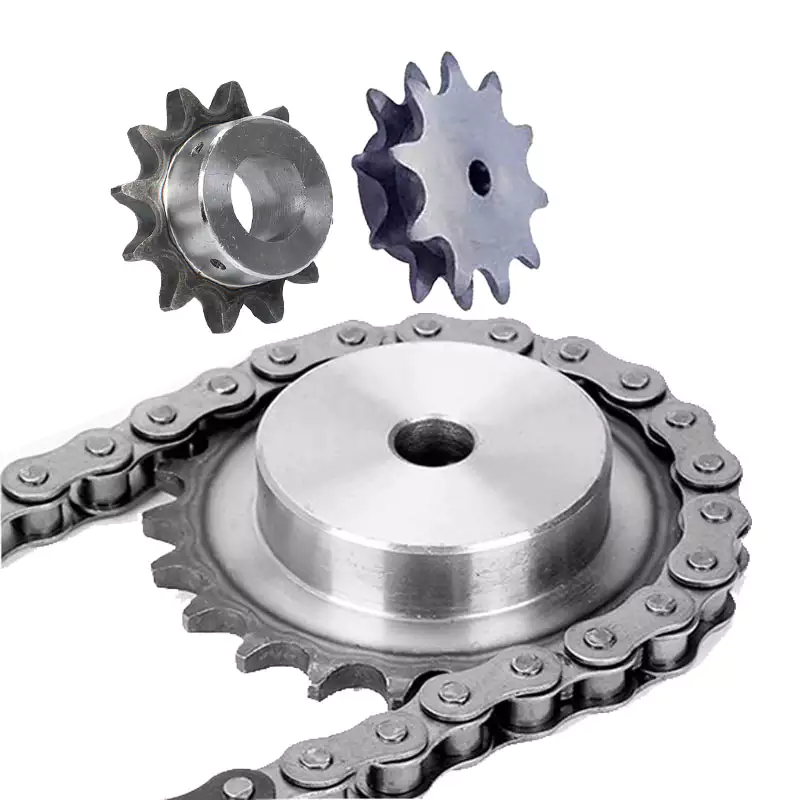
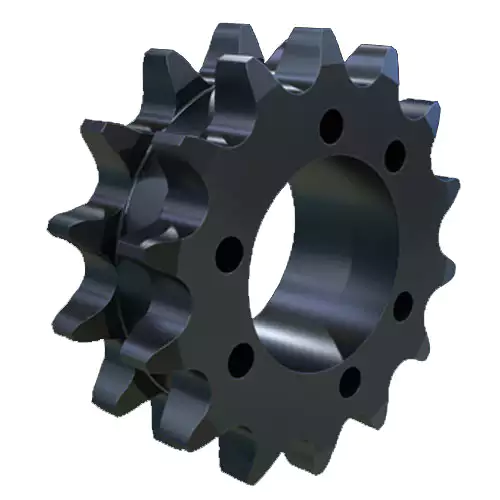
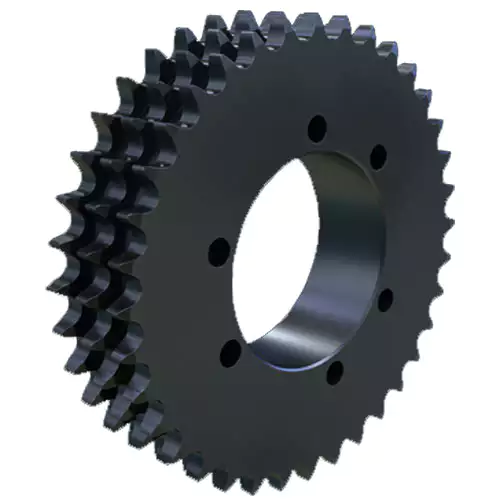
QD Sprocket No.50 Single Type is a type of sprocket commonly used in power transmission systems. It is an essential component that helps transfer power from one device to another. The basic concept of QD sprocket is to provide a simple and effective way to mount a sprocket onto a shaft without the need for a keyway.
Definition and Basic Structure
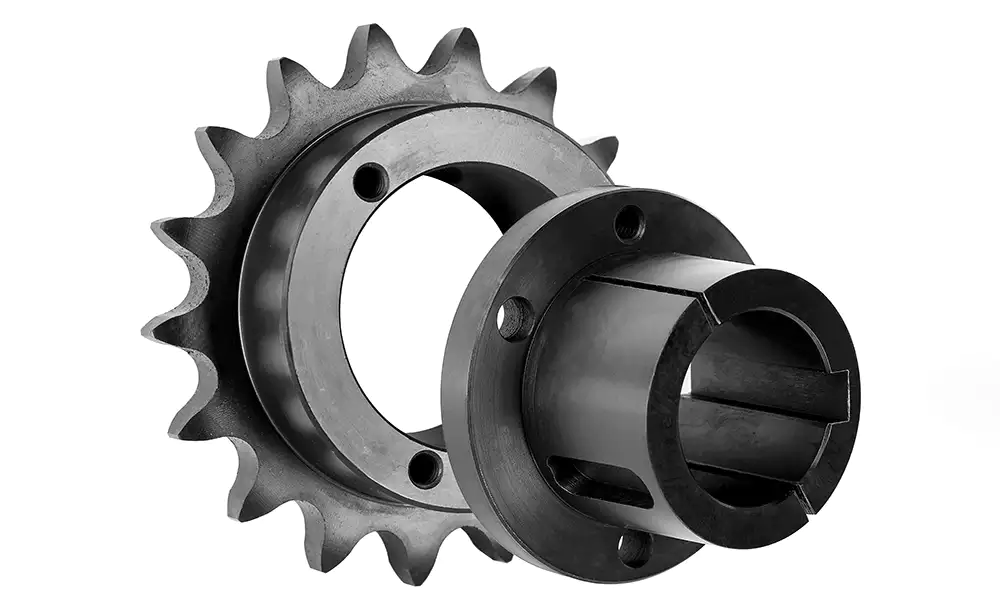
QD sprocket consists of two main components: the sprocket and the bushing. The sprocket is a toothed wheel that meshes with a chain. The bushing is a sleeve that fits over the shaft and secures the sprocket in place. The bushing is designed with a tapered bore that matches the shaft diameter, allowing it to be mounted securely without the need for a keyway.
QD Bushing Features and Functions
QD bushings have several key features and functions that make them ideal for power transmission systems:
Easy to install
High load-carrying capacity
Standardized design
Compact design
Low maintenance cost
One of the main advantages of QD bushings is their ease of installation and removal. They require no special tools or training, and can be installed or removed quickly and easily.
Easy to Install
QD bushings are designed to be easy to install. They come with a split design that allows them to be tightened around the shaft with a few simple tools. This makes them ideal for applications where frequent maintenance or replacement is required.
High Load-Carrying Capacity
QD bushings have a high load-carrying capacity, thanks to their tapered bore design. This allows them to distribute the load evenly across the shaft, reducing the risk of shaft damage or failure.
Standardized Design
QD bushings have a standardized design, which means they are compatible with a wide range of sprockets and other power transmission components. This makes them ideal for use in a variety of applications.
Compact Design
QD bushings have a compact design, which means they take up less space than traditional keyway bushings. This makes them ideal for use in applications where space is at a premium.
Low Maintenance Cost
QD bushings have a low maintenance cost, thanks to their simple design. They require little or no lubrication, and can be easily replaced if damaged or worn out.
Installation and Removal Process
The installation and removal process for QD bushings involves several steps:
Prepare tools and materials
Clean shaft and sprocket surfaces
Position sprocket onto shaft
Install QD bushing onto shaft
Tighten QD bushing onto shaft
Check alignment and torque
It is important to follow these steps carefully to ensure that the QD bushing is installed and removed safely and correctly.
Manufacturing Process
The manufacturing process for QD sprockets involves several steps:
Prepare raw materials
Cut materials into desired shape
Forge or cast sprocket
Machine sprocket to required specifications
Roll teeth onto sprocket
Heat treat sprocket
Apply surface treatment
Perform quality inspection
FAQs
1. What is a QD sprocket?
A QD sprocket is a type of sprocket that is designed to be mounted onto a shaft without the need for a keyway.
2. What is a QD bushing?
A QD bushing is a sleeve that fits over a shaft and secures a sprocket in place.
3. What are the advantages of QD bushings?
QD bushings are easy to install and remove, have a high load-carrying capacity, a standardized design, a compact design, and a low maintenance cost.
4. How do you install a QD bushing?
To install a QD bushing, you need to prepare tools and materials, clean shaft and sprocket surfaces, position sprocket onto shaft, install QD bushing onto shaft, tighten QD bushing onto shaft, and check alignment and torque.
5. What is the manufacturing process for QD sprockets?
The manufacturing process for QD sprockets involves several steps, including preparing raw materials, cutting materials into desired shape, forging or casting sprocket, machining sprocket to required specifications, rolling teeth onto sprocket, heat treating sprocket, applying surface treatment, and performing quality inspection.Author: Miya
Hot Tags: QD Sprocket No.50 manufacturer, single type sprocket supplier, QD sprocket wholesale
We use cookies to offer you a better browsing experience, analyze site traffic and personalize content. By using this site, you agree to our use of cookies.Privacy Policy


 Raydafon