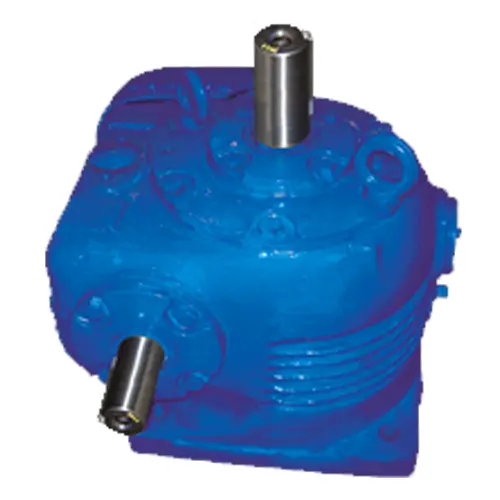
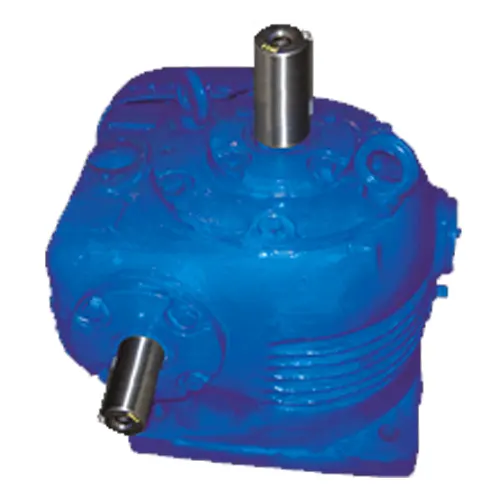
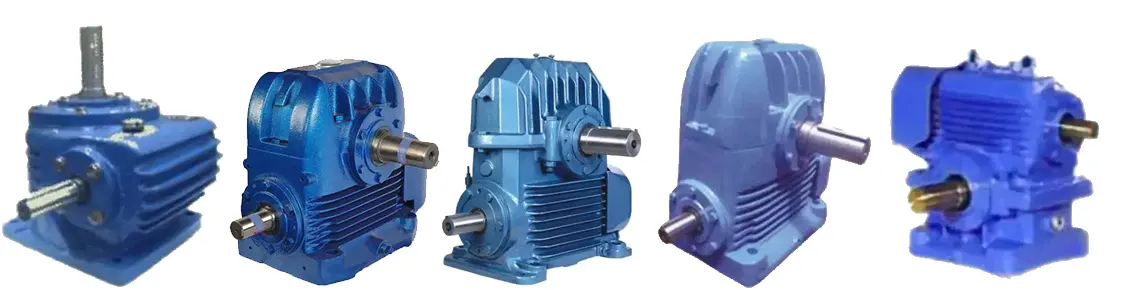
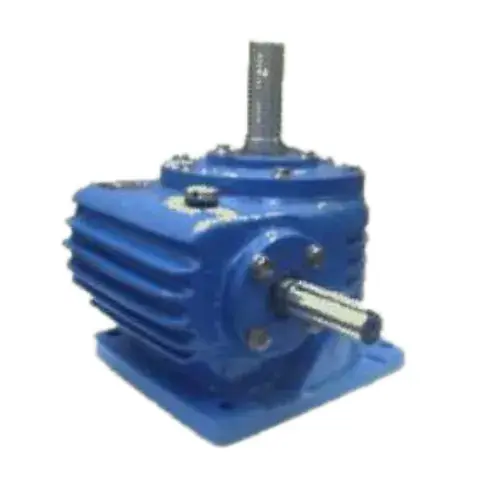
Worm Reducer-Replacement of Fenner FV Type Worm Gearbox FV400
Upgrade your machinery with Raydafon Group's Worm Reducer-Replacement of Fenner FV Type Worm Gearbox FV400—a durable, high-efficiency solution for industrial applications. Engineered for seamless compatibility and superior performance, it reduces downtime and enhances reliability. Ideal for maintenance teams and engineers, it delivers smooth operation and peace of mind. Experience unmatched quality and longevity with Raydafon Group, designed to outperform competitors effortlessly.
Our company provides high-quality worm gearboxes as replacements for Fenner FV Type Worm Gearboxes. Our products offer excellent quality and competitive prices. It is important to note that our products are replacement parts and not original equipment manufacturer (OEM) parts. If you require OEM parts, please contact the original supplier for purchasing.
Product Features
The housing is made of fine-grained FG-260 level C.I. for durability.
The gearbox is equipped with well-designed heat sinks and suitable fans to efficiently dissipate heat.
The entire design is based on BS 721:1963, with precision grade A.
The gearbox is designed to be interchangeable with standard gearboxes.
The worm shaft is made of high-quality surface-hardened steel, precisely generated and ground for optimal performance.
The worm wheel is made of high-quality phosphor bronze, with a large cross-section for enhanced rigidity.
Both the worm shaft and worm wheel shaft are mounted on high-quality taper roller/angular contact bearings to withstand axial thrust and radial loads.
Under full load conditions and with a temperature limit of 90 degrees Celsius, the minimum gear life of all gearboxes is 20,000 hours.
No maintenance is required for the gearboxes, except for checking the oil level every two weeks.
All worm gearboxes have gear ratios ranging from 5:1 to 70:1.
Fenner Worm Gearbox Replacement
Our company specializes in providing replacement worm gearboxes for Fenner. We offer several advantages:
High-quality worm gearboxes that meet or exceed Fenner's standards.
Competitive prices for our replacement parts.
Emphasis on the fact that our products are replacement parts and not OEM parts. For original equipment purchases, we recommend contacting the original supplier.
Customization options available for customers with specific requirements.
Efficient and reliable after-sales service.
Fast delivery to ensure minimal downtime for our customers.
Wide range of applications for our worm gearboxes.
Guaranteed quality and performance of our products.
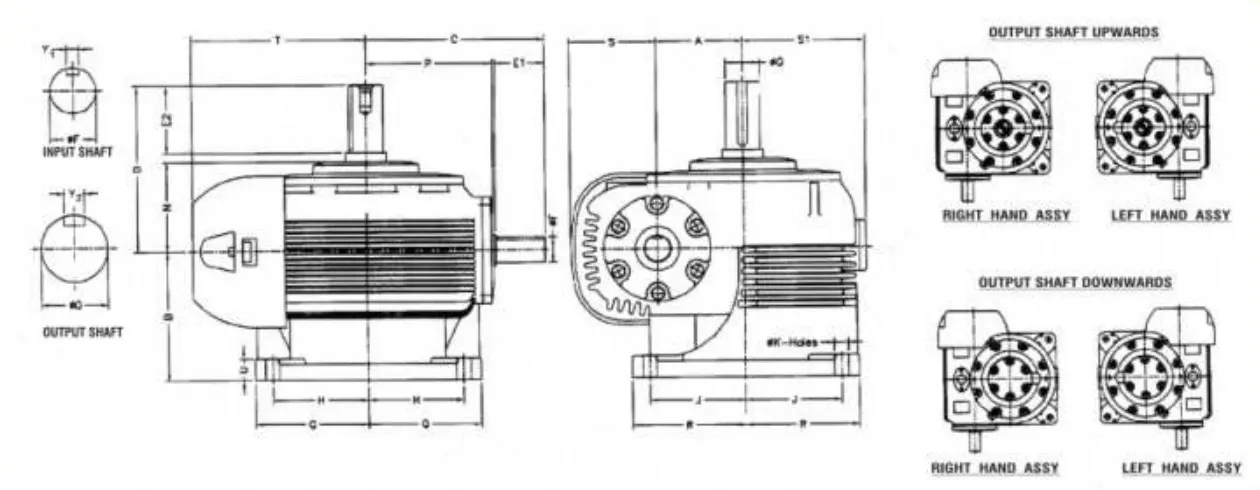
Structure of Worm Reducer
The worm reducer consists of the following components:
Worm Shaft: Transmits torque from the input to the output.
Worm Wheel: Interacts with the worm shaft to achieve the desired gear ratio.
Housing: Provides support and protection for the internal components.
Heat Sinks and Fans: Aid in heat dissipation to prevent overheating.
Bearings: Support and guide the rotation of the worm shaft and worm wheel shaft.
Gears: Transmit motion and power between the worm shaft and worm wheel.
Selection of Suitable Worm Gearbox
The selection of a worm gearbox is based on comparing the actual transmission load with the catalog rated values. However, actual load conditions may vary or fluctuate depending on the application type, and for handling the same problem, the use of factors must be considered to achieve equivalent load or design power. Therefore, the equivalent load = actual load ?? service factor. The mechanical rated value and service factor are used to measure capacity in terms of life and/or strength, assuming continuous operation for 10 hours daily under uniform load conditions. If the equipment operates for more than 10 hours per day, the mechanical service factor should be selected based on the type of prime mover, hours of operation per day, application type connected to the equipment, and its load characteristics to ensure an appropriate gear life. The catalog rated value of the selected equipment should be at least equal to or greater than half of the maximum overload achieved during its operation. The lifespan of the gearbox can be determined by comparing the actual transmission load with the catalog rated value. The selection process involves the following steps:
Calculate the required ratio.
Calculate the design power based on load type, operating time, and service factor.
Calculate the output torque.
Select the appropriate device based on the data.
Possible Issues and Solutions
Problem
Cause
Solution
Overheating of the gearbox
Insufficient lubrication or excessive load
Ensure proper lubrication and reduce the load if necessary
Noise from the gearbox
Misalignment or worn-out gears
Check alignment and replace worn-out gears
Vibration
Imbalance or misalignment
Balance or realign the gearbox
Oil leakage
Seal failure or damaged housing
Replace seals or repair housing as needed
Gearbox not working
Electrical or mechanical failure
Check electrical connections and troubleshoot mechanical components
Installation Considerations
It is important to securely install the gearbox to minimize the impact of vibrations or heavy loads. The following considerations should be taken into account:
Ensure proper alignment by using dowel pins to position the gears correctly, preferably in a diagonal direction.
Using a flexible coupling (with rubber inserts) is crucial for improving gearbox performance.
The coupling should be aligned to avoid angular and eccentric misalignment.
We use cookies to offer you a better browsing experience, analyze site traffic and personalize content. By using this site, you agree to our use of cookies.Privacy Policy