
Air drying technology is crucial in many industrial processes. Moisture in compressed air systems can cause equipment failure, corrosion, and contamination, leading to costly downtime and repairs. In addition, compressed air is often used to operate pneumatic tools and machinery, and moisture in the air can lead to reduced performance and efficiency.
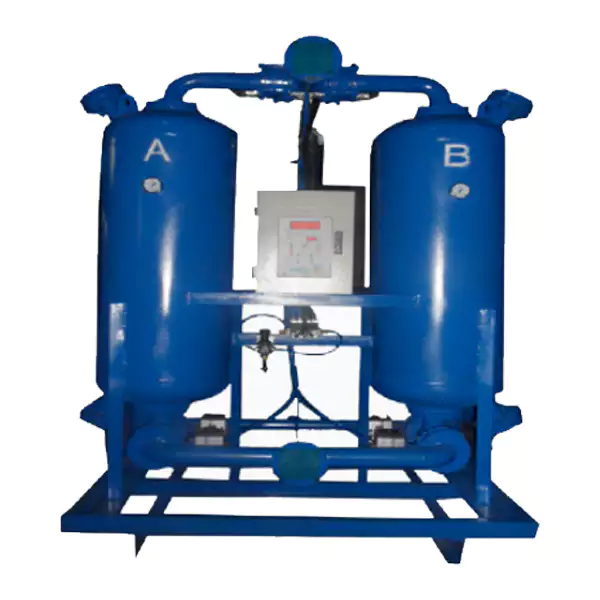
Microwave regeneration adsorption dryer technology has gained popularity due to its numerous advantages over traditional drying systems. This technology uses a desiccant material to adsorb moisture from compressed air, and then uses a micro-heat regeneration process to remove the moisture from the desiccant and release it into the atmosphere. This cycle is repeated continuously to achieve a continuous supply of dry air.
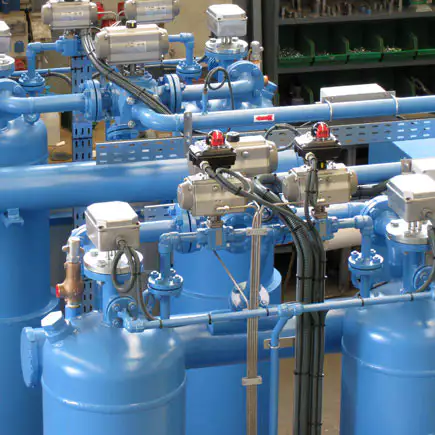
| Technical Specifications | Value |
|---|---|
| Model | CMNL-020X |
| Drying Method | Micro-heat Regeneration Adsorption |
| Drying Capacity | 20Nm3/min |
| Power Supply | 220V/50Hz |
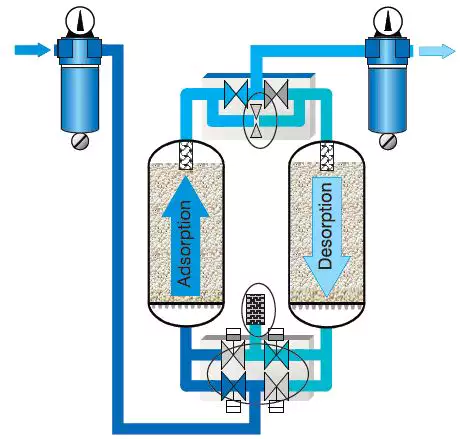
The adsorption drying process involves the use of a desiccant material such as silica gel or activated alumina to adsorb moisture from compressed air. When compressed air is passed through the desiccant, moisture is trapped in the material, leaving dry air to exit the system.
The micro-heat regeneration process involves applying a small amount of heat to the desiccant material to release the adsorbed moisture. This process is carried out using a separate heating element, which heats the desiccant to a temperature high enough to release the moisture but not high enough to damage the material.
The drying cycle involves the adsorption of moisture from compressed air, followed by a regeneration cycle where the desiccant material is heated to release the moisture. The cycle is repeated continuously to achieve a continuous supply of dry air.
The choice of desiccant material is critical to the performance of the adsorption dryer. A high-quality material such as activated alumina or silica gel should be chosen for optimal results. The control system and automatic logic should be designed to optimize the drying cycle and minimize energy consumption.
The technical advantages of the micro-heat regeneration adsorption dryer include:
The micro-heat regeneration adsorption dryer offers significant advantages over traditional drying systems such as refrigerated dryers or absorption dryers. Unlike refrigerated dryers, which are limited by the dew point temperature, the adsorption dryer can achieve a lower dew point and produce drier air. In addition, the adsorption dryer does not require refrigerant and has lower energy consumption. Unlike absorption dryers, which require large amounts of purge air to regenerate the desiccant, the adsorption dryer uses a micro-heat regeneration process, which saves energy and allows for a more efficient drying cycle.
The micro-heat regeneration adsorption dryer is used in a wide range of industries, including:
In each of these industries, the adsorption dryer is used to achieve a continuous supply of dry air, which is critical to the success of the manufacturing process.
When purchasing an adsorption dryer, it is important to consider factors such as the drying capacity, power supply requirements, and the choice of desiccant material. In addition, it is important to choose a manufacturer that offers reliable after-sales service and support, including installation, maintenance, and repair services.
At our factory, we specialize in the production of high-quality air compressors and related products, including adsorption dryers. Our products are designed to meet the highest standards of performance and reliability, and we are committed to providing our customers with the best possible service and support.
Our advantages include:
Author: Miya
Address
Luotuo Industrial Area, Zhenhai District, Ningbo City, China
Tel

 Raydafon