
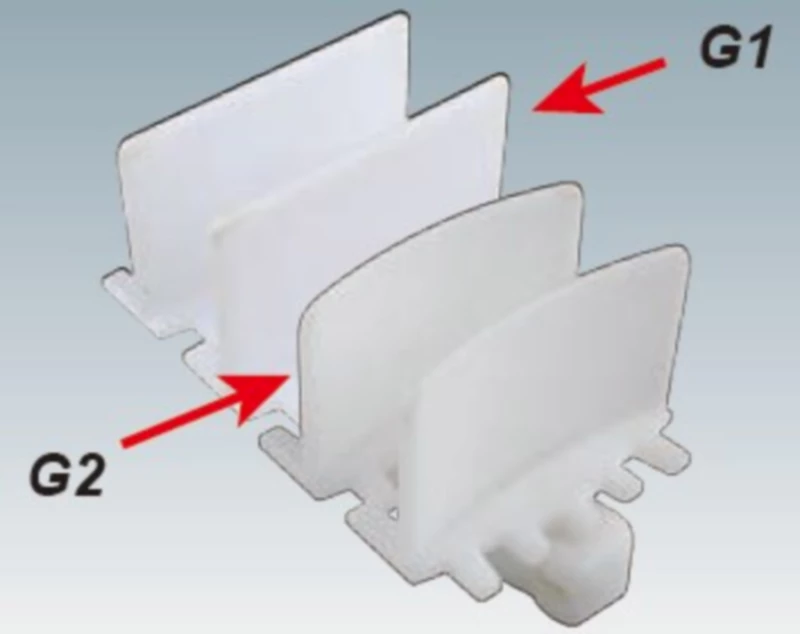
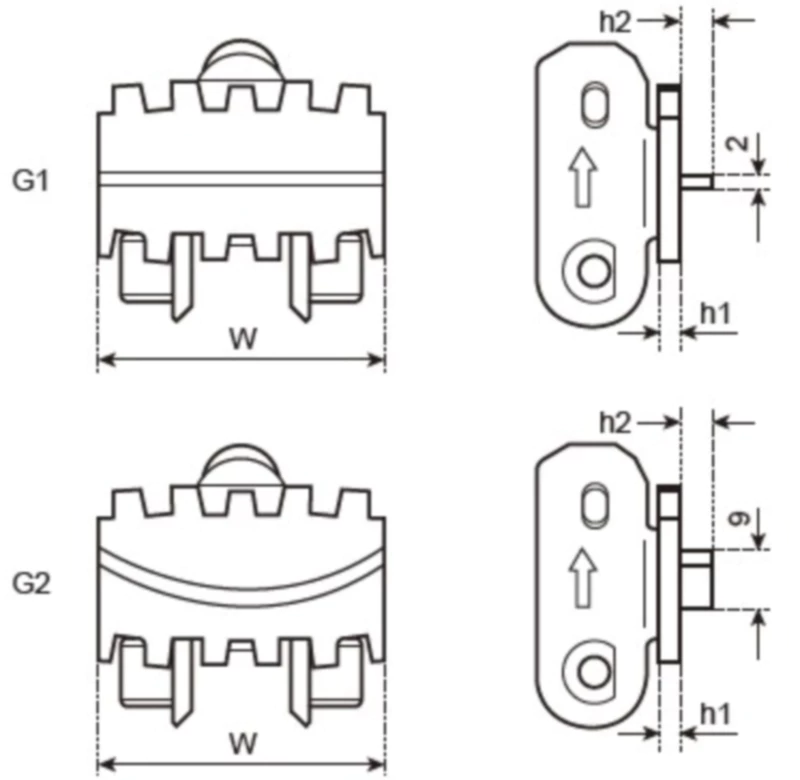
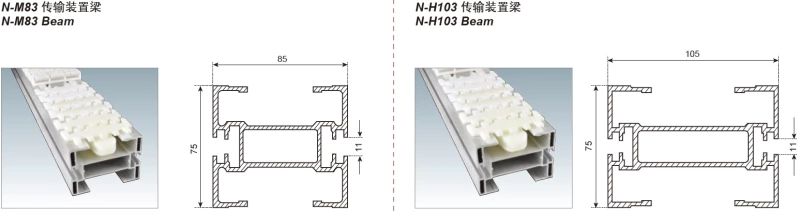
 Features and AdvantagesStrength and Durability: Plastic Flexible Chains Cleat Chain Type G is made of high-quality plastic material, which provides excellent strength and durability to withstand heavy loads and harsh working conditions.Flexibility and Bendability: The chain has outstanding flexibility and bendability, making it suitable for curved and winding conveyor systems. It can maintain material stability and positioning while bending and turning.Flange Structure: The flange structure on the chain provides material positioning and anti-slip function, ensuring that the material does not slide or shift during transportation.High-Speed Transport: Plastic Flexible Chains Cleat Chain Type G is suitable for high-speed transport systems. It has good seismic and vibration-reducing properties, making the material stable during high-speed operations.Low Noise and Low Friction: Due to the use of plastic materials, the chain has low noise levels and a low friction coefficient, making it smoother and more efficient during operation.Corrosion Resistance and Chemical Resistance: Plastic Flexible Chains Cleat Chain Type G has excellent corrosion resistance and chemical resistance properties, making it suitable for industries and applications that come into contact with chemicals.ApplicationsMaterial Handling Systems: Plastic Flexible Chains Cleat Chain Type G is commonly used in various material handling systems, including production lines, assembly lines, and packaging lines. They can reliably convey and position materials, ensuring accurate material transfer.Packaging Industry: In the packaging industry, Plastic Flexible Chains Cleat Chain Type G is widely used in packaging machinery, such as conveyors, assembly lines, and packaging machines. They ensure accurate positioning and movement of products during the packaging process.Food Processing: As this chain is made of food-grade plastic, it is very suitable for the food processing industry. It can be used to transport, sort, and position food and food packaging materials.Pharmaceutical and Chemical Industry: Plastic Flexible Chains Cleat Chain Type G is also widely used in the pharmaceutical and chemical industries. They are used to transport and process drugs, chemicals, and other related products.Warehousing and Logistics: In the warehousing and logistics industry, this chain is commonly used in material handling and sorting systems. They can be used for material transport, sorting, and stacking.Automotive Manufacturing and Auto Parts Production: Plastic Flexible Chains Cleat Chain Type G has a wide range of applications in automotive manufacturing and auto parts production. They are used to transport and position parts to support the production line process.Electronics and Semiconductor Manufacturing: In the electronics and semiconductor manufacturing industry, this chain can be used to transport and position electronic components and semiconductor products.Textile and Clothing Industry: Plastic Flexible Chains Cleat Chain Type G is used in the textile and clothing industry for the transport and positioning of fabrics, clothing, and textile products.Machinery Manufacturing and Automation: This chain can also be used in the machinery manufacturing and automation industry for the transport and positioning of parts and finished products.Customization OptionsApplication Requirements: Ensure that you clearly communicate your specific application requirements with the manufacturer or supplier, including working environment conditions, load requirements, curve radius, speed requirements, etc. This will help the manufacturer to provide you with a customized chain solution.Material Selection: Choose the appropriate plastic material based on the requirements of the application environment to ensure wear resistance, corrosion resistance, and resistance to chemical solvents, among other properties. Ensure that the customized chain is fully compatible with the equipment and meets the requirements of transportation.InstallationPreparation: Clean the working area of the conveyor system to ensure that there are no debris or obstacles. Check the integrity of the chain and related accessories.Positioning the Chain: Position the chain along the path of the conveyor line according to the design requirements and system layout. Ensure that the direction and positioning flanges of the chain are aligned with the drive and guide wheels.Connecting the Chain: Use appropriate connectors (such as pins, connecting plates, etc.) to connect the two ends of the chain together. Ensure that the connectors are securely tightened to ensure the continuity of the chain.Tensioning the Chain: Moderate tensioning of the chain according to the manufacturer's recommendations to ensure proper transmission and positioning functions. Over-tensioning or loosening of the chain can affect the performance of the system.Testing: Before formal use, conduct a test run to verify the installation and function of the chain. Check the smoothness of the chain operation and the accuracy of material positioning.MaintenanceCleaning: Regularly clean the chain to remove accumulated dust, dirt, and other debris. Soft brushes or wet cloths can be used to wipe the surface of the chain. Avoid using strong acids, strong alkalis, or corrosive solvents to prevent damage to the chain material.Lubrication: Regularly lubricate the chain according to the manufacturer's recommendations. Use appropriate chain lubricants and follow the manufacturer's recommendations to apply them to the surface of the chain to reduce friction and wear.Inspection and Replacement: Regularly inspect the wear, damage, or looseness of the chain. If the chain joint is worn or the flange is damaged, replace the damaged components promptly to ensure the normal operation of the chain. Fastener Inspection: Regularly inspect the fastening of chain connectors and fasteners. Ensure that the connectors are in a firm state, and tighten or replace them if necessary.Avoid Overload: Avoid applying excessive loads to the chain to prevent excessive stress and damage.Regular Maintenance: Perform regular maintenance and upkeep according to the manufacturer's recommendations. This may include chain adjustment, cleaning, and lubrication.Matching BeamsBeams are essential for the proper functioning of the Plain Chain. At Raydafon, we offer aluminum profile beams that are compatible with the Plastic Flexible Chains Cleat Chain Type G. These beams provide the necessary support for the chain to ensure smooth and reliable material transportation. See the following images for the Aluminum Profile Beams: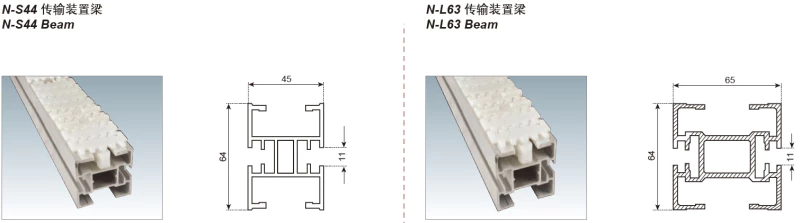
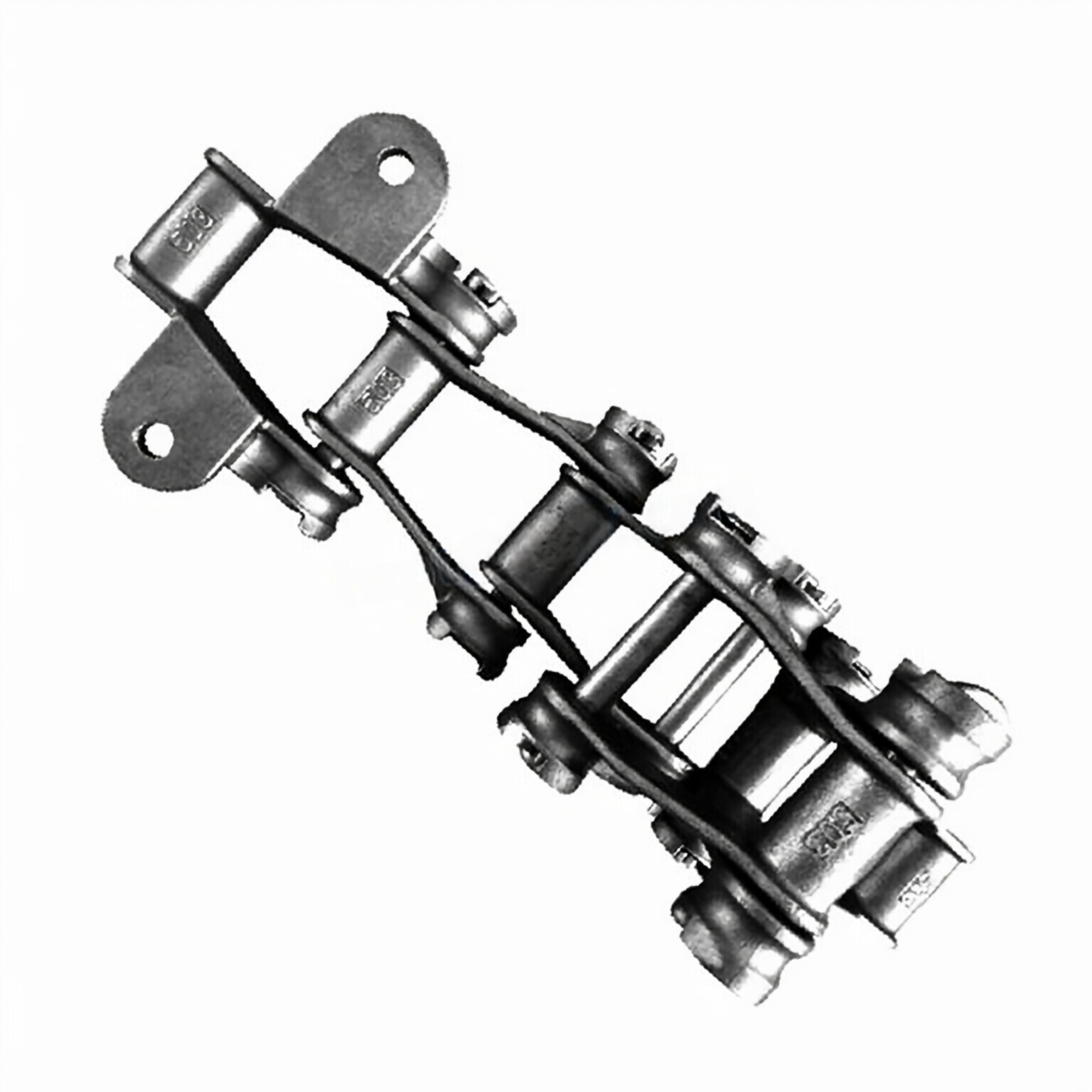
 Other Chain ProductsIn addition to Plastic Flexible Chains Cleat Chain Type G, we also offer other chain products such as Plastic Chain, Stainless Steel Chain, Agricultural Chains, Leaf Chains, etc.About RaydafonRaydafon was established in 2003 and is a professional company specializing in power transmission components. We have multiple advanced production and inspection equipment, including CNC gear grinding machines, gear measuring machines, CNC gear shapers, machine centers, CMMS, torque test systems, etc. We offer a range of customized services to meet the needs of our clients. Our international certifications, professional services, and high-quality production equipment prove our commitment to excellence. Contact us today to learn more about how we can help you.FAQs1. What is the maximum speed that the Plastic Flexible Chains Cleat Chain Type G can handle?The Plastic Flexible Chains Cleat Chain Type G is suitable for high-speed transport systems and has good seismic and vibration-reducing properties. However, the maximum speed that the chain can handle depends on various factors such as the load, working conditions, and curve radius. Please consult the manufacturer or supplier for detailed recommendations.2. Can the Plastic Flexible Chains Cleat Chain Type G be used in low-temperature environments?Yes, the Plastic Flexible Chains Cleat Chain Type G can be used in low-temperature environments, but it is important to choose appropriate plastic materials that can withstand cold temperatures. Consult with the manufacturer or supplier for more information.3. What is the maximum load that the Plastic Flexible Chains Cleat Chain Type G can bear?The maximum load that the Plastic Flexible Chains Cleat Chain Type G can bear depends on various factors such as the size of the chain, the working conditions, and the application environment. Please consult the manufacturer or supplier for specific load recommendations.4. Can the Plastic Flexible Chains Cleat Chain Type G be used in corrosive environments?Yes, the Plastic Flexible Chains Cleat Chain Type G has excellent resistance to corrosion and chemicals and can be used in corrosive environments. However, it is important to choose appropriate plastic materials that can withstand the corrosive environment. Consult with the manufacturer or supplier for more information.5. How often should the Plastic Flexible Chains Cleat Chain Type G be lubricated?The frequency of lubrication for the Plastic Flexible Chains Cleat Chain Type G depends on various factors such as the working conditions, the application environment, and the load. Please consult the manufacturer or supplier for specific lubrication recommendations.
Address
Luotuo Industrial Area, Zhenhai District, Ningbo City, China
Tel

 Raydafon